
Forex Trading Indicators Explained
📉 Master forex trading indicators to analyse currency trends and make sharper decisions. Learn key tools, tips and tricks tailored for South African market conditions. 💱
Edited By
Isabella Clarke
Margin is a fundamental concept in forex trading, acting as the safety net that allows traders to control larger positions than their actual capital would permit. It’s basically a deposit you hold with your broker to open and keep a forex trade active. Without this, you wouldn’t be able to trade on leverage, which is a key feature of the forex market.
Traders often get confused between margin and leverage — while related, they are not the same thing. Margin is the collateral you provide, expressed in your account’s base currency. Leverage, on the other hand, refers to the multiple of your funds that you can control through margin. For instance, a 100:1 leverage means you can manage a R1,000,000 position with only R10,000 in margin.
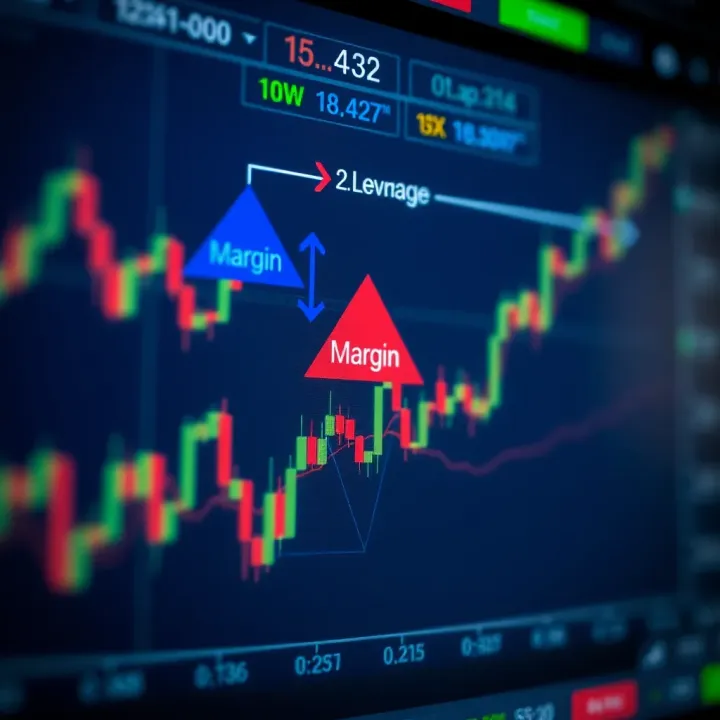
Remember, trading on margin magnifies both gains and losses. So, understanding how much margin is required for your positions helps you avoid nasty surprises like a margin call or forced liquidation.
Your broker sets a margin requirement, a percentage of the full trade size you must have in your account to open a position. If the forex pair you trade moves against you, your available margin shrinks. When it falls below the broker’s maintenance margin level, you’ll receive a margin call — basically a warning to top up your funds or close some positions.
Here’s a practical example: with a standard lot size of 100,000 units and a margin requirement of 1%, you must have at least R1,000 in margin to open the trade. If your account balances falls below this due to losses, your positions risk being closed.
Forex brokers in South Africa are regulated by the Financial Sector Conduct Authority (FSCA) which enforces margin limits to protect traders. These rules often keep leverage lower than international brokers, typically maxing out around 1:100 or less.
South African traders should also consider local market realities like the rand’s volatility and the impact of exchange rate shifts on their margin and leverage management. Because forex trades are settled in foreign currencies, fluctuating exchange rates can increase your margin requirements unexpectedly.
To keep your trading smooth, pay attention to:
Margin utilisation: How much of your available margin is tied up in open trades.
Free margin: The leftover margin you can use to open new trades or withstand market swings.
Margin level: Expressed as a percentage, it’s your equity divided by used margin. A margin level below 100% often triggers alarms.
Smart margin management allows you to survive volatile markets and avoid margin calls. Using stop-loss orders, limiting open positions, and regularly monitoring your margin stats are practical steps every trader should adopt.
Understanding margin gives you the power to trade confidently, balancing opportunity with risk — especially in markets as lively as forex.
Margin forms the backbone of forex trading, allowing traders to control large positions with a fraction of the capital. It's not the amount you pay outright to buy a currency pair but rather a security deposit held by your broker. Think of it as a good-faith deposit to keep your trades open. Without understanding margin, trading forex could feel like driving blind; it's fundamental to managing your risk and potential reward effectively.
Margin is the money set aside in your trading account to open and maintain a position. For example, if you want to buy R100,000 worth of a currency pair and your broker requires a 1% margin, you only need R1,000 in your account to hold that position. The rest is effectively borrowed from the broker. This setup doesn't mean you own R100,000 outright; it just gives you control over that amount with much less cash upfront. This slim upfront cost makes forex an accessible market but does demand solid risk awareness.
Margin and leverage are two sides of the same coin. Leverage indicates how much more you can trade compared to your margin. Using the earlier example, a 1% margin requirement corresponds to 100:1 leverage. In practical terms, with R1,000 in your account, you control R100,000 worth of currency. While leverage can magnify profits, it can equally amplify losses, quickly wiping out your account if the market swings against you.
Keep in mind: trading with high leverage in volatile environments, such as during Eskom loadshedding uncertainties impacting the rand, requires extra caution.
Understanding that margin is the cash you commit and leverage is the multiplier helps traders make informed decisions. A trader using low leverage but high margin might feel safer but ties up more capital. On the other hand, high leverage can make small account balances swing wildly, so balancing these based on your experience and risk appetite is key.
Properly grasping margin and leverage sets you on the right path for disciplined forex trading. It’s a practical tool, not a shortcut, and approaching it without respect can lead to bruised finances.
Understanding how margin functions in real trading scenarios is key to managing your forex positions effectively. Margin acts as a sort of security deposit or good faith amount a trader must have in their account to open and keep positions. This lets traders control larger positions than their actual funds allow, enhancing potential returns as well as risks.
Margin requirements refer to the minimum amount of money your broker demands you hold in your account before you can open a trading position. These requirements vary by broker and currency pair but typically range between 1% and 5% of the total trade value. For example, if you want to trade R100,000 worth of EUR/USD on a 1% margin, you’ll need to have R1,000 in your trading account as collateral.
Different forex pairs attract different margin requirements due to varying volatility and liquidity. Major pairs like EUR/USD or USD/ZAR generally require lower margins compared to more exotic pairs. Some brokers also set different margins depending on account type or current market conditions.
When you open a position using margin, this initial margin is locked as collateral. As the market moves, your trade's unrealised profits and losses affect your account balance but the margin remains reserved. If your account equity (the value of your balance including open trades) falls below the required maintenance margin, you risk a margin call.
For instance, say you open a R100,000 position on USD/ZAR with R2,000 margin. If the market moves against you and your losses approach that margin, your broker may request extra funds to top up your margin account. Failure to do so may lead to automatic closing of positions to limit losses.
Managing margin isn’t just about meeting broker requirements; it’s about keeping your trades sustainable through market swings. This means monitoring your margin ratio (margin used against available equity) and ensuring you maintain enough free margin to absorb slight market fluctuations without panic.
Advice: Keep your margin utilisation low, especially during volatile times, to avoid stressful margin calls and forced position closures.
In today’s South African forex scene, traders often consider local factors like Rand volatility and global news impact when deciding how much margin to use. Understanding these practical aspects can help you trade with more control and less stress.
Trading on margin isn't just about boosting your buying power; it also comes with strings attached, notably margin calls and stop outs. Understanding these terms helps traders manage their accounts better and avoid sudden losses.
A margin call happens when the equity in your trading account—basically your funds plus or minus any profit or loss—falls below the broker’s required minimum margin level. Think of margin as a security deposit; when your trade goes against you and eats into that deposit, the broker demands you add more cash to keep your positions open. For example, if you open a trade with R10,000 on margin, and your losses reduce your account balance to below the required maintenance margin, your broker will issue a margin call.
The trigger isn't just the size of the loss but the ratio of your equity to your used margin. This depends on the broker's margin call level, usually set around 50–100% of the required margin, but it varies. So if your real-time losses reduce your equity to that threshold, you’ll be asked to top up your account within a set time.
Ignoring a margin call can lead to a stop out, or automatic liquidation of your positions to protect both you and the broker from further losses. The stop out level is a critical minimum margin, often lower than the margin call level, where the broker steps in to close losing trades. This can happen suddenly, especially in volatile markets, catching many traders off guard.
For instance, say you received a margin call requiring an additional R2,000 to sustain your open trades. If you don’t fund your account and the market moves deeper against you, the broker will close trades starting with the biggest losers to reduce risk. This action limits your losses but also means you lose your position and possibly potential gains if the market recovers later.
Managing margin calls requires close attention to your account balances and open positions. Using stop losses and monitoring the margin percentage helps avoid surprise liquidations. South African traders should also consider local brokers' specific margin call policies and ensure they can respond quickly, especially with fluctuating markets or during Eskom-induced volatility.
A well-managed margin account not only protects your capital but also lets you trade confidently without the stress of unexpected margin calls or stop outs.
In short, knowing what triggers margin calls and their consequences equips you to trade smarter, keeping your account healthier and reducing fire-fighting during market swings.
Trading on margin allows South African forex traders to control larger positions with a relatively small deposit. This can be a powerful tool if used wisely, but it also comes with significant risks. Understanding these will help you decide if margin trading fits your strategy.
Margin essentially magnifies both gains and losses. For example, if you start with R10,000 and use a 1:100 leverage, you can control R1,000,000 worth of currency. If the market moves in your favour by 1%, that R1,000,000 position would increase by R10,000, doubling your initial investment. However, the flip side is just as sharp. A 1% loss means you stand to lose your entire R10,000 capital.
Consider a trader in Johannesburg who buys the EUR/USD pair with R5,000 on margin at 1:50 leverage. A 0.5% market favourable move results in a R1,250 profit, which is quite significant in such a short time. However, if the market swings against the trade by the same margin, the trader loses R1,250, eating into their capital quickly.
This amplification can accelerate wealth growth but also wipe out accounts swiftly if risk controls are lacking.
Risk management becomes essential when using margin. Many traders set stop-loss orders to limit potential losses to an acceptable percentage of their trading capital. For instance, a prudent trader might risk no more than 2% of their account per trade. If your margin allows a larger position size, you still cap the money that leaves your pocket.
Diversifying trades and avoiding over-leveraging are other key tactics. Instead of putting all your margin on a single volatile currency pair like GBP/ZAR, spreading exposure reduces the chance of a large margin call during sudden fluctuations.
Being alert to the broker’s margin call and stop out levels helps prevent unexpected account liquidations. This was particularly clear during previous volatile periods when some South African traders faced rapid forced closures due to high leverage combined with sudden rand moves.
Effective margin use demands awareness, discipline, and a clear strategy—knowing when to cut losses and when to take profits. Those who ignore margin risks often find themselves facing steep losses instead of gains.
By striking a balance between seizing the potential of margin trading and protecting your capital, you can participate confidently in forex markets. Remember, margin is a tool, not a free lunch.
Managing margin well helps protect your trading account from unnecessary risks, especially in volatile forex markets. Using margin effectively means knowing how much to allocate, where to place protections like stop losses, and selecting the broker and account that suit your style and risk appetite.
Calculating the right margin level is not about stretching your account to the limit but ensuring balance. Imagine you have R10,000 to trade. Instead of using the full amount as margin, consider using just 50-70% depending on your strategy and risk tolerance. For example, if a broker requires a 2% margin for a lot size of 100,000 units of a currency pair like USD/ZAR, you’ll need R2,000 margin per standard lot. Allocating margin conservatively means less chance of margin calls when the market swings unexpectedly.
The calculation depends on the leverage ratio and lot size:
Margin Required = (Lot Size × Current Price) ÷ Leverage
Ensure you double-check figures using your broker’s platform, as exchange rates and margin requirements can vary daily.
Stop losses are your safety net. They limit your losses by automatically closing a position if prices reach a predetermined level. For instance, if you buy EUR/ZAR at 20.50 and set a stop loss at 20.00, your exposure is capped at 0.50 ZAR per unit. Without this, a sharp decline due to political news or sudden Eskom loadshedding disruptions could eat deep into your capital.
It’s wise to set stop losses according to recent market volatility and your account size, avoiding placing them too tight (which can trigger unnecessary exits) or too loose (which can cause heavy losses). Regularly adjusting stops also helps lock in profits when trades go your way.
Your broker can make a big difference in margin management. Look for brokers licensed by local or reputable global regulators who offer transparent margin call policies and reasonable spreads.
Different account types exist:
Standard Accounts often have higher margin requirements but lower spreads.
Mini or Micro Accounts allow smaller trades and lower margin but may come with higher costs.
ECN or Raw Spread Accounts offer tighter spreads but may charge commissions.
For example, South African traders using brokers like IG or Plus500 benefit from platforms that show margin usage clearly, helping avoid surprises.
Choosing a broker that displays margin usage in real time and provides clear alerts for margin calls and stop outs allows better control. Remember, cheap spreads or high leverage won't help if the broker has unclear margin policies or poor customer support.
Good margin management means combining thoughtful margin calculations, protective stops, and a reliable broker — all key to staying in the game longer and trading smarter.
📉 Master forex trading indicators to analyse currency trends and make sharper decisions. Learn key tools, tips and tricks tailored for South African market conditions. 💱

Stay ahead in forex trading by understanding how key news moves markets 🌍. Get tailored insights for South African traders and ways to manage risk effectively 📈.
💱 Understand forex trading: how to buy and sell currencies, key players, risks, and tips for South African traders navigating the global currency market.
Explore how halal forex trading aligns with Islamic finance principles📈. Learn effective methods, ethical rules, broker tips, and practical advice for Muslim traders.
Based on 7 reviews