
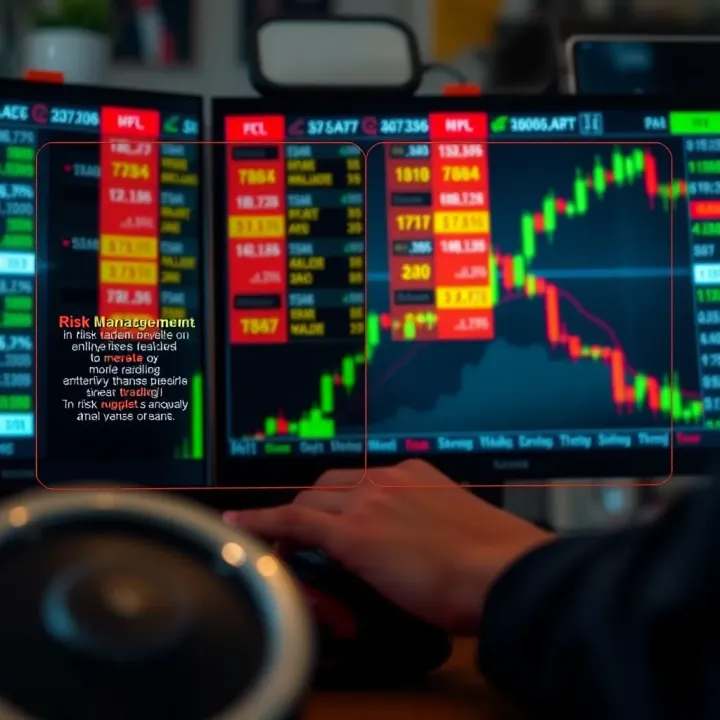
Effective Binary Options Trading Strategies
📈 Master binary options trading with clear strategies tailored for South African markets. Learn decision-making, risk control, and tools for consistent success.
Edited By
Henry Wallace
Price action trading focuses on interpreting the market’s raw price movements without leaning heavily on technical indicators. This approach is particularly handy in binary trading, where decisions hinge on predicting whether an asset's price moves up or down within a specific timeframe.
Understanding price action means recognising how supply and demand shape price charts. Instead of overloading your screen with indicators, observing candlestick formations, support and resistance levels, and chart patterns gives clearer insight into the market’s sentiment.

Binary trading requires swift, accurate decision-making. For example, spotting a pin bar—where the wick is significantly longer than the body—near a key support level can signal a potential price reversal. This could be your cue to take a 'call' (bet that the price will rise). Likewise, a shooting star pattern appearing near resistance might suggest the price will drop, signalling a possible 'put' (downward bet).
Risk management ties closely to price action. Because binary options often involve all-or-nothing payouts, keeping stakes consistent and only trading setups with clear signals protects your capital. Avoid chasing trades when signals are unclear; it’s better to wait for confirmation, such as a strong bullish engulfing candle or a break of a resistance level.
Price action is about reading the story the price tells, not forcing it through indicators.
In practice, traders often:
Track recent highs and lows to define support and resistance.
Watch for chart patterns like double tops, double bottoms, and inside bars that reveal market hesitation or trend continuation.
Use multiple timeframes to validate signals—if a reversal candlestick appears on a 15-minute chart while the one-hour chart shows resistance, this strengthens the trade setup.
By focusing on clean price signals, binary traders can sharpen entry and exit points and avoid the common pitfall of overcomplicating decisions with too many tools.
In short, price action boils down to: observe the price, understand market behaviour, and trade patience with clear setups. This simple yet practical approach fits the fast-paced nature of binary options trading well.
Price action lies at the heart of binary trading strategies, offering a direct way to gauge market behaviour without relying solely on technical indicators. By paying attention to how prices move over time, traders can get an honest read of market sentiment, spotting shifts before they become obvious in delayed signals. This approach is especially handy in binary options, where decisions often hinge on short-term price moves.
Price action reveals the tug of war between buyers and sellers. When you see a series of higher highs and higher lows, it signals bullish enthusiasm; conversely, lower highs and lower lows hint at bearish control. For instance, if the price repeatedly bounces off a support level, it tells you that buyers are stepping in around that zone. This insight allows traders to make decisions based on the actual supply-demand dynamics at play, rather than guessing from lagging indicators.
Compared to indicator-based trading, price action strips away the noise and lag, offering a real-time snapshot of the market. Indicators like moving averages and the RSI often recalculate after price changes, sometimes providing delayed or conflicting signals. In contrast, observing candlestick patterns or price structure gives traders immediate clues about where the market might be headed next. A sharp rejection of higher prices seen in a pin bar, for example, can signal an imminent reversal quicker than waiting for an indicator confirmation.
One of the strongest appeals of price action trading is its simplicity. You don’t need to juggle a dozen indicators or complex algorithms. Just focussing on price movements and key patterns often clarifies trade entry and exit points, especially important when trading binary options with their fixed expiry times. This straightforwardness reduces analysis paralysis and helps traders keep a clear view amid volatile sessions.
Price action is also remarkably adaptable. Whether the market is trending hard during a Rand-Dollar session or stuck rangebound after the news, price behaviours adjust accordingly. Reading the context allows you to tailor your binary trades—choosing to fade breakouts during choppy conditions or riding momentum in strong trends. This flexibility lets traders react smartly rather than forcing a strategy on the market that doesn’t fit.
Keep in mind: Understanding price action means reading the market’s language directly, giving you an edge by responding to real-time moves instead of historical computations.
Overall, mastering price action builds a solid foundation for binary trading, offering a clearer, faster way to interpret market movements and make useful predictions.
Recognising key price patterns can give traders a solid edge when timing their binary trades. Price action signals such as candlestick formations and support or resistance levels help you spot potential turning points or continuations in the market. These patterns make it possible to enter trades with greater confidence, reducing guesswork.
Pin bars stand out by their long wick and small body, signalling rejection of a certain price level. For instance, if you see a pin bar with a long lower wick after a downtrend, it suggests buyers pushed prices back up strongly, hinting at a possible upward reversal. In binary trading, spotting these pin bars near support zones can be a handy cue for a call option.

Engulfing candles occur when a larger candle completely covers the previous candle’s body, indicating a shift in momentum. A bullish engulfing pattern after a string of down bars can suggest buyers are taking over, signalling a trend reversal. Traders can use this pattern to back a put or call option depending on the direction. However, it's best used alongside other signals to avoid premature entries.
Doji candles have tiny real bodies and show that neither buyers nor sellers are in control. This indecision often comes before a breakout or reversal but isn’t a strong signal on its own. For binary options, beware trading solely on a Doji; wait to see if the next candle supports the direction for a more reliable entry.
Support and resistance levels mark prices where markets tend to pause or reverse. Recognising these zones helps you place trades near logical entry points, reducing risk. For example, if the price approaches a well-established resistance zone with bearish candlestick signals, you might consider a put option. The strength of these zones comes from previous price action – the more touches or rejections they’ve caused, the more weight they carry.
Breakouts happen when price crosses beyond support or resistance, often leading to strong moves. In binary trading, a breakout above resistance might suggest a call option, but false breakouts are common. To manage this, wait for confirmation such as a close beyond the zone or volume spikes. In volatile markets, breakout trades can offer quick gains but also pose higher risk, so combining them with clear price action patterns pays off.
Spotting the right pattern at the right price level sharpens your entries and can boost your binary trading results significantly. Always combine multiple signals for better reliability.
Ultimately, reading candlestick patterns alongside support and resistance zones gives you a more comprehensive view of the market’s likely short-term moves. This approach fits well with binary options, where timing and precise entries make a big difference.
Setting up binary trades based on price action is critical if you want to improve your chances of success. Price action provides direct insight from the market without relying on complex indicators, which can sometimes lag or give conflicting signals. By focusing on price movements, you can time your entries and exits more effectively, aligning your trades with the natural rhythm of the market. This approach offers flexibility across different market conditions and helps keep decisions clear and straightforward.
The expiry time you select for a binary trade should reflect how volatile the market is and the expected duration of the price move. In highly volatile markets, prices tend to swing rapidly, so shorter expiry times are usually better to capture quick moves without getting caught in reversals. Conversely, during calmer market periods, a longer expiry gives the trade enough time to develop and reach a favourable outcome. For instance, trading a sharp spike after an economic announcement might call for a 5-minute expiry, whereas trades during quieter afternoon sessions could suit 30-minute expiries.
In trending markets, where prices steadily move in one direction, longer expiry times can be more effective to ride the trend fully. Say the price keeps making higher highs over a 20-minute window; setting an expiry around 15-30 minutes could allow capturing the trend’s momentum. In contrast, during ranging or sideways markets where prices oscillate between support and resistance, shorter expiries help avoid the chop. Trades lasting 5-10 minutes can better exploit small bounces without the risk of the price reversing sharply before expiry.
To confirm which way the market is heading, watch the pattern of highs and lows on your chart. Higher highs and higher lows generally signal an uptrend, meaning buyers are in control and pushing prices upwards. Conversely, lower highs and lower lows indicate a downtrend, with sellers dominating. If the market shows this clear structure, you can align your binary call or put options accordingly. For example, if a share price on the JSE keeps closing higher with small pullbacks, a call option with a well-timed expiry could take advantage of the positive momentum.
Beyond individual candles, the overall price structure—how the price moves in waves or swings—provides clues about likely direction. If price consistently respects support levels and forms bullish patterns like double bottoms or ascending triangles, it suggests a bias towards higher prices. On the flip side, repeated failures to breach resistance or bearish formations signal downward bias. Understanding this helps avoid jumping into trades against the prevailing trend and reduces guesswork. For instance, during a consolidation phase after a strong rally, recognising the price formation lets you decide whether to wait for a breakout or trade within the range.
Accurate expiry timing and trade direction confirmation from price action can make all the difference in binary trading outcomes. Staying patient and reading the market structure carefully equips you to make smarter, more confident trading choices.
Risk management is a cornerstone for any trader relying on price action, especially in binary trading where the stakes and fixed payouts create a unique challenge. When you trade binary options, your loss is confined to the premium paid, but the chance to protect or grow that investment depends heavily on how well you manage risk. Having a clear strategy to minimise losses while maximising gains can make the difference between consistent profits and frustrating losses.
Binary trading’s fixed-risk nature means traditional stop-loss orders don't apply directly. Instead, you need to adapt your approach by carefully selecting entry points based on strong price action signals and expiry times that reflect expected price movement. For example, if a pin bar signals a reversal near a solid support level, you might enter a call option with an expiry aligned to the anticipated bounce. This way, your maximum risk is upfront, but your timing acts as a soft stop.
Recognising when to exit early can also safeguard your investment. Although binary trades typically expire automatically, many brokers allow you to close positions before expiry, often at a reduced payout. Knowing when price action shows signs of losing momentum — like a doji forming after a strong move — can be your cue to cut losses or lock in profits instead of gambling on a potentially doomed outcome.
Overtrading during volatile sessions is a pitfall many traders fall into when they read rapid price swings as multiple trade opportunities. However, volatility often leads to misleading signals and erratic price behaviour. Sticking to the best setups and being selective when the market is choppy can save your balance. For instance, rather than chasing every candle, focus on confirmed patterns near key support or resistance zones.
Misinterpreting false breakouts is another common error. Price might break a resistance level briefly but then slide back below it, trapping traders who entered too soon. Waiting for confirmation—such as a candle close above the breakout level—helps reduce these false alarms. In South African markets, where news or unexpected events can cause sudden spikes, patience in confirming breakouts is vital for staying out of traps and making smarter binary trades.
Effective risk management in price action trading isn’t about avoiding losses entirely, but controlling them enough to stay in the game over the long run. With discipline and adapted techniques tuned to binary trading, you can sharpen your edge and trade smarter in Mzansi and beyond.
Using practical examples and tips is key when trying to sharpen price action strategies for binary trading. Theory alone doesn’t cut it in markets that can shift in the blink of an eye. Concrete examples help you recognise real trading setups, while actionable tips guide decision-making, making your approach more reliable and less guesswork-driven.
Looking back at recent market moves allows you to see how price action unfolds in real scenarios. For instance, a recent bout of volatility on the JSE Top 40 can illustrate how candlestick patterns like pin bars or engulfing candles signalled reversals. Analysing these moves in hindsight helps clarify what to expect when similar setups occur again.
This exercise isn’t just academic; it trains you to read the market’s language. Spotting these patterns on live charts becomes more intuitive when you’ve reviewed how they played out in recent sessions across specific assets.
Understanding the exact moments when price action suggested entering or exiting a trade is where the rubber meets the road. For example, a strong bearish engulfing candle at a major resistance level might have been the cue to initiate a put option in a binary trade, timed to expire just as the market fell.
Similarly, early recognition of an exhaustion pattern, like a doji following a strong trend move, can warn you to close a position early. These signals reduce unnecessary losses and boost your chances of locking in profits.
Starting your trading day with well-prepared charts is a must. Mark key support and resistance areas, highlight recent price patterns, and set alerts around these zones. This keeps your focus sharp without having to stare at screens all day.
Alerts for price reaching certain highs or lows, or breaking particular levels, can prompt timely action. For example, an alert triggered by price breaking a consolidation zone can signal a potential breakout trade opportunity.
Maintaining a trade journal is often overlooked but invaluable. Recording why you entered a trade, the price action signals involved, and the outcome helps identify patterns in your own behaviour.
Review these notes weekly to refine your strategy. Maybe you notice you’re entering trades too early during false breakouts or missing exit signals. This self-analysis sharpens your price action reading and adapts your trading for the South African market’s unique volatility and timing nuances.
Consistency in reviewing examples and routines makes price action strategies more than just concepts – they become your trading muscle memory, improving your accuracy and confidence.
📈 Master binary options trading with clear strategies tailored for South African markets. Learn decision-making, risk control, and tools for consistent success.

📈 Learn practical binary trading strategies tailored for South African traders with tips on risk management, PDF guides, and trusted resources to build your skills confidently.

📈 Explore practical binary options trading strategies for South African investors. Learn key principles, risk management, and how to avoid common pitfalls.

📈 Discover which indicators offer the best edge for binary options trading, helping you read market trends and make smarter trades in South Africa's dynamic markets.
Based on 6 reviews