
Understanding Risk Management Plans for Businesses
📊 Learn how a risk management plan helps South African businesses spot, assess, and manage threats that could disrupt operations or goals. Stay prepared! ⚠️
Edited By
Henry Collins
Treasury risk management is a critical part of running a successful business in South Africa’s unpredictable financial environment. With frequent exchange rate swings, periodic loadshedding disrupting operations, and shifting regulatory demands, companies must navigate a web of risks that affect their cash flow, investments, and overall financial health.
Understanding the main types of treasury risks helps businesses anticipate challenges. Exchange rate risk is particularly significant for firms involved in imports, exports, or foreign borrowings. A sudden strengthening or weakening of the rand against the dollar or euro can quickly alter profit margins. Cashflow risk is another key concern, especially when loadshedding interrupts production or delays payments.

Effective treasury risk management isn’t about eliminating risks entirely but rather about identifying, measuring, and controlling them. Many South African companies use a mix of hedging instruments — such as forward contracts and options — alongside internal controls to manage exposure. For instance, a business importing components from China may lock in exchange rates via forward contracts to avoid nasty surprises.
Beyond financial tools, aligning treasury practices with local requirements like the Financial Intelligence Centre Act (FICA) and the Protection of Personal Information Act (POPIA) safeguards compliance. This ensures accurate reporting and helps prevent penalties that could undermine financial stability.
Given the unpredictability of Eskom’s power supply, integrating contingency plans—like backup generators or investment in solar solutions—into treasury forecasts has become increasingly common. Companies factoring in these operational risks alongside more traditional financial risks tend to maintain stronger cash reserves and improve decision-making.
A proactive approach to treasury risk means regularly reviewing the risk landscape, adjusting strategies as market conditions shift, and ensuring treasury policies reflect South Africa’s unique economic realities.
In summary, treasury risk management for South African businesses calls for a blend of financial savvy, legal awareness, and practical contingency planning. These strategies help firms protect their assets, maintain liquidity, and confidently face the economic ups and downs typical of the local market.
Grasping what treasury risk entails is a fundamental step for any business aiming to secure its financial footing. Treasury risks directly influence a company's ability to manage cash, meet its obligations, and maintain operational flow, especially amidst fluctuations in economic conditions. For South African firms, understanding these risks ensures better planning, prevents unnecessary losses, and safeguards business continuity.
Financial risks affecting treasury operations stem from the various ways a company’s cash and funding mechanisms can be disrupted. These include sudden changes in cash inflows or outflows, unexpected shortfalls in working capital, or challenges in meeting debt repayment schedules. For example, a manufacturing firm that relies heavily on imported raw materials might face delays in payments due to fluctuating foreign currency prices, directly affecting its treasury function.
In terms of types of treasury risk: liquidity, market, credit, operational, these represent distinct challenges treasury teams must handle:
Liquidity risk is about the company's ability to meet short-term financial commitments. A retailer facing a lull during the festive season without adequate liquidity may struggle to pay suppliers on time.
Market risk arises from movements in market variables such as interest rates and exchange rates. A South African exporter can suffer if the rand unexpectedly strengthens, reducing export revenue when converted back to rand.
Credit risk involves the chance of default by customers or counterparties. If a large client delays payment or fails to pay altogether, it can disrupt cash flow.
Lastly, operational risk includes internal issues such as system failures or human error. For instance, inaccurate treasury data entry can lead to poor decision-making or compliance breaches.
The impact on cash flow and business continuity cannot be overstated. Poor treasury risk management may leave a business locked out of cash when it needs it most, potentially halting operations or damaging relationships with suppliers. Consider a logistics company halted by load shedding; without a financial buffer or alternative power source funding, it could struggle to keep vehicles fueled or staff paid.
South Africa’s economic landscape presents challenges unique to the local environment. Exchange rate volatility is frequent, influenced by global and domestic factors like commodity prices or political developments. This affects firms dealing in foreign currency. Add to this ongoing loadshedding, inflationary pressures, and regulatory changes, and the treasury function must remain agile and vigilant. For example, an agricultural exporter must constantly recalibrate foreign currency exposure strategies to protect margins amid rand fluctuations.
Effective treasury risk management is about anticipating these risks and setting practical safeguards, so South African businesses don't just survive but can thrive even with economic shocks.
Understanding these basics helps financial officers and managers craft policies that not only protect resources but optimise their use in a tough and ever-changing market.
Assessing treasury risks is a cornerstone for effective risk management in any South African business. Without a clear view of where the business is vulnerable, managing those risks becomes guesswork. For traders, investors, and financial analysts, understanding the tools and techniques available to identify and measure treasury risk exposure is fundamental to safeguarding financial health.
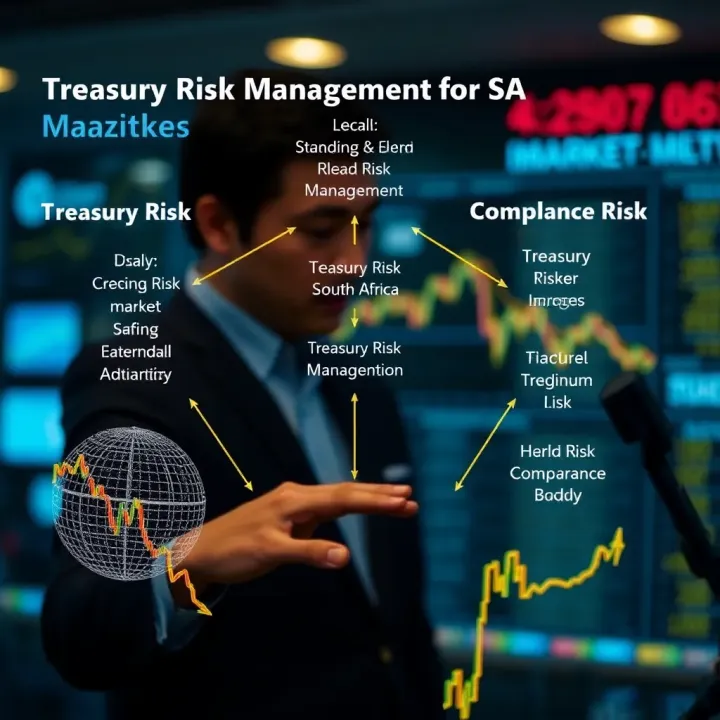
Risk mapping and scenario analysis help firms to visualise and prepare for potential risks. Risk mapping involves identifying all relevant treasury risks—like liquidity squeezes or foreign exchange swings—and plotting their likelihood against the potential impact. For example, a Gauteng-based exporter might map the risk of rand volatility against their foreign receivables to highlight exposure.
Scenario analysis takes this further by simulating different economic or market situations, such as a sudden spike in interest rates or intensified loadshedding, to pinpoint how these events would affect treasury operations. This approach supports decision-makers in planning responses well before a crisis occurs.
Use of financial models and forecasting plays a key role in identifying risks hidden beneath daily transactions. Businesses often rely on cash flow forecasting models to predict future liquidity needs. For instance, a retailer dealing with fluctuating supplier terms can use these models to anticipate periods when cash reserves may thin out.
Moreover, financial tools such as value at risk (VaR) models quantify potential losses from market risks within a set confidence level. While these models aren’t foolproof, they provide traders and investors with a practical yardstick to evaluate exposure and assess whether current hedging strategies are adequate or require adjustment.
Quantitative assessment methods involve using numbers to gauge how much risk a company is carrying and what the potential financial loss could be. Examples include stress testing cash reserves against a worst-case scenario of several weeks of emergency funding interruptions or calculating the maximum probable loss on currency exposure during periods of rand weakness.
These quantitative methods help Treasury to assign clear cost figures to risks, making it easier for boards and finance teams to justify mitigation spending. For example, if a scenario shows that unhedged forex exposure could wipe out R2 million in profit, the company can direct resources toward appropriate hedging instruments.
Qualitative factors and risk appetite complement numerical assessments by incorporating the company’s broader tolerance for risk and operational priorities. Not all risks can be expressed purely in rand terms—things like reputation, regulatory compliance, or stakeholder trust require judgement calls.
A mining company in KZN, for example, might accept more operational risk due to infrastructure challenges but insists on very strict liquidity limits to stay solvent during periods of Eskom load shedding. Clearly defining this risk appetite guides treasury teams on when to act decisively and when to tolerate certain exposures.
Effective treasury risk management depends on pairing solid quantitative data with a clear understanding of company values and external realities, especially within South Africa’s complex economic environment.
By using these identification and assessment methods, South African businesses can develop a clear picture of their treasury risk landscape and prepare effective strategies to protect their financial stability.
Managing treasury risks effectively is vital for South African businesses to maintain financial stability and operational resilience amidst economic uncertainty. Practical approaches help firms control exposure, optimise liquidity, and reduce losses from market fluctuations. These strategies centre on cash management, hedging techniques, and monitoring counterparties, all tailored to local conditions.
Maintaining optimal cash reserves is about balancing liquidity with investment. Too little cash risks shortfalls during unexpected expenses or delays in receivables, while too much idle cash means missed opportunities for growth. For example, a Johannesburg-based manufacturer may hold enough cash to cover at least 30 days of operating costs, ensuring it weathers suppliers’ payment cycles or power outage disruptions without resorting to costly emergency borrowing.
Short-term funding and liquidity buffers act as a safety net. Companies keep revolving credit facilities or overdraft limits in place to manage sudden cash flow gaps. Consider a Cape Town retailer who anticipates increased stock purchases ahead of the December festive season. By securing a short-term loan facility, they ensure uninterrupted operations even if sales temporarily slow or suppliers demand upfront payments.
Foreign exchange and interest rate hedging techniques shield businesses from volatility, especially relevant given the rand's frequent swings. Firms dealing with imports or exports might use forward contracts to lock in exchange rates, avoiding surprises when settling invoices months later. On the interest rate side, a company with variable-rate borrowings may contract interest rate swaps to stabilise repayment costs, offering predictability in budgeting.
Using derivatives appropriately requires understanding their complexity and risks. Derivatives like options, futures, and swaps provide flexibility but can backfire if mismanaged. South African firms often engage with derivatives under clear policies and expert advice, ensuring hedging activities align with genuine exposures rather than speculative bets, keeping treasury risk within appetite.
Setting credit limits and policy enforcement help control the potential impact from customers or partners failing to meet obligations. Treasury teams establish thresholds based on credit ratings, past transactions, and market conditions. An example is a mining supplier who limits exposure to industrial clients facing financial strain due to commodity price drops, ensuring no single counterparty endangers overall cash flow.
Monitoring counterparty creditworthiness involves continuous assessment of financial health, payment behaviour, and external information like credit bureaus or market rumours. Regular reviews allow early identification of risks, enabling preemptive action such as requiring upfront payments or adjusting credit terms. This vigilance is essential to avoid surprises that could disrupt treasury operations.
Effective treasury risk management depends on proactive, well-structured approaches. South African businesses that tailor cash management, hedging, and credit controls to local realities stand a better chance of maintaining financial steadiness even in choppy markets.
This section brings practical insight for financial analysts, traders, and brokers focused on South African markets, emphasising clear, actionable strategies for managing treasury risks amid local economic challenges.
Combining strong governance, strict compliance, and clear reporting forms the backbone of effective treasury management. For South African businesses, this trio helps navigate regulatory demands, manage risks transparently, and maintain stakeholder confidence. When treasury functions operate without proper oversight, firms risk missteps that could jeopardise cash flow, creditworthiness, or even invite regulatory penalties.
South African treasury teams must stay on top of key regulations such as the Financial Intelligence Centre Act (FICA), the Protection of Personal Information Act (POPIA), and exchange control rules governed by the South African Reserve Bank (SARB). These regulations affect transactions, data handling, and foreign currency dealings. For instance, failing to observe exchange control limits can lead to heavy fines or difficulties when repatriating funds from international operations.
Beyond legal conformity, compliance influences daily treasury decisions. Treasury staff must verify counterparties against sanctions lists, ensure accurate customer due diligence, and manage transactional reporting to SARS and other authorities. One practical example is the requirement for banks and businesses to flag suspicious transactions, which protects both from being unwitting channels for illicit funds.
Internal controls and audits are equally crucial. They provide a safety net by detecting errors and preventing fraud. Deploying segregation of duties—where one person authorises payments and another processes them—helps prevent misuse of funds. Regular internal audits verify that policies align with regulations and reveal any weak spots in treasury processes before external regulators step in. For example, a routine internal audit might uncover that treasury is not reconciling bank accounts timely, thus exposing the business to unnoticed discrepancies.
Robust treasury reporting keeps management, boards, and investors well informed. Standard reporting formats include cash flow forecasts, risk exposure summaries, and compliance status updates. Regular reports empower decision-makers to spot red flags early, such as near-term liquidity crunches or overexposure to volatile currencies like the rand.
Clear communication with stakeholders extends beyond just numbers. Explaining treasury strategies and potential risks in straightforward terms builds trust. For example, if the treasury team adopts a new foreign exchange hedging method, detailing its purpose and implications prevents misunderstandings or unwarranted concerns among shareholders and credit providers.
Transparent reporting and open lines of communication turn treasury functions from a black box into a trusted advisor, vital during uncertain economic times.
In sum, good governance, rigorous compliance, and clear reporting combine to protect South African businesses from treasury risks while supporting sound, timely financial decisions.
Local economic factors significantly shape the treasury risk landscape for South African businesses. Companies operating here face unique challenges that directly affect cash flow, cost structures, and financial planning. Understanding elements like exchange rate volatility and infrastructure issues helps treasury teams anticipate and manage risks more effectively, ultimately supporting business continuity and financial stability.
Fluctuations in the rand can swing wildly due to global market shifts, changes in commodity prices, and local political developments. For businesses engaged in importing or exporting, this volatility directly affects cost and revenue. For example, a company importing machinery parts priced in US dollars might face sudden increases in rand costs when the currency weakens. Conversely, exporters may benefit from a weaker rand but struggle if demand drops internationally.
Managing foreign currency exposure is essential to avoid unexpected losses or cash flow gaps. South African firms often use hedging tools such as forward contracts and options to lock in exchange rates, providing certainty in budgeting and pricing. Treasury teams must regularly assess their exposure by currency, trade flows, and payment terms, adjusting hedging strategies as market conditions evolve. Sharper rand swings call for more agile currency risk management, including reviewing supplier terms or realigning invoicing currencies where possible.
Effective currency exposure management helps reduce surprises in working capital requirements and protects profit margins against rand fluctuations.
Loadshedding remains a practical and unpredictable risk impacting treasury functions. Power outages can stall production lines, disrupt IT systems, and delay cash collection processes. This leads to irregular cash flow patterns, making forecasting and liquidity management more complicated.
To counter these risks, many businesses invest in alternative power sources such as diesel generators, solar panels, or battery storage systems. These investments act as a buffer against operational interruptions, securing continuous business activity and stable cash flow. Additionally, firms may negotiate flexible payment terms with suppliers or build liquidity buffers to withstand periods of reduced income. Integrating these strategies into treasury plans allows quicker recovery from disruptions while maintaining financial discipline.
By planning for infrastructure challenges, treasury can cushion the company from sudden cash squeezes caused by operational halts due to loadshedding.
Ultimately, treasury teams must weave local economic realities into their risk management frameworks. Keeping a close eye on exchange rate trends and preparing for infrastructure setbacks puts businesses in a stronger position to safeguard liquidity and steady financial health in South Africa's complex market environment.
📊 Learn how a risk management plan helps South African businesses spot, assess, and manage threats that could disrupt operations or goals. Stay prepared! ⚠️

🌍 Manage currency risks for South African businesses with practical steps like hedging, diversification, and understanding exchange impacts. Protect your currency exposures effectively.

📉 Master forex risk management with tips on position sizing, stop-loss orders & mindset. Tailored for South African traders to guard capital & trade smartly.

🛡️ Learn how South African businesses can spot and manage risks, meet legal standards, and build a strong risk-aware culture to safeguard growth and resilience.
Based on 15 reviews