

Understanding a Degree in Risk Management SA
Understand a degree in risk management in South Africa 🏢. Learn about key modules, career paths in finance, insurance & governance, all within our unique business climate.
Edited By
Amelia Foster
Foreign exchange (forex) risk is a reality for many South African businesses and investors who deal with international markets. The rand’s volatility, paired with global economic shifts, means that exposure to currency fluctuations can impact profits, cash flow, and overall financial health.
Understanding forex risk starts with recognising its three main types:
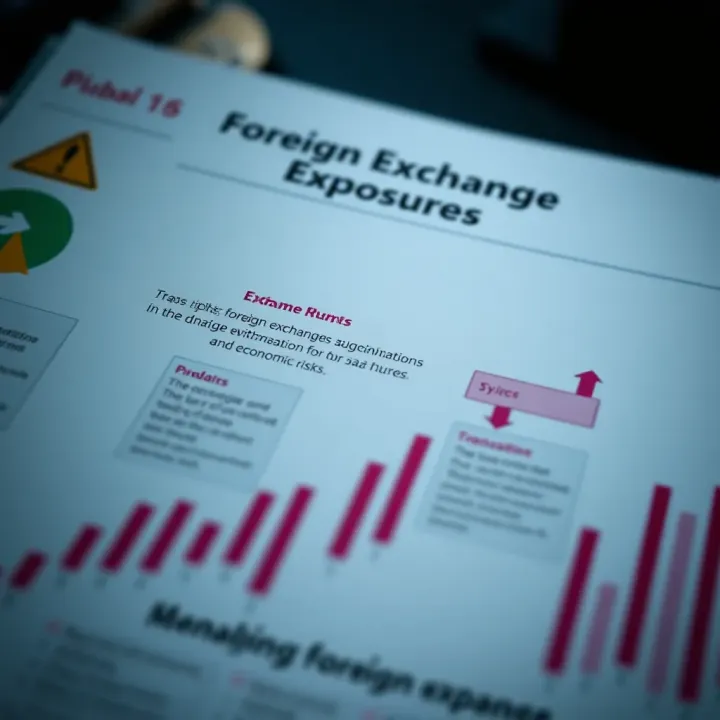
Transaction exposure, which arises from specific foreign currency commitments like imports, exports, or debts.
Translation exposure, affecting how foreign assets or liabilities are reported in financial statements.
Economic exposure, tied to long-term shifts in competitive position due to exchange rate movements.
For example, a Gauteng-based exporter selling goods to the EU may face losses if the rand strengthens against the euro before payment arrives. Conversely, an importer in Cape Town buying machinery from the US could see costs rise if the rand weakens.
Managing these risks is not about eliminating them but controlling potential losses to safeguard business viability.
Common practical approaches to managing forex risk include:
Natural hedging: Aligning currency inflows and outflows to reduce net exposure. For instance, a company might try to source materials in the same currency it earns revenues.
Financial hedging tools: Using instruments like forward contracts, futures, options, and swaps to lock in exchange rates or limit downside. South African businesses often use forward contracts with local banks or brokers to fix the rand price today for future transactions.
Currency diversification: Spreading revenue or investment across several currencies so adverse moves in one do not derail overall performance.
Developing clear forex policies: Defining risk tolerance, approval processes, and hedging strategies to keep decisions consistent and transparent.
Regular monitoring: Staying updated on market conditions, rand movements, and relevant regulations, such as Exchange Control rules by the South African Reserve Bank, to adjust risk management tactics as needed.
Considering Eskom loadshedding impacts and South Africa’s trade relationships—especially with major partners like China, the EU, and the US—tailored forex risk strategies keep companies resilient. Most importantly, combining these methods with sound financial planning supports sustainable growth amid currency unpredictability.
Understanding foreign exchange risk is essential for anyone involved in international trade or investment. This type of risk arises when currency values fluctuate relative to one another, affecting the cost and returns of cross-border transactions. For South African businesses, this impact is very real because the Rand (ZAR) can be quite volatile compared to major currencies like the US dollar, euro, or Chinese yuan.
Grasping the nature of this risk helps companies and investors make smarter decisions—whether that means hedging currency exposure, setting prices more effectively, or simply preparing the business for unexpected swings in profit.
Foreign exchange risk, or currency risk, refers to the possibility that changes in exchange rates will negatively affect the value of transactions or assets denominated in foreign currency. It’s not just about trading money but how this volatility can erode profits, increase costs, or affect asset values over time.
This risk can impact a range of activities, from importing machinery priced in dollars to holding offshore investments denominated in euros. In practical terms, if a South African importer agrees to pay US$100,000 for machinery next month, any weakening of the Rand against the dollar before payment means paying more in rand than first expected.
South Africa’s economy is heavily tied to global commodity prices, and the Rand often swings widely due to factors like trade tensions, domestic political shifts, or global economic uncertainty. This makes managing foreign exchange risk a day-to-day reality for many companies.
Consider a Johannesburg-based exporter receiving payments in euros — if the Rand suddenly strengthens against the euro, their revenue when converted back home shrinks, squeezing margins. Otherwise, companies may see costs rise unexpectedly if they rely on imported inputs bought in foreign currency, hurting competitiveness locally.
Transaction exposure deals with the risk on specific cash flows due in the future that are denominated in foreign currency. It's about outstanding payments or receipts that haven't settled yet. For example, a Cape Town firm importing electronics from China agreeing on payment in US dollars three months from now faces transaction exposure: if the Rand weakens by then, the Rand cost increases.
This exposure directly affects cash flow and is arguably the easiest to quantify and hedge since payment dates and amounts are typically known in advance.

Translation exposure, or accounting exposure, impacts businesses owning foreign subsidiaries or assets when financial statements are consolidated. Exchange rate changes can alter the reported value of foreign assets, liabilities, revenues, and profits even if no transactions occur.
Say a Durban-based group owns a subsidiary in the UK. When the financials are consolidated, fluctuations between the Rand and British pound affect reported profits and balance sheet figures. This might influence investor perceptions and credit ratings but doesn’t immediately affect cash flow.
Economic exposure concerns longer-term effects of exchange rate shifts on a company's market value and competitiveness. It’s less direct and harder to measure but very important.
For instance, a South African manufacturing firm selling domestically could be hurt if the Rand strengthens, making imports cheaper and local goods less competitive. Conversely, a weaker Rand might boost exports but raise costs for imported inputs, impacting profitability.
Businesses that understand each type of exposure can better tailor their risk management strategies, safeguarding both immediate finances and longer-term viability.
By recognising these distinctions, South African traders, investors, and analysts can identify where their biggest currency risks lie, and choose suitable safeguards to keep those risks in check.
Understanding your exposure to currency swings is a fundamental step before applying any risk management strategy. Without a clear picture of where and how a company or investor is vulnerable to exchange rate changes, efforts to hedge or mitigate losses may be misdirected or insufficient.
When it comes to imports and exports, currency risk directly affects pricing and profitability. Suppose a South African exporter agrees to sell goods priced in US dollars. If the rand weakens after the deal but before payment, the exporter benefits by receiving more rand for each dollar. However, if the rand strengthens, the local value of the payment drops, squeezing margins unexpectedly. Similarly, importers paying suppliers in foreign currencies face the opposite risk; a weaker rand inflates costs, cutting profit or increasing prices for consumers.
For foreign investments and loans, exposure often lies in the valuation of assets and liabilities reported in rands. Consider a South African company with a loan denominated in euros. If the rand falls against the euro, the rand value of that debt rises, increasing repayment costs even if interest rates remain stable. Likewise, investments in foreign equities or bonds fluctuate in rand value as exchange rates move, potentially offsetting gains or compounding losses.
Sensitivity analysis plays a key role in quantifying the impact of currency movements. By simulating changes in exchange rates—say a 5% appreciation or depreciation of the rand—a business can estimate how profit margins and cash flows might be affected. This method highlights which currencies pose the greatest threat and helps prioritise hedging resources effectively.
Sensitivity analysis is not about predicting exact outcomes but preparing for reasonable scenarios, so decision-makers can respond strategically rather than reactively.
The effect on profitability and balance sheets goes beyond cash transactions. Foreign currency movements influence reported asset values, affecting net worth and financial ratios critical to stakeholders and lenders. For instance, a company with significant foreign receivables might see its balance sheet strengthened in a weaker rand environment but would also need to watch for inflations in operational costs if they rely on imported inputs. These balance sheet effects, although sometimes non-cash, can trigger covenant breaches or affect borrowing costs.
By regularly assessing exposure through these practical lenses, South African traders, investors, and analysts develop a grounded view of currency risk. This understanding supports more informed decisions on when and how to deploy hedging instruments or restructure operations to withstand the ebb and flow of global currencies.
Managing foreign exchange risk is essential for South African traders, investors, and financial analysts who navigate the volatility of multiple currencies daily. Without a clear strategy, exposure to sudden rand fluctuations can dent profit margins or disrupt investment returns. This section outlines both natural and financial approaches that can help businesses and individuals keep currency risks under control and make more predictable decisions.
Matching currency inflows and outflows means aligning your foreign currency payments with receipts in the same currency. For instance, a Gauteng-based export company selling goods to Europe and paying suppliers in euros could invoice clients in euros too. This approach cuts down on the need to convert currencies frequently and reduces the risk caused by exchange rate swings. By balancing these flows, the firm avoids situations where it receives payment in one currency but must pay expenses in another, which can expose it to losses if rates move unfavourably.
This strategy is particularly practical for South African businesses engaged in both imports and exports. Instead of converting rand every time, timing payments and receipts within the same currency can act like a built-in shield against unpredictable rand moves.
Another natural method is to spread your assets, liabilities, and revenues over several currencies. Imagine an investment fund in Cape Town holding a portion of its portfolio in US dollars, euros, and even emerging-market currencies like the Brazilian real or Chinese yuan. Such diversity limits the impact if the rand suddenly weakens against one currency while strengthening against another.
For companies, this might mean sourcing raw materials from suppliers invoicing in various currencies or investing profits generated offshore across different dollar zones. This way, you avoid putting all your eggs in one basket and can smooth out currency shocks over time.
Forward contracts let you lock in an exchange rate today for a currency transaction that will happen in future, often 30, 60, or 90 days ahead. For example, a South African importer expecting to pay R2 million in dollars in three months can enter a forward contract to buy the required dollars at a set rate. This removes the guesswork and prevents nasty surprises if the rand suddenly weakens.
They’re widely used locally, particularly among businesses facing regular overseas payments, as they provide certainty around costs and budgeting. However, because forward contracts are binding, if the rand strengthens, you could miss out on a better rate.
Currency options give you the right, but not the obligation, to buy or sell a currency at a specific rate before a certain date. This offers more flexibility compared to forward contracts. For instance, a South African exporter getting paid in euros might buy a put option to protect against the rand gaining value and thus reducing rand revenue.
Futures contracts, traded on exchanges, standardise these agreements and help investors hedge against currency moves without negotiating terms privately. These instruments are more suited to larger players like institutional investors or traders who want clear exit strategies.
Currency swaps involve exchanging principal and interest payments in one currency for those in another over a set period. South African corporations might use swaps to finance projects offshore without facing foreign exchange risk. For example, a mining company borrowing dollars but generating rand revenue can swap debt payments to rand, aligning currency risk with income.
Swaps are complex and usually negotiated between banks and large firms, but they can substantially reduce exposure for those dealing with significant foreign currency debt or investment.
Effective foreign exchange risk management blends natural and financial hedging to strike a balance between cost, flexibility, and protection—especially against the rand’s well-known volatility. Adopting these strategies will not only safeguard profit margins but also provide a clearer view of future financial standing.
A well-defined foreign exchange risk policy acts like a firm road map for businesses navigating the choppy waters of currency fluctuations. Without a clear policy, companies are often reactive—playing catch-up instead of steering with intention. Implementing such a policy helps define boundaries for acceptable risk and ensures all stakeholders understand their roles in managing the exposures. This is particularly relevant for South African companies dealing with volatile currencies like the rand, which fluctuates significantly due to global factors and local economic conditions.
Defining acceptable risk levels means setting clear thresholds for how much currency risk a business is willing to tolerate. For example, a local exporter might decide that it will not allow more than a 5% negative impact from currency swings within a quarter. This provides a practical guardrail and prevents rash decisions when the rand suddenly weakens or strengthens. Specifying limits upfront also simplifies decision-making—if exposures exceed set limits, the company knows it needs to take action to hedge or adjust.
Aligning with business goals ensures that the risk management approach supports broader strategic aims. A firm focused on aggressive growth might accept higher currency risk to capture expanding markets, while a company prioritising stable profits could adopt a more conservative stance. For instance, a South African mining firm eyeing long-term overseas contracts may align its currency risk tolerance with project timelines and cash flow forecasts, ensuring the foreign exchange policy isn’t at odds with business priorities.
Who manages currency risk? Responsibility typically lies with the finance team, headed by the CFO or treasury manager, but it’s not a one-person job. The finance team must collaborate with traders, accountants, and risk officers to monitor exposures and execute hedges. South African businesses often involve external advisors or banks, especially for complex instruments like currency swaps. Clear accountability means the company won’t miss critical exposures or opportunities to manage risk effectively.
Coordination between finance and operations is key to ensuring currency risk information flows smoothly. For example, the procurement department’s awareness of payment dates and amounts in foreign currency is vital for the treasury to predict exposures accurately. Operations might also have insight into contracts or negotiations affecting currency inflows and outflows. When these departments work in sync, the business avoids surprises and can act swiftly when market moves threaten profitability.
Tracking currency exposures should be a continuous process, not a one-off task. Firms need systems in place to flag changes in foreign currency positions or market moves that could affect their bottom line. For example, daily or weekly reports showing net exposure in USD or EUR can help a Johannesburg-based importer spot a growing risk from weakening rand. Technology tools and local market data sources play a critical role in enabling timely, accurate tracking.
Adjusting strategies as needed allows companies to remain agile against an ever-changing foreign exchange environment. If the policy limits are breached, or if market conditions shift abruptly—as seen during recent rand volatility—businesses must revisit hedging positions, renegotiate contracts, or reconsider natural hedges. For instance, a Cape Town exporter might adjust its forward cover levels mid-quarter to reflect sudden changes in forecasted sales. Regular reviews ensure the company’s approach stays relevant and practical.
Having a solid foreign exchange risk policy with clear limits, defined roles, and a system for ongoing review greatly improves a company’s ability to manage currency risk effectively — saving time, protecting profits, and reducing stress in uncertain markets.
Understand a degree in risk management in South Africa 🏢. Learn about key modules, career paths in finance, insurance & governance, all within our unique business climate.

🔍 Learn effective fraud and risk management strategies tailored for South African businesses to detect, prevent, and respond to threats confidently.

Explore financial risk management salary trends in South Africa 💼. Learn how qualifications, market demand, and economic factors shape earnings from R to career growth.

🔍 Learn practical fraud risk management tactics tailored for South African businesses—identify, prevent, detect, and respond effectively to reduce losses and protect your reputation.
Based on 5 reviews