
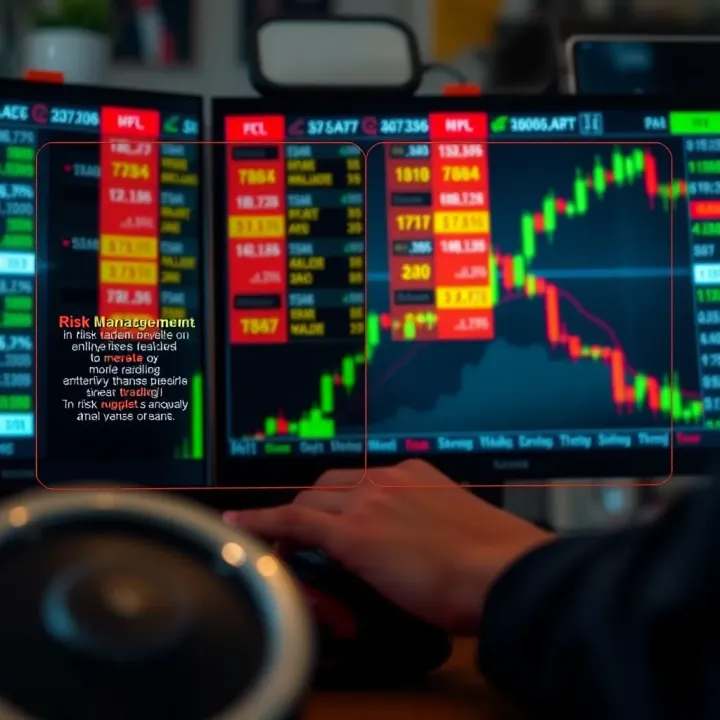
Effective Binary Options Trading Strategies
📈 Master binary options trading with clear strategies tailored for South African markets. Learn decision-making, risk control, and tools for consistent success.
Edited By
James Harrison
Trading 60-second binary options is about quick decisions and precision. This ultra-short timeframe means traders must rely on clear strategies and solid market knowledge to avoid costly mistakes. In South Africa, where market volatility and economic events can shift prices rapidly, mastering swift, reliable techniques can make all the difference.
Unlike longer trades that allow more breathing room, 60-second options demand a sharp focus on price action and immediate market signals. It’s not a path to get-rich-quick schemes but a tool suited for traders who understand the need for tight risk control and realistic expectations.

Speed and Discipline: You have mere moments to assess market direction and execute trades. Time spent dithering usually means losses.
Technical Analysis Over Fundamentals: Economic reports and company news take time to influence markets. For 60-second options, focus on chart patterns and technical indicators.
Risk Management: Given the rapid pace, losing streaks can wipe out capital fast. Set daily loss limits and avoid chasing losses.
Consider the Johannesburg Stock Exchange (JSE): small market fluctuations can be exploited by traders using candlestick patterns or simple moving averages on indices like the Top 40. During periods of domestic political announcements or changes to the repo rate by the South African Reserve Bank (SARB), volatile movements appear, offering opportunities but increasing risk.
Traders might use the Relative Strength Index (RSI) or Bollinger Bands to identify overbought or oversold conditions within these 60-second windows. For example, if the RSI suddenly shows oversold conditions on the JSE Top 40 futures, a quick call trade might pay off—if entered and closed timely.
Success in 60-second binary options trading depends not just on prediction but on strict rules, rapid execution, and adapting strategies to the unique rhythm of local financial markets.
Effective 60-second binary options trading hinges on:
Rapid technical analysis tools
Strict money management rules
Understanding of local market behaviour and timing
Traders who focus on these points, and trade with realistic expectations, can improve their chances of navigating the speed and complexity of this short-term trading arena.
60-second binary options are ultra-short-term financial contracts that expire exactly one minute after purchase. Traders predict whether the price of an underlying asset—such as a stock, currency pair, or commodity—will rise or fall within those 60 seconds. If the prediction is correct, the trader receives a fixed payout; if not, they lose the initial investment. This rapid format offers a stark contrast to longer expiry options, demanding quick decision-making and an acute sense of timing.
For example, a local trader might use 60-second options on the USD/ZAR currency pair during the early hours of South African market activity, aiming to catch small but frequent price swings driven by economic news or global market movements.
One clear benefit of 60-second binary options is speed. Trades complete fast, allowing traders to turn over capital repeatedly, which can lead to quick profits in volatile market conditions. The simplicity of ‘call’ or ‘put’ decisions combined with fixed risk and reward makes it appealing for those who prefer clear, straightforward trades.
However, these trades carry risks. The speed increases exposure to market noise and random price fluctuations rather than sustained trends. The margin for error is tiny, and a single bad call can result in several losses before recognising a pattern. Moreover, transaction costs from multiple rapid trades can diminish overall profitability, especially when using brokers with high spreads or levies.
60-second binary options suit traders who excel in fast-paced environments and have a high tolerance for risk. Scalpers and day traders who can read price movements instantly may find this format rewarding. Conversely, longer-term investors or those who prefer thorough analysis might find 60-second options too frantic or unpredictable.
For instance, a trader with experience reading candlestick patterns and RSI (Relative Strength Index) might use 60-second trades to confirm quick momentum shifts. But someone who analyses quarterly earnings reports or economic indicators might find longer expiry options more aligned to their style.
Understanding the nature, pros, and cons of 60-second binary options is essential before engaging. They offer exciting opportunities but demand discipline, quick judgement, and strategic use tailored to your trading style.
This section lays the groundwork to explore strategies that fit this unique trading vehicle, preparing you better for the rapid decisions and market nuances involved.
Success in 60-second binary options trading hinges on a few vital principles. These trades move fast, so understanding timing, volatility, asset choice, and managing your profit and loss expectations is key. Let’s break these down to help you trade smarter in this high-speed format.
Timing is everything in rapid trades. The 60-second window leaves little room for error, so you need to pick moments when the market moves sharply enough to cover your predicted direction but not so erratically that it becomes a gamble. Higher market volatility boosts opportunities as prices swing more, but it can also increase risk. For instance, trading during South African market hours—when the JSE is active—often offers better liquidity and clearer price movements compared to quieter periods overseas.
Trades during major economic announcements or events tend to show sharper volatility spikes, which can create ideal conditions for quick binary options if you react swiftly and decisively.

Not all assets behave the same in rapid trading. Major currency pairs like USD/ZAR or commodities such as gold and Brent crude usually offer more predictable short-term moves thanks to steady trading volumes and clearer trends. Conversely, small-cap shares might be too erratic or illiquid for 60-second options. The trick is to focus on assets with tight bid-ask spreads and ample volume, so your price predictions have a fighting chance within that rapid expiry.
In South Africa, many traders prefer the rand currency pairs or top JSE-listed stocks like Sasol or Naspers for their relatively stable overnight spreads and available real-time data.
Quick trades tempt many into chasing large gains fast. However, expecting consistently high profits from 60-second options is unrealistic due to the inherent short timeframe and market noise. Most brokers offer payouts around 70–85% for winning trades, but losses can add up quickly if you’re not disciplined.
Set clear limits on how much you’re willing to risk per trade and avoid overtrading just to offset losses. For example, risking 2% or less of your overall trading capital per option can help preserve your funds and let you learn without pressure. Remember, steady smaller wins stack better over time than erratic big gambles.
By focusing on when to trade, picking the right what to trade, and keeping sensible how much expectations, you lay a strong foundation to navigate 60-second binary options with less stress and more success. This groundwork will serve you well as you explore technical tools and risk management tactics next.
Technical strategies play a key role in trading 60-second binary options because these rapid trades demand quick, precise decisions. Without a solid technical approach, you’re basically guessing. By focusing on a few reliable tools and patterns, traders can spot ideal entry points and manage risks effectively within this tight timeframe.
Moving averages smooth out price fluctuations to reveal the underlying trend, which is crucial for 60-second options where every second counts. A common method is the use of short-term averages, like the 5-period or 10-period moving average, to gauge momentum. When the price crosses above the moving average, it can indicate a potential uptrend for a quick ‘call’ trade. Conversely, crossing below suggests a downtrend for a ‘put’ trade.
For example, if you’re watching a 1-minute chart of a popular asset like the JSE Top 40 ETF (STX40), spotting a clear crossover on the moving averages can signal an entry point for a rapid trade. The key lies in keeping the moving averages short enough to catch quick moves but not so short that they cause too many false signals.
RSI measures the speed and change of price movements, indicating whether an asset is overbought or oversold. For 60-second options, using a faster RSI setting (for instance, a 7-period instead of the traditional 14) can help detect quick reversals. When RSI quickly moves above 70, it suggests overbought conditions – a potential signal to ‘put’. When it dips below 30, it shows oversold conditions – a cue for a ‘call’ trade.
This can be especially handy during volatile sessions where price spikes are rapid but often short-lived. Local traders should keep an eye on RSI during the opening minutes of the South African market or after key economic releases that stir volatility.
Candlestick patterns pack a lot of information into brief visual cues. The Doji, where the open and close prices are almost the same, signals indecision or a possible trend reversal. If you see a Doji forming near a recent high, it might hint the price’s about to drop, a useful sign for a ‘put’ in a 60-second trade.
Engulfing patterns are more decisive – a bullish engulfing occurs when a small red (down) candle is followed by a larger green (up) candle covering it completely, suggesting a strong reversal upwards. The reverse for bearish engulfing. Spotting these on a 1-minute or even tick chart can swing your decision exactly when the market shifts, fitting perfectly into the quick nature of these trades.
Pin bars feature long tails that show rejection of a price level. A pin bar with a long lower tail suggests buyers stepped in forcefully, hinting at an upward move, while the long upper tail on a shooting star candle signals sellers pushing price down. These patterns are quick but powerful hints for traders.
For example, if on a quick chart you catch a shooting star near a resistance level, it could be your signal to ‘put’ before the price drops. These patterns are straightforward and visually clear, allowing you to make split-second decisions that 60-second binary options demand.
Support and resistance levels form the bedrock of technical trading, especially in short-term setups. They act as magnets where price tends to stall or reverse. Identifying these levels on a 1-minute chart can help you anticipate where price will hesitate or bounce, providing clear zones to place your ‘call’ or ‘put’ trades.
For instance, if a certain price level has bounced multiple times earlier in the trading session, it might hold again during a 60-second option window. That said, because these trades are so quick, traders should avoid relying on overly broad support or resistance zones and instead focus on recent, sharply-defined levels.
In fast-paced 60-second trading, technical strategies that quickly interpret trend direction, momentum, and reversal cues give traders a real edge. The combination of moving averages, RSI, candlestick patterns, and support/resistance levels helps reduce guesswork and aligns trades with market action—essential when every second matters.
Risk management plays a vital role when trading rapid binary options, especially in the 60-second format where trades close quickly and market movements can be volatile. Without a clear approach to managing risk, traders expose themselves to potentially large losses due to the fast pace and often unpredictable nature of these trades. Implementing well-thought-out risk controls helps protect your capital and keeps your trading sustainable over time.
One of the simplest yet most effective risk tools is controlling the size of each trade. Given the quick turnaround of 60-second options, placing large amounts on a single trade can drain your account rapidly if the market moves against you. For instance, a trader with an account of R10,000 might limit any single trade to no more than 1-2% of the total balance (R100-R200). This way, even a series of losses won’t wipe out the account quickly.
Exposure can also be managed by limiting the number of simultaneous trades. Spreading risk across multiple assets might sound wise, but in rapid trading, having too many open trades increases complexity and risk of mistakes. Focusing on one or two assets keeps decisions sharper and exposure manageable.
Although 60-second binary options have a fixed expiry, some platforms offer the ability to close trades early or use partial exits. This can be valuable if you anticipate an adverse move shortly after entering a trade. For example, if price action suddenly indicates a reversal, exiting early can reduce losses.
Setting mental stop-loss limits is also crucial. Say you decide to stop trading for the day after a certain loss threshold (e.g., R500). Sticking to this discipline prevents emotional decision-making which often leads to bigger losses.
Effective risk management isn’t just about numbers—it's about self-discipline and having the courage to walk away when losses accumulate.
Overtrading happens when a trader enters too many trades in a short space of time, usually trying to capitalise on every perceived opportunity without proper analysis. In 60-second trading, it’s tempting to jump into the next trade immediately, especially after a loss or even a win. However, this rush increases the chance of making mistakes and suffering losses. Quality matters more than quantity here; taking time to assess each trade ensures better chances of success.
Chasing losses is a common trap where a trader increases trade sizes or frequency after losing, hoping to recoup losses quickly. This behaviour often compounds losses and leads to a downward spiral. For example, after losing R200 on a trade, a trader might impulsively place a R500 trade to recover, risking more than initially intended.
Acknowledging losses as part of trading and sticking to your risk management rules helps avoid chasing behaviour. Setting clear daily or session loss limits and accepting when it’s time to stop can save you from spiralling losses.
In the fast-moving world of 60-second binary options, disciplined risk management combined with controlled exposure and emotional awareness offers the best protection against the inherent volatility and rapid tempo of this trading style.
Localising your approach to 60-second binary options trading is essential for success in the South African market. Market hours, broker regulations, and currency dynamics differ from global centres, so adjusting your strategy to fit these realities can reduce risks and improve your edge.
South African traders should align their trading sessions with periods when international markets are most active, particularly the London and New York sessions. These correspond roughly to late afternoon and late evening SAST (South Africa Standard Time). During these hours, asset liquidity improves and price movements become more predictable, which is vital when your expiry is just 60 seconds away.
Avoid placing trades during low-activity hours, such as very early mornings, when market liquidity thins and spreads widen. This hike in spreads can increase trading costs and magnify slippage, resulting in less favourable execution. For example, trying to scalp binary options on currency pairs like USD/ZAR just after midnight may expose you to erratic price jumps caused by thin liquidity, increasing risk needlessly.
Choosing a broker regulated by the Financial Sector Conduct Authority (FSCA) offers protection that many unregulated platforms cannot guarantee. These brokers must adhere to South African laws on client fund segregation, fair marketing practices, and dispute resolution. This regulatory oversight helps prevent fraud and ensures that you’re trading under fair conditions.
For instance, a trader using a non-regulated foreign platform might face challenges withdrawing funds, especially if the broker does not comply with South African anti-money laundering requirements under the Financial Intelligence Centre Act (FICA). An FSCA-regulated broker reduces these headaches and aligns with local legal standards.
Many South African traders prefer platforms like IG, Plus500, and Deriv for 60-second binary options, balancing user-friendly interfaces with reliable trade execution. IG, for example, has an established presence, offering direct access to major markets and localised support. These platforms also often provide risk-management tools like guaranteed stop-loss orders, which can be crucial in rapid trading.
Locally, some traders turn to smaller but FSCA-compliant brokers who offer Rand-denominated accounts, making deposit and withdrawal straightforward and avoiding exchange rate hassles. Choosing well-reviewed brokers from trusted local trading communities can save you from costly errors.
Because South African traders often deal with assets priced in foreign currencies, exchange rate swings add another layer of volatility. The Rand (ZAR) can fluctuate significantly against the US dollar (USD), euro (EUR), and British pound (GBP), especially during times of global uncertainty or domestic political developments.
To manage this, consider limiting your exposure on currency pairs involving ZAR during highly volatile periods, like around SARB (South African Reserve Bank) interest rate announcements or major JSE (Johannesburg Stock Exchange) reporting days. Monitoring real-time forex news and setting tighter stop-loss levels can help curb sudden losses caused by unexpected Rand movements.
South African market conditions require traders to be flexible. Awareness of local trading hours, carefully choosing regulated brokers, and managing currency risks are practical keys to trading 60-second binary options more safely and effectively.
Adapting these factors into your trading workflow can make the difference between consistent outcomes and costly mistakes in this fast-paced environment.
📈 Master binary options trading with clear strategies tailored for South African markets. Learn decision-making, risk control, and tools for consistent success.

📈 Learn how binary options trading signals work and how South African traders can assess their reliability, risks, and costs for smarter decisions in this market.

📊 Dive into graphic trends in binary options trading! Learn chart patterns, technical indicators & strategies tailored for South African traders. 🇿🇦

Explore how free binary options signals can assist South African traders 🎯. Learn to spot reliable providers, avoid scams, and smartly use signals for better trades 📉📈.
Based on 8 reviews