
Understanding Binary Code: The Role of 17
📊 Learn how the number 17 converts to binary code and why it matters in computing, digital systems, and everyday tech 🇿🇦, explained clearly for South African readers.
Edited By
Ethan Clarke
Binary code forms the backbone of digital communication, encoding text and data into sequences of zeroes and ones. When it comes to expressing something personal like the phrase 'I love you', this code translates those words into a series of bits that computers can store, transmit, and interpret.
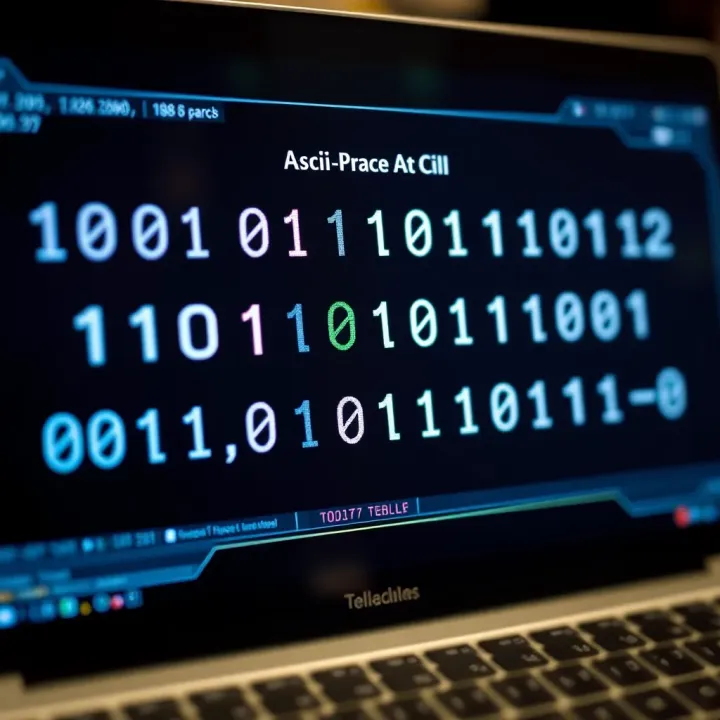
Understanding how 'I love you' converts into binary involves first accepting that computers don't deal with letters or emotions—they deal with numbers. Each character in the phrase corresponds to a numerical value, which is then represented in binary. The most widely used standard for this is ASCII (American Standard Code for Information Interchange), which assigns a specific 7- or 8-bit binary number to letters, digits, and symbols.
For example, the capital letter 'I' is assigned the number 73 in ASCII, which translates to 01001001 in binary. Spaces and lowercase letters follow with their own unique binary codes. These sequences combine to fully encode the phrase. Beyond ASCII, Unicode extends this system to cover many more characters from international languages and special symbols, ensuring compatibility across different devices and platforms.
Computers process text at the binary level, making ASCII and Unicode essential for consistent data encoding and decoding worldwide.
From a practical perspective, knowing how to encode and decode phrases like 'I love you' in binary has applications beyond curiosity. Traders and investors dealing with encrypted messaging or secure communication in tech-driven environments might encounter such encoding. Additionally, creative uses, such as embedding secret messages or programming customised alerts, rely on these fundamentals.
In short, binary encoding transforms human-readable language into a digital format computers understand. This is invaluable for transmitting messages across networks reliably and securely, especially in an era where digital interactions dominate.
I: 01001001
(space): 00100000
l: 01101100
o: 01101111
v: 01110110
e: 01100101
(space): 00100000
y: 01111001
o: 01101111
u: 01110101
Understanding this sequence gives you insight into how simple phrases convert into the foundation of all digital text communication.
Understanding how binary code works and how it represents text is essential when decoding messages like 'I love you' into digital form. Binary code is the foundation of all computer processing, turning information into a series of 0s and 1s that machines can interpret. This section breaks down the core concepts behind binary and how it’s used to encode the text we recognize.
The binary system is a numeric method that uses only two digits: 0 and 1. Unlike the decimal system we use daily—which has ten digits (0–9)—binary is base-2. This simplicity suits digital electronics because their circuits have two stable states, corresponding to these digits, making binary a natural choice for computers.
In practice, representing data with binary means each 0 or 1 is a bit, the smallest piece of digital information. For instance, the combination "101" represents the decimal number 5. Every form of digital data—text, images, sound—is stored by strings of bits.
Computers process everything in this way because their hardware components are switches that are either on or off. These states translate to binary digits, enabling computers to perform calculations, run programmes, and store anything from financial data to messages.
When it comes to text, computers don’t understand letters the way we do. Instead, they rely on standards like ASCII (American Standard Code for Information Interchange) and Unicode. These assign unique numerical values to characters—letters, numbers, symbols—which are then translated into binary.
ASCII was an early system that uses 7 bits to encode up to 128 characters, enough for basic English letters and symbols. Unicode expands this dramatically to cover characters from nearly every written language, allowing global communication.
The conversion process starts when you type a character; the computer looks up its assigned number in the encoding standard. For example, capital “I” in ASCII is 73. Next, this number is translated into binary—73 becomes 01001001. The computer stores or transmits this binary sequence, which can be reversed back into the character.
Without these encoding standards, exchanging text across devices and programmes would be chaotic and prone to errors. Whether it's sending an email or storing a document, accurate encoding ensures messages retain their meaning.
Understanding this chain from text to binary and back clarifies why digital messages like 'I love you' can smoothly exist, even in the simplest 0s and 1s. This knowledge also helps in spotting issues when data gets corrupted or misinterpreted, which is vital in fields handling sensitive financial or communication data.
Binary code uses only 0 and 1 because digital circuits correspond naturally to these states.
ASCII and Unicode serve as essential bridges turning text into numbers and then binary.
Every character you see on screen starts as a binary number behind the scenes.
These basics set the stage for exploring how 'I Love You' is transformed into binary and what that means in both technical and cultural contexts.
Translating the phrase 'I love you' into binary code goes beyond a neat tech trick; it demonstrates how words we speak every day become tangible to computers. For traders, investors, and financial analysts who increasingly rely on digital platforms and coded communication, understanding how text converts into binary provides insights into data integrity and transmission reliability. If you can picture the phrase broken into its smallest digital components, you grasp how information moves in systems underpinning everything from stock trading apps to secured banking messages.
The American Standard Code for Information Interchange (ASCII) assigns each character a unique number between 0 and 127. For 'I love you', each letter — including spaces — converts into an ASCII decimal value; for instance, 'I' corresponds to 73, while the space character is 32. These decimal values act like a universal language for computers, ensuring accurate interpretation across different machines and systems.
Once you know the ASCII values, the next step is turning these decimals into binary digits, specifically 8-bit sequences. For example, the letter 'I' (decimal 73) translates to 01001001 in binary. This step-by-step conversion involves dividing the decimal by 2 repeatedly and tracking remainders to build the binary pattern — a practical method if you ever need to verify conversions manually or troubleshoot simple data communication issues.
ASCII sufficiently encodes basic English characters but falls short with diverse symbols or languages featuring accented letters, like Afrikaans or isiZulu words. That's where Unicode steps in, accommodating a vast range of characters worldwide — a vital tool in a multicultural society like South Africa's. When communicating complex texts or including emojis in digital correspondence, Unicode ensures those characters are correctly represented without data loss.
Unicode expands encoding from 7-bit to 8, 16, or even 32 bits, depending on the format (UTF-8, UTF-16, UTF-32). This change means each character may have a longer binary code, potentially increasing data size but enabling global language compatibility. Traders using international financial platforms or reports in multiple languages benefit from Unicode's flexibility, preventing errors that could arise from incompatible character encoding.
Understanding these encoding methods helps you appreciate how everyday phrases like 'I love you' transition into binary, revealing the foundations of digital communication essential in today's data-driven industries.
Binary code, beyond being a foundational element for computing, offers interesting ways to convey messages that go beyond traditional text. For professionals like traders and analysts, understanding how binary encodes information can provide new perspectives on data transmission security and subtle digital communication. Using binary opens doors to creative and often private exchanges, adding a layer of technical intrigue to everyday messages.
Secret messages encoded in binary rest on converting text into strings of zeros and ones, which then require specific knowledge to decode. For example, the phrase "I love you" translated into ASCII binary form appears as a series of eight-bit patterns. These can be embedded in digital files, emails, or even in the metadata of an image to create hidden notes unnoticed by casual observers.
In practical terms, binary secret codes help protect sensitive information in digital communication. South African businesses working with confidential data might use basic cryptographic techniques that start with binary encoding before applying encryption. This ensures the message isn't readily readable even if intercepted, helping avoid leaks in sensitive deals or contract discussions.
Binary code has found its way into gifts, cards, and digital art, making it popular for expressing affection in a tech-savvy style. For instance, a greeting card printed with the binary form of "I love you" feels personal and geeky at once, appealing to those in the tech industry or with a fascination for code. Digital artists sometimes incorporate binary sequences into their works, blending modern technology with traditional designs.
On the cultural side, binary language shows up in movies, memes, and social media, adding a fun twist to how emotion and affection are portrayed. In South African tech circles, using binary in pop culture references signals an insider knowledge of computing basics while simultaneously offering a quirky way to share feelings. It reflects how digital communication influences social interactions and shapes new forms of expression.
Using binary to express messages blends practical security with a creative edge, connecting technical understanding with human emotion in unique ways.
In summary, whether for privacy or playful expression, binary code's role in messaging continues to evolve. Traders and analysts familiar with binary might appreciate both its practical security applications and its unexpected place in cultural quirks and personal communication.
Using the right tools is key when working with binary encoding, especially if you want to express something as simple yet profound as 'I love you' in binary. Efficient tools help save time, reduce errors, and allow you to focus on the message's meaning rather than getting stuck in technical details. For anyone involved in tech or trading sectors, where precision matters, having reliable binary encoding resources can aid communication and data representation.
There are several online binary translators available that convert text to binary instantly. Websites like RapidTables and BinaryTranslator offer straightforward interfaces where you just type your text, and the tool spits out the binary code. These tools tend to support ASCII and sometimes Unicode, which covers most common text. For mobile users, apps like "Binary Converter" on Android or iOS also come in handy when you're on the move.
These platforms are practical because they remove the mathematical guesswork and are especially useful if you don’t have a programming background. If you want to embed a secret love note in binary or understand binary codes in trading software, these apps and sites are the fastest route.
To get the most out of online binary converters, start by verifying the encoding type—ASCII or Unicode—for your specific needs. ASCII works fine for basic English phrases like 'I love you', but Unicode is needed if you include characters outside this range, such as symbols or emojis.
Also, double-check the output for accuracy before using it, especially if the binary code is part of a professional project or communication. Save or copy the binary results into a secure format to avoid losing your message. Finally, understand that these tools are aids; knowing the fundamentals of binary helps interpret or troubleshoot if the output seems off.
Manual conversion boils down to knowing place values in the binary system, which uses base two—each digit represents 2 raised to an exponent based on its position. For example, the decimal number 65 corresponds to binary 01000001, where 64 (2^6) plus 1 (2^0) equals 65. This is exactly how the letter 'A' is encoded using ASCII.
Understanding these basics enables you to convert character codes to binary without any software—helpful in situations where digital tools aren't accessible or to deepen your grasp of how computers process text.
Start with knowing the ASCII value of each character in your phrase. Write down the decimal numbers, then convert each to an 8-bit binary number using repeated division by two or by subtracting place values.
Keep a table handy for powers of two (128, 64, 32, 16, 8, 4, 2, 1) to speed up this process. Although this method is slower than using online tools, it's a hands-on way to appreciate the behind-the-scenes data coding. Traders and analysts fascinated by data structures will find this exercise rewarding, especially when dealing with low-level data encoding or debugging.
Knowing how to encode text to binary both manually and with online tools equips you with the flexibility to handle data representation in various real-world scenarios. Whether for digital communication or learning purposes, this skill can bridge the gap between language and machine logic.
Binary code may seem like dry, technical stuff, but it holds significant cultural and technological weight. It's the backbone of all digital communication and computing, making it indispensable in today’s fast-moving tech landscape. Plus, how people use binary to express ideas—like saying "I love you"—reflects the blending of technology with everyday life and emotions.
Binary is the language that computers understand, using just two digits—0 and 1—to store and process data. Every file, app, or web page you open breaks down into binary sequences. This simplicity makes binary efficient and reliable for data storage and transmission, allowing devices to handle vast amounts of information accurately. For traders and investors, recognising binary’s role helps appreciate why technology infrastructure matters when analysing companies involved in software, hardware, or data centres.
At the same time, programming languages—like Python, C++, or Java—rely heavily on binary at their core. While programmers write in more readable code, their commands eventually translate into binary instructions that CPUs execute. This layered approach allows flexibility for developers while keeping the machine-level processes efficient. For financial analysts, understanding this helps in assessing tech firms’ operational strengths or software scalability.
Binary code has grown beyond technical use and taken on symbolic meaning. Saying "I love you" in binary portrays affection with a digital twist, appealing to those in the tech community or anyone fascinated by coding culture. It shows how technology influences communication styles—turning zeros and ones into personal messages. In an era dominated by digital interaction, this binary love expression is both playful and meaningful.
South African tech communities have embraced this blend of culture and technology, especially among young developers and tech enthusiasts. For example, during hackathons or coding workshops in Gauteng and Cape Town, it’s common to see binary-coded messages on T-shirts or event swag, symbolising shared passion. Such expressions reflect how tech skills and cultural identity merge, reinforcing community bonds. This also highlights a growing trend: technology doesn't just power business—it shapes social interactions and local identity.
Binary code is more than a technical tool; it connects technology with human expression, symbolising how digital and cultural worlds intersect.
Understanding binary’s technological importance alongside its cultural impact gives a fuller picture of why phrases like "I love you" in this code matter today, especially for those navigating South Africa’s vibrant tech and finance landscapes.
📊 Learn how the number 17 converts to binary code and why it matters in computing, digital systems, and everyday tech 🇿🇦, explained clearly for South African readers.
🔍 Explore Gray code: its unique binary system where adjacent numbers differ by one bit. Learn clear steps to convert Gray code to binary with examples and tips.

🎵 Explore binary form in music: two contrasting sections, its key features, variations and why it still shapes classical and modern tunes today.
🔢 Learn how to convert binary code into ASCII characters for clear digital communication. Get step-by-step methods, practical tips, and real-life applications here. 💻
Based on 9 reviews