
Key Elements of a Solid Risk Management Plan
📋 Learn the essential components of an effective risk management plan to identify, assess, and tackle risks, keeping your business safe and resilient.
Edited By
Ethan Wells
A risk management team is critical to protecting a business from unpredictable challenges. In South Africa's volatile economic and regulatory climate, such teams play a hands-on role in spotting potential risks early and coming up with plans to handle them effectively.
Typically, a risk management team is made up of specialists covering a range of skills—finance, legal, operations, and sometimes IT security. This mix of expertise is what helps the team see risks from different angles, whether it’s currency fluctuations affecting export earnings or compliance with new SARS tax rules.

Clear roles and responsibilities define the team’s work. For example, the risk analyst focuses on evaluating likelihoods and impacts of different risks, while the risk officer may take charge of implementing controls and monitoring ongoing risk exposure. Meanwhile, leadership, such as a risk manager or chief risk officer, ensures coordination and drives the risk strategy across the organisation.
Successful risk management hinges on solid communication. Teams need to share insights, escalate concerns swiftly, and keep stakeholders engaged. An open flow of information helps avoid surprises like sudden loadshedding or disruptive municipal service interruptions.
South African companies often face sector-specific risks—mining companies deal with labour unrest and safety risks, while financial institutions handle credit defaults and cyber threats. A well-rounded team tailors risk plans to such realities, blending vigilance with practical solutions.
In short, the key components of a risk management team involve a diversity of skills, clear accountability, strong leadership, and continuous communication. When these come together, businesses are better prepared to respond flexibly and protect their bottom line amid uncertainties.
Every organisation needs a well-defined risk management team to steer through uncertainties and protect its objectives. Setting a clear purpose helps the team know exactly what risks to focus on—from financial volatility to operational hiccups—and how they contribute to the broader business goals. For example, a Johannesburg-based investment firm might prioritise market fluctuations and regulatory compliance, guiding their risk team to direct efforts on monitoring JSE trends and preparing for policy changes by SARS.
Structuring the team effectively means matching expertise with responsibilities. Without clear roles, overlaps can cause confusion or gaps in risk coverage. In practice, this ensures that the risk manager maintains oversight, analysts crunch data for emerging threats, while compliance officers keep the business on the right side of legislation like the Financial Sector Conduct Authority (FSCA) rules.
Risk management acts as the organisation's early-warning system and shield against disruptions. It identifies uncertainties before they bite, assesses their potential impact, and helps craft responses that minimise losses or capitalise on opportunities. In a South African context, this includes analysing risks such as Eskom loadshedding or exchange rate swings on imports and exports.
Consider a retail chain in Cape Town that faces supply disruptions from frequent transport strikes. The risk team’s role would involve assessing alternative supply routes, liaising with logistics providers, and monitoring political developments to adjust plans swiftly. This proactive approach saves costs and keeps shelves stocked—a tangible benefit that customers notice.
Effective risk management is not just about avoiding problems but creating resilience and business agility in a fast-changing environment.
A risk management team is a vital piece in the corporate governance puzzle. It provides structured oversight and accountability, ensuring that leadership makes informed decisions backed by risk insights. They report directly to the risk committee or board, delivering transparent updates on risk exposures and mitigation progress.
For example, a financial services group in Durban might integrate its risk team into governance frameworks by holding quarterly risk reviews with the board. This keeps directors aware of credit risks, cyber threats, and regulatory changes, enabling swift policy adjustments. Without this link, decision-makers would lack the necessary perspective, potentially risking non-compliance or financial damage.
In short, the team's purpose and structure are what enable them to operate efficiently within the organisation and governance framework, delivering clarity, confidence, and protection against the unknown.
A risk management team relies on a mix of specialised roles, each contributing unique skills to identify, assess, and mitigate risks effectively. Having the right expertise in place helps businesses, particularly in South Africa's dynamic market environment, stay prepared for financial uncertainties, regulatory changes, and operational hiccups.
The risk manager is the linchpin of the team, responsible for setting the overall risk strategy and ensuring it aligns with organisational goals. They steer the team’s focus towards priority risks and coordinate risk controls. For example, a risk manager at a Johannesburg-based investment firm would oversee how geopolitical developments impact portfolio risk and advise on hedging approaches. Their role involves constant liaison with executives, underlining the importance of risk at the strategic decision-making level.
Risk analysts dig into data to uncover potential threats and quantify their impact. They use tools ranging from statistical models to scenario analyses to generate risk reports. In South African contexts, analysts could assess currency volatility affecting import costs or the impact of loadshedding on supply chains. Their insights enable timely adjustments and support informed risk appetite setting.
Compliance officers keep the team on the right side of laws and regulations. With South Africa’s evolving financial and corporate legislation, such as amendments to FICA (Financial Intelligence Centre Act) or POPIA (Protection of Personal Information Act), these officers ensure policies are updated and followed. They conduct audits, advise on regulatory changes, and minimise risks of non-compliance penalties, which can be costly and damage reputation.
Operational risk specialists focus on routine processes and controls to prevent disruptions. For instance, banking operations amidst regular cellphone network outages require operational risk input to maintain transaction reliability. They analyse internal weaknesses and recommend process improvements to keep business running smoothly.
Each role complements the others, forming a cohesive team that marries strategy, analysis, legal adherence, and operational reliability. This integrated expertise forms the backbone of resilient risk management in South African businesses.
By understanding these core roles and their practical applications, traders, investors, and analysts can better appreciate the layers of protection and insight that safeguard assets and improve decision-making.
Supporting roles and cross-functional contributors form the backbone of an effective risk management team, often providing specialised expertise that complements core risk functions. They ensure risk is assessed from various angles, strengthening the organisation’s ability to foresee and manage diverse threats. In South African businesses, where operational complexities and regulatory demands constantly shift, these collaborators bring vital perspectives and practical insights that might otherwise be overlooked.
Internal auditors serve as impartial watchdogs within the organisation, conducting independent reviews to verify that risk controls are working as intended. Unlike those directly managing risk, they offer fresh eyes on processes, identifying gaps or inefficiencies unnoticed by day-to-day operators. For example, an internal auditor might uncover weaknesses in procurement that expose the company to fraud or compliance risks – a common challenge in sectors like manufacturing or retail. Their findings support management in refining risk frameworks, while also reassuring external stakeholders such as auditors, regulators, and board members.
In a digital age, IT security experts are crucial in defending the organisation’s data and systems from cyber threats. With South Africa seeing a rise in cybercrime incidents, these specialists constantly monitor networks, respond to breaches, and implement defensive technologies. For instance, banks deploying multi-factor authentication and encryption help protect clients’ financial data against hacking attempts. Their role extends to educating staff on phishing scams or unsafe online practices that could expose internal systems to malware. Neglecting IT security often leads to financial and reputational damage, making these contributors indispensable.
Finance professionals track and analyse monetary risks that could impact an organisation’s bottom line. They assess credit, liquidity, and market risks, often linking financial data to broader business operations. For example, during exchange rate volatility, finance teams advise on hedging strategies to protect Rand-based investments or payments. Their expertise allows the risk management team to quantify potential losses and align mitigation strategies with fiscal realities. Additionally, finance input ensures compliance with SARB regulations and internal reporting accuracy, bolstering overall governance.
Human Resources (HR) plays a pivotal role in managing risks tied to personnel, such as talent shortages, labour disputes, and compliance with employment law. For South African organisations, navigating the complexities of labour legislation, union negotiations, and affirmative action policies requires nuanced understanding. HR contributes by designing policies that promote workplace safety, employee wellbeing, and diversity, thereby minimising risks of turnover or legal disputes. In volatile sectors, such as mining or manufacturing, HR’s role in training and enforcing safety standards directly reduces operational hazards.
Cross-functional collaboration enriches risk management beyond technical assessments, embedding it into the fabric of everyday business decisions.
Together, these supporting roles form a comprehensive risk detection and control system. Their involvement ensures risks are viewed holistically, aligning with South Africa’s dynamic economic landscape and regulatory environment. Businesses that integrate these diverse contributions benefit from heightened resilience and more informed decision-making across all levels.
Strong leadership and clear decision-making are the backbone of an effective risk management team. Without a focused guiding force, even the best analysts and specialists can struggle to coordinate efforts or respond quickly when risks materialise. In South African businesses, where external factors like loadshedding or regulatory changes can disrupt operations unexpectedly, decisive leadership helps keep the team aligned and proactive.
Having a dedicated risk committee within an organisation ensures risks receive focused attention from senior management. This committee typically comprises members with diverse expertise, including the risk manager, finance head, compliance officer, and sometimes external advisors. They meet regularly to review risk profiles, assess emerging threats, and recommend action plans. For example, a manufacturing firm might use its risk committee to monitor supplier stability amid currency fluctuations and advise procurement adjustments accordingly.
A risk committee elevates risk discussions above the operational level and integrates them into strategic decision-making. It also helps embed a risk-aware culture by holding management accountable for implementing risk controls. Without this dedicated body, risk processes tend to fragment, leading to gaps in oversight.
Clear communication channels between the risk team, executive management, and operational departments are vital. A well-defined reporting line allows timely escalation of significant risks and ensures accurate information flows freely. Consider a financial services firm where risk analysts spot suspicious transactions signalling potential fraud; they must quickly report this to compliance and senior management to prevent losses.
Regular reporting should include concise dashboards showing risk metrics, trends, and status updates. Avoid overwhelming executives with jargon or excessive detail. Instead, focus on highlighting risks that could impact financial performance or compliance. Transparency fosters trust and enables swift decisions.
Risk management cannot function in isolation. Close collaboration with executive management and the board anchors risk within the organisation's broader strategic context. Executives set priorities and allocate resources, while the board provides governance oversight. A constructive working relationship means risks are factored into business planning, and decisions balance opportunity with caution.
For instance, when a listed company anticipates volatile commodity prices, input from the risk team can inform hedging strategies discussed at the board level. Effective collaboration also ensures risk frameworks comply with South African legislation and align with B-BBEE requirements, which affect operational access and reputation.
Leadership and communication in risk teams translate risk insights into actions that protect and create value. Without them, critical issues can slip through, undermining business sustainability.
In short, solid leadership, clear reporting, and active engagement with executives and the board reinforce a risk management team's ability to safeguard the organisation against uncertainties, particularly in South Africa’s dynamic business landscape.
Effective risk management requires more than just people; it depends heavily on the tools and processes that the team uses daily. A risk management team armed with the right methods and systems can identify hazards early, assess their impact accurately, and respond promptly to ensure the organisation stays on track. This support infrastructure is especially vital in fast-moving sectors like finance and investment, where market volatility and regulatory demands constantly evolve.
Identifying potential threats before they materialise is the backbone of risk management. Teams often use a blend of qualitative and quantitative techniques to pinpoint risks. For example, risk matrices are common tools that help visualise the severity and likelihood of risks side by side, making it easier to prioritise which ones need urgent attention. On the quantitative side, statistical models might analyse market data trends or credit risk scores, enabling teams to estimate financial exposure with more precision.
In the South African context, where economic, regulatory, and political variables can shift rapidly, scenario analysis proves useful. This approach imagines different future conditions—like sudden changes in exchange rates or loadshedding interruptions—to assess how resilient investments or portfolios might be.
Once risks are identified and assessed, continuous monitoring is key. Automated dashboards that pull real-time data can help teams spot warning signs before they escalate. Systems that integrate financial feeds, regulatory alerts, and operational indicators offer a comprehensive risk snapshot. For instance, a financial analyst tracking share market fluctuations benefits from platforms like Bloomberg Terminal or Thomson Reuters Eikon, which provide instant access to news and analytics.
Reporting systems also play a critical role. They ensure that insights reach decision-makers clearly and regularly. Structured reports, combined with visual charts, allow board members and executives to understand risk positions quickly without getting bogged down in technical jargon. This timely communication supports proactive decisions rather than reactive scrambling.
No risk strategy is complete without solid plans to handle crises and keep operations running during disruption. Business continuity plans (BCP) outline steps to follow if key business functions face interruption—be it due to cyber-attacks, supply chain failures, or severe weather events as increasingly seen with climate change impacts in South Africa.
A robust crisis response involves defined roles, clear communication channels, and frequent simulation exercises to keep the team sharp. For example, a Johannesburg-based investment firm might run quarterly drills simulating a cyber breach, ensuring that everyone from IT security to compliance knows their responsibility and response time targets. Having digital backups and alternative trading platforms is also part of the practical side of continuity.
A well-equipped risk management team with precise tools and tested processes doesn't just react to threats—it builds resilience that can protect earnings, reputation, and stakeholder confidence even in tough times.
Together, risk identification, monitoring, and crisis planning form a strong support framework that helps South African businesses steer through uncertainty confidently and strategically.
📋 Learn the essential components of an effective risk management plan to identify, assess, and tackle risks, keeping your business safe and resilient.
📊 Explore the core functions of risk management—identify, assess, control, monitor—to protect your business and aid smarter decisions in South Africa.
Explore effective risk management frameworks 📊 that help organisations in South Africa navigate challenges and boost decision-making with practical insights.
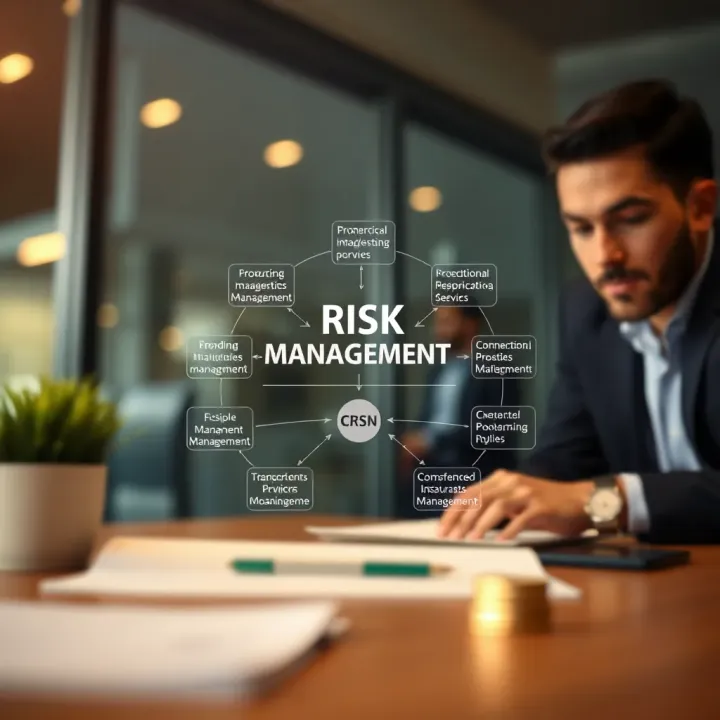
📊 Learn how effective risk management protects your business by identifying, assessing, and controlling risks for safer, smarter decisions in SA markets.
Based on 8 reviews