
Forex Trading Basics for South African Beginners
Ready to start forex trading in South Africa? Learn market basics, find reliable platforms, understand legal rules, and get tips to overcome beginner challenges 💹🌍
Edited By
Emily Hawthorne
Forex trading, or foreign exchange trading, involves buying and selling currencies to profit from changes in their value. Unlike the JSE or property markets, forex runs 24/5 across global financial hubs. South Africans can participate easily through online platforms offered by brokers like IG or EasyEquities.
The forex market handles trillions of rands daily, making it the world's largest financial market. It operates on currency pairs such as USD/ZAR or EUR/ZAR, where you speculate on whether one currency will strengthen or weaken against another. For example, if you believe the rand will improve against the US dollar, you would buy the USD/ZAR pair.
Keep in mind, forex trading carries significant risk. It's not a guaranteed way to make quick money, especially for beginners without solid strategies or risk management.
To trade effectively, understanding key terms such as 'pip' (the smallest price move in a currency pair), 'leverage' (borrowing capital to increase exposure), and 'spread' (difference between the buy and sell price) is essential. For instance, leverage might let you control R10,000 with just R1,000, but losses can pile up quickly if the market moves against you.
South African traders must also consider factors like the local regulatory environment and market hours influenced by time zones. Brokers authorised by the Financial Sector Conduct Authority (FSCA) provide a safer trading experience. Plus, understanding how Eskom loadshedding could disrupt your internet connection helps you prepare better.
For those starting out, practice on demo accounts to get familiar without risking real money. Start small, and develop a trading plan that includes clear entry and exit points, along with stop-loss limits to protect your capital.
This guide will cover basics and practical tips tailored for South Africans, helping you navigate forex trading safely and avoid costly mistakes.
Grasping how the forex market operates is key for anyone looking to trade currencies confidently. Knowing its structure, key players, and the way currencies are exchanged gives you a practical edge in making informed decisions and managing risk. This section breaks down those essentials, helping you appreciate the markets beyond just price charts.
Forex trading involves exchanging one currency for another, essentially buying one currency while selling another simultaneously. This can be compared to when you exchange rands for euros before travelling to Europe. However, forex trading happens on a much larger and continuous scale, involving currencies from all over the world. The rate at which you exchange currencies—their price—fluctuates constantly, influenced by economic events, interest rates, and market sentiment.
Unlike swapping cash for foreign notes for a holiday, forex trading aims to profit from these currency value changes. Traders might buy the US dollar expecting it to strengthen against the rand, so they can sell it later at a better price. The fluid nature of currency exchange means there is always something moving, which appeals to active traders seeking profit opportunities at any hour.
When comparing forex with other financial markets like stocks or bonds, its 24-hour operation stands out. While the JSE closes daily and only operates during business hours, forex moves around the clock thanks to trading centres spread across time zones. This means flexibility but also requires you to stay alert to market openings and news events worldwide.
The forex market is truly global, with major trading hubs in London, New York, Tokyo, and Sydney. These cities host peaks in activity aligned with their local business hours. For a trader in Johannesburg, this means the London session overlaps partially with local time, while the New York session starts later in the afternoon. Knowing these time overlaps helps you plan when to trade, as liquidity and volatility shift according to which centres are active.
Banks, brokers, and individual traders form the heart of the forex market. Banks make huge currency trades for clients, companies manage currency flows for imports and exports, while retail traders speculate on price movements. Brokers act as the middleman, offering platforms where you can place trades. In South Africa, brokers regulated by the Financial Sector Conduct Authority (FSCA) provide a safer environment compared to unregulated operators.
Understanding who moves the market and when ensures you are not trading blind. For instance, major announcements from the US Federal Reserve or the Reserve Bank of South Africa can cause sharp price swings as banks and funds restructure positions.
Together, these elements shape the way forex works for traders: constant shifts in currency values, a global network of participants, and diverse motivations behind trades. Without this foundation, it’s easy to miss the bigger picture and how your trades fit into the overall market rhythm.
Understanding the key terms and concepts in forex trading gives you a strong foundation to make informed decisions. Knowing how currency pairs work, what pips are, and how leverage impacts your trades helps you avoid common pitfalls and manage your risk properly. For South African traders, grasping these basics means you can navigate local platforms and regulations with more confidence.
When you trade forex, you’re always dealing with currency pairs. These pairs show the value of one currency compared to another. The major pairs are the most traded globally and include currencies like the US dollar (USD), euro (EUR), British pound (GBP), and Japanese yen (JPY). For example, EUR/USD represents how many US dollars one euro is worth. Majors tend to have tighter spreads and more liquidity, which often means lower transaction costs and easier execution.
Minor pairs involve currencies from major economies but exclude the US dollar, like EUR/GBP or AUD/NZD. These pairs are less liquid but still popular among traders. Then there are exotic pairs, such as USD/ZAR or USD/TRY, which mix a major currency with that of an emerging market. Exotic pairs usually come with wider spreads and more price swings, so they’re riskier but could offer bigger opportunities if you manage it well.
Understanding these classifications helps you pick pairs that suit your trading style. Beginners might want to stick to majors to start with, as they’re generally more stable and easier to follow.
Base and Quote Currencies come into play when looking at these pairs. The base currency is the first one listed (like the EUR in EUR/USD) and represents the currency you’re buying or selling. The quote currency (USD in this case) is what you use to value the base currency.
For example, if EUR/USD is 1.1500, it means one euro costs 1.15 US dollars. If you believe the euro will strengthen, you buy the pair; if you think it will weaken, you sell. Understanding which currency you're trading and how it relates to the other is key to deciding when to enter or exit a trade.
A pip is the smallest price move a currency pair can make based on market convention. It’s usually 0.0001 for most pairs, except those involving the Japanese yen, where it’s 0.01. For example, if USD/ZAR moves from 15.5000 to 15.5001, that’s one pip.
Pips are essential because they measure your profit or loss. If you bought USD/ZAR at 15.5000 and sold at 15.5100, you made 100 pips. Knowing how to calculate pips helps you assess trade results clearly.
Lot sizes refer to the volume you trade. A standard lot is 100,000 units of the base currency, a mini lot is 10,000 units, and a micro lot is 1,000 units. Trading a standard lot means a pip movement is worth more money compared to a micro lot. For example, with USD/ZAR, a pip in a standard lot might be worth roughly R10, while in a micro lot it will be R0.10. Smaller lots help beginners control risk by trading smaller amounts.
Leverage lets you control a large position with a small deposit. South African brokers commonly offer leverage ratios like 1:100 or 1:200. This means with R1,000 in your account, you could control R100,000 or R200,000 worth of currency.
While leverage can boost your profits, it also increases potential losses. If the market moves against your position, losses can quickly exceed your deposit. That’s why managing leverage and using stop losses is vital. Think of leverage as a double-edged sword – useful when handled carefully, but risky if misused.
Getting a good grasp of these terms early will give you a clearer picture of forex trading mechanics, making it easier to develop strategies and manage your funds without getting caught off guard.
Jumping into forex trading can feel overwhelming, but breaking it down into clear, practical steps helps you build confidence steadily. This section focuses on choosing the right broker, practising safely, and adopting basic strategies to get moving with a solid foundation.
When picking a forex broker, first check their registration with the Financial Sector Conduct Authority (FSCA). This local regulator ensures brokers comply with rules that protect traders from fraud and unfair practices. For example, FSCA-registered brokers keep client funds separate from their operational accounts, which means your money has an extra layer of security. Brokers who aren’t registered pose higher risks and may not follow proper safeguards.
Account options and trading platforms matter too. Many brokers in South Africa offer several account types tailored for beginners through to experienced traders. Typical accounts differ in minimum deposit, spread charges, and leverage limits, so picking one that fits your budget and risk appetite is essential. Platforms like MetaTrader 4 and 5 dominate, offering straightforward charting tools and order types. Some brokers also provide web-based or mobile apps, allowing you to manage trades on the go, which is practical given how hectic life can be.
Starting with a demo account lets you practise forex trading without risking real money. You trade in a simulated environment, using virtual cash to explore how currency pairs move and test strategies. This hands-on experience is invaluable for understanding order execution and platform navigation. For instance, South African traders might test how Rand pairs react during different market hours before going live.
Transitioning to a live account should be gradual. Begin with small trades to get used to real market emotions and execution differences. Avoid jumping in with large amounts straight away, as that often leads to mistakes. Build confidence and refine your approach while keeping losses small until you comfortably handle volatility and risk.
Simple technical approaches like moving averages help spot trends without complex setups. On the fundamental side, monitoring economic indicators such as South Africa’s interest rate decisions or GDP reports sheds light on currency movements. Combining these methods provides a practical way to form trade ideas without feeling bogged down.
Risk management should be your constant companion. Using stop-loss orders limits potential losses on each trade, while position sizing ensures no single trade threatens your entire capital. For example, risking just 1-2% of your trading balance on any trade is a solid rule of thumb. Practically, this controls emotional stress and keeps you in the game long-term.
Remember, forex trading is a marathon, not a sprint. Starting practically with reliable brokers, practising on demo accounts, and adopting simple strategies with solid risk controls prepares you well for the markets ahead.
Trading forex is a balancing act between potential profit and risk. Avoiding common pitfalls helps traders preserve their capital and sharpen decision-making skills, especially when the market can shift rapidly. Managing risks means protecting your investment from sudden losses and emotional swings, ensuring you can stick around long enough to learn and grow your strategy. This is particularly important for South African traders, facing local market quirks and currency fluctuations influenced by events like Eskom loadshedding or rand volatility.
Fear and greed often play tricks on forex traders. Fear might make you exit a trade too early, missing out on gains, or avoid trading altogether after a few losses. Greed can push you to hold onto losing positions, hoping for a rebound, or increase your stakes beyond what your plan allows. Both emotions cloud judgement, leading to impulsive decisions that hurt your wallet.
Staying disciplined counters these emotional swings. One practical method is setting a fixed daily loss limit — once hit, you stop trading for the day. This helps curb the urge to chase losses. Also, writing down your trading plan and following it strictly can prevent swaying from gut feelings. Mindfulness techniques, like taking deep breaths or short breaks after each trade, work wonders to reset your mindset.
Setting sensible stop losses and take profits is like putting guardrails on a winding mountain road — they protect you from sliding off. A stop loss limits the amount you’re ready to lose on a trade, locking in a maximum loss if the market moves against you. A take profit defines the price level where you secure your gains without waiting too long and risking a reversal.
For example, if you buy EUR/ZAR at R18.50 anticipating a rise but want to limit losses to R0.30, set your stop loss at R18.20. If your target is R19.00, place your take profit there. It’s crucial to base these levels on market analysis — like support and resistance points — rather than guesswork.
Capital protection becomes critical during the rand’s volatile swings or unexpected news events. Stop losses prevent one bad trade wiping out your account, while take profits help you lock in winnings steadily. Overtrading without these limits exposes you to wild fluctuations, which can be costly. Automated orders offered by brokers ensure these limits are enforced even if you aren’t watching the screen constantly.
Remember: No strategy guarantees profits, but managing risks boosts your chances of long-term success in forex trading.
By recognising emotional pitfalls and using risk management tools like stop losses and take profits, you keep your trading on steady ground — ready to respond to market moves without unnecessary losses.
Continuous learning is essential for anyone serious about forex trading. Markets shift quickly, influenced by local and global events, so staying updated helps you adapt and improve your trading skills. Whether you're a beginner or have some experience, tapping into the right resources keeps your strategies relevant and sharp.
Starting with the right educational materials gives you a solid foundation. Look for books written by respected traders that explain forex concepts clearly, such as Kathy Lien's Day Trading and Swing Trading the Currency Market. These offer practical insights rather than just theory.
In South Africa, it’s worth exploring local courses and workshops too, which often focus on challenges unique to our market, like the impact of Eskom loadshedding on trading hours or Rand volatility. Websites such as the Johannesburg Stock Exchange (JSE) and financial news portals like BusinessTech can provide relevant updates and analyses that resonate with South African traders.
Forums and online communities also make a difference. Platforms like the MyBroadband Forex Forum or dedicated Facebook groups for South African traders allow you to swap ideas and experiences. These communities help bridge the gap between textbook knowledge and real-world practice, offering support and practical tips that come from fellow traders dealing with the same market conditions.
Using the right tools can simplify complex decisions. Charting software like MetaTrader 4 or TradingView gives you visual data on price movements, helping identify trends and entry points. Economic calendars, which list upcoming events like SARB interest rate decisions or global GDP reports, are crucial; these events often trigger sharp market moves, so knowing when they’re due can help you prepare or avoid unnecessary risk.
Mobile trading platforms have become increasingly popular in South Africa, allowing you to trade wherever you are, even under the constraints of loadshedding or commuting. Apps from brokers like IG or EasyEquities offer reliable interfaces tailored to local users, featuring fast execution and access to forex pairs relevant in our region. These tools also often include educational content and alerts, making them handy both for learning and action.
Access to quality resources and tools is not a luxury but a necessity for solid forex trading. By combining local insights with proven global methods, you position yourself to trade smarter and navigate the twists the forex market throws out.
Ready to start forex trading in South Africa? Learn market basics, find reliable platforms, understand legal rules, and get tips to overcome beginner challenges 💹🌍
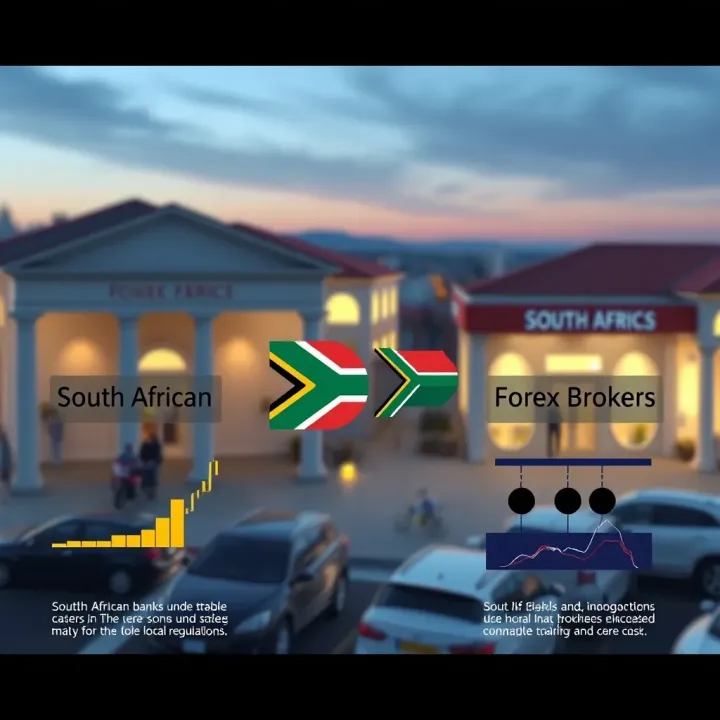
Discover which South African banks support forex trading 🇿🇦, how they interact with brokers, key rules you need to follow, and tips for smooth trading within local laws 💹.

📈 Learn the basics of forex trading in South Africa with clear tips on strategies, risk management, and using handy PDFs to start trading confidently today.

📉 Explore forex trading fundamentals from a South African perspective. Learn market dynamics, strategies & risk tips to trade with confidence.
Based on 10 reviews