
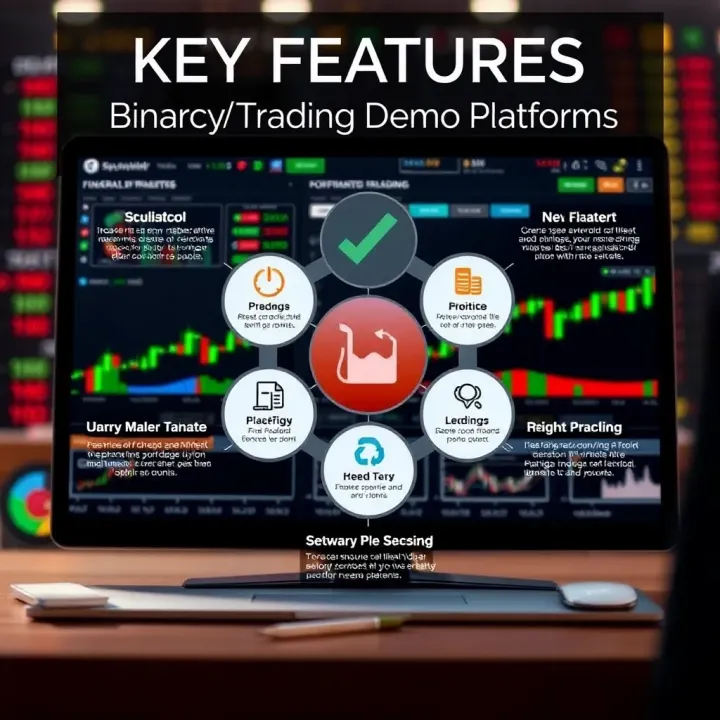
Understanding Free Binary Trading Demo Accounts
📊 Discover how free binary trading demo accounts let South African traders practise risk-free, learn key features, and pick the right platform effectively.
Edited By
Sophie Bennett
Binary options demo accounts serve as a risk-free environment where traders can learn and practise trading strategies using virtual money. These accounts mirror real-market conditions without any real financial exposure, making them ideal for newcomers and experienced traders wanting to test new tactics.

Trying out a demo account before trading with real cash helps build confidence. Imagine a novice trader from Durban experimenting with different expiration times for binary options contracts without losing R100 or more on a bad call. It’s a practical way to develop skills, understand price movements, and familiarise oneself with the trading platform.
The advantages extend beyond just beginners. Even seasoned traders in Johannesburg or Cape Town can use demo accounts to gauge the impact of sudden news events, like changes in Eskom's loadshedding schedule or shifts in commodity prices affecting Rand volatility.
Setting up typically requires only basic personal details and an email address. Most platforms offer a straightforward registration process – take BidXTrade or IQ Option as examples, popular choices that provide generous virtual balances (often upwards of R10,000 simulated funds).
Traders can expect:
Access to real-time market data
Ability to place various binary option types (e.g., one-touch, ladder, high/low)
Simulated profit and loss tracking
No deposit is necessary to start; this helps South African users avoid unnecessary risk. Demo accounts enable seamless experimentation with different asset classes, such as forex pairs (USD/ZAR), indices like the JSE All Share, or commodities including gold and platinum.
Demo accounts don’t fully replicate the psychological experience of real trading. Traders may take risks they wouldn’t dare with real funds. Also, some platforms limit demo usage to 30 days or restrict access to advanced features.
Furthermore, South Africans must ensure the trading platform complies with local regulations, such as those enforced by the Financial Sector Conduct Authority (FSCA), to avoid gearing up on unlicensed or fraudulent brokers.
Understanding these basics helps traders approach real-money binary options trading more prepared, reducing costly mistakes. Practising on a demo account is a practical first step to mastering the market while keeping your finances safe.
A binary options demo account offers traders a risk-free way to experience trading without putting real money on the line. It acts like a training ground where you can understand how binary options markets work, practice decision-making, and get comfortable with the trading platform before moving on to live trades. This introduction is vital for anyone aiming to trade binary options, since jumping straight into real-money trades can be costly without prior experience.
Simulated trading environment
A demo account replicates a live trading environment but uses simulated conditions. This means you get to see real-time price movements and market reactions without actually engaging the real market. For example, if the price of a listed stock moves on the Johannesburg Stock Exchange during the trading day, your demo account reflects those changes instantly. This practical exposure makes it easier to grasp how trades unfold without risking hard-earned cash.
Use of virtual funds
In demo accounts, your trading balance consists of virtual funds—essentially play money. This allows you to buy and sell binary options as if you were trading with real currency, but no actual money changes hands. You might start with, say, R10,000 virtual Rand, which you can use repeatedly to try out different trades. This system encourages experimenting with larger or smaller amounts and diverse asset classes without financial pressure.
Access to real-market data
Whilst you’re trading with virtual money, the price data and market information you rely on come from real-world sources. This access helps ensure your trading experience is as close to reality as possible, giving you a clear sense of how fast market prices fluctuate during peak hours or how certain economic events trigger price swings.
Training for beginners
For newcomers to binary options, the demo account is a fundamental learning tool. It lets beginners understand the basics without losing money in the process. Take someone starting in Cape Town who’s intrigued by binary options but unsure how market timing works; a demo account will give them the chance to practise identifying trends and placing trades confidently before risking actual Rand.
Strategy testing for experienced traders
Even seasoned traders use demo accounts to test new strategies or adjust existing ones under current market conditions. For instance, a trader in Johannesburg might want to trial a new approach based on interest rate announcements or commodity price moves. The demo account provides a low-stakes environment to fine-tune timings or trade sizes.
Familiarisation with trading platforms
Every broker’s platform varies slightly in layout, tools, and order execution. A demo account familiarises traders with these specifics, helping them avoid clumsy mistakes caused by unfamiliar interface quirks. Imagine logging into a platform for the first time, trying to place a trade, and realising you’ve pressed the wrong button—it costs nothing with a demo but can be costly live. Practising navigation here is especially important if you’re switching brokers or devices.
Demo accounts build confidence and skill, serving traders from all levels to prepare practically for live binary options trading.
This groundwork ultimately saves time and money, helping traders avoid early pitfalls and smooth out their approach in a controlled setting.
Using a demo account offers several significant advantages for traders exploring binary options. It acts as a practical stepping stone, allowing users to familiarise themselves with the trading environment without risking actual cash. The benefits revolve around hands-on experience, strategy refinement, and confidence building before moving onto live markets.
A central benefit of demo accounts is the fact that no real money is at stake. This makes demo trading an ideal space for newcomers to get comfortable with placing trades, understanding expiration times, and interpreting asset price movements without the stress of financial loss. For example, if you buy a call option on the JSE Top 40 index and the market moves against you, it's simply a virtual loss—no Rands lost, no accounts drained.
This safe environment lets traders experiment freely, learning from mistakes without penalty. It's a pressure-free zone to test instincts, sharpen decision-making skills, and observe how different assets behave throughout the day. Safe from the emotional rollercoaster of losing real cash, you can learn essential lessons that are harder to grasp when actual money is involved.

Demo accounts are great platforms for evaluating different trading approaches. Whether you want to test trend-following, reversal trades, or news-based strategies, the demo lets you play out various ideas in real market conditions. A trader might, for example, try both short-term high-frequency trades on forex pairs like USD/ZAR and longer expiry trades on commodities such as gold. The demo highlights which style suits you best without risking your capital.
Moreover, markets can be unpredictable, so adapting strategies to shifting conditions is vital. A demo account helps simulate how your strategy performs during volatile times, like during South Africa's budget announcements or global events affecting crude oil prices. By tracking outcomes in a demo, you gain valuable insights to adjust risk limits or entry points before going live.
Binary options platforms come with various charting and analysis tools that help traders make informed decisions. Demo accounts provide access to these features—like candlestick charts, volume indicators, and technical overlays—allowing users to familiarise themselves with interpreting data. Getting used to spotting support and resistance levels on tools available in platforms like IQ Option or Binomo can make all the difference when real stakes come into play.
Understanding the order execution processes is another practical benefit. Demo trading lets you observe how quickly your trades are placed and settled, revealing any lag or slippage issues. This is crucial for binary options, where timing can impact whether a trade finishes in the money or not.
Lastly, navigating the user interface is smoother with demo practice. Different brokers have unique layouts and workflows—knowing where buttons are, how to access your trade history, or where to adjust settings improves efficiency. It means you waste less time fumbling during live sessions, reducing chances of costly errors.
Practising on a demo account builds both skill and confidence, laying the groundwork for successful real-money trading with binary options.
Using a demo account is the first step many traders take before risking real money in binary options. Knowing how to open and use one properly helps you get familiar with the market and platform without stress. It’s like taking a bakkie for a test drive on the farm before you buy it—better to spot any quirks early.
Choosing a broker that is regulated and licensed should be non-negotiable. For South African traders, this means checking if the broker is authorised by the Financial Sector Conduct Authority (FSCA). Regulated brokers must meet minimum standards of conduct and transparency, reducing the risk of scams and unfair practices. For example, an FSCA-authorised broker must segregate client funds, so your virtual trading experience mimics the security you’d expect in live trading.
Besides licences, it's wise to look at the broker’s reputation. Independent reviews and trader feedback give insight into platform reliability, customer service, and withdrawal processes. A broker might be regulated but have frequent technical glitches or slow payouts, which can be frustrating. Look for brokers with a proven track record in South Africa and positive reports from users who have tested their demo accounts.
Opening a demo account usually involves a straightforward registration, often just an email address and a password. Some brokers may ask for more details, like phone numbers for verification, which adds a layer of security. It’s useful to pick a broker whose sign-up process doesn’t take ages; the quicker you get in, the sooner you can start learning.
After registration, you can typically set how much virtual money to start with. This matters because starting with a realistic fund size, say R10,000, helps simulate real trading mindset more effectively than an absurdly high or low amount. Some platforms also let you tweak settings like payout levels or asset types available, tailoring your practice to specific strategies or asset classes you want to explore.
Once inside, practising placing trades is key. You’ll get a feel for the process—from selecting assets and expiry times to confirming trades. Managing positions involves decisions such as when to close early or let them run to expiry. Trying this in a risk-free environment helps you build discipline that will be crucial when real money is on the line.
Demo platforms usually provide tools to track your trade history and performance metrics. Regularly reviewing these helps identify which strategies work and where you lose steam. For example, you might notice better results trading certain currency pairs or assets during specific market hours. Monitoring this data helps you refine your approach before switching to live trading.
Starting with a demo account is no mere formality—it’s a practical rehearsal that builds confidence and hones your skills without risking a cent. Choose your broker carefully, set realistic practice conditions, and use the platform’s tools to sharpen your trading edge.
Demo accounts serve as a valuable tool for practising binary options trading without risking actual money. However, it’s crucial to understand their limitations to avoid misconceptions when you switch to live trading. These limitations can influence your learning curve and affect your readiness to handle real market conditions.
The feelings you experience when trading demo money differ vastly from those with real funds on the line. Without the pressure of losing actual cash, your emotional response will be more detached, which can mislead you about your true risk tolerance. For example, you might take bolder trades on a demo account because you know there’s no real loss, but this behaviour rarely transfers well to live trading where emotions like fear and greed play a huge role.
While demo accounts simulate real market prices, the speed of trade execution often differs from live accounts. Slower order processing or delayed reaction to market events can give demo traders an unrealistic impression of how trades settle. In volatile markets, live execution may face slippage or requotes, but demos usually lack these hitches, making the trading experience a bit too smooth and potentially unrepresentative.
Most binary options brokers limit demo accounts to a specific period, often 30 to 90 days. This means you need to make the most of your practice time before the account expires. For traders learning new strategies or systems, this time limit can feel rushed, reducing their opportunity to build confidence before moving to the real thing.
Because demo accounts can expire, traders might feel pressured to rush their practice, leading to shallow learning rather than deep understanding. Taking breaks and returning to the demo platform is crucial but not always possible if the demo has closed. As a result, frequent renewal of demo accounts or switching between brokers might be necessary but can interrupt consistency in your learning process.
Success in the demo environment doesn’t guarantee similar results live. Traders often forget that demo accounts don’t account for emotional stress, slippage, or sudden changes in liquidity. For instance, a trader might achieve a 70% success rate on a demo, only to see it drop significantly in real trades due to factors not simulated in the demo.
To transition smoothly, you need to prepare for the psychological impact of real financial stakes. Start with small real trades to build comfort, understanding that losses are part of learning. Acknowledging this mental shift early helps prevent rash decisions and preserves your trading capital in the long run.
Demo accounts are like training wheels – they help you get started, but you still need to master balance and control before going solo on a live bike.
Understanding these limitations ensures you don’t fall into common pitfalls, helping you approach live binary options trading with clearer expectations and better preparation.
Navigating the legal and regulatory environment is essential for South African traders considering binary options. Knowing the rules and protections in place can help you avoid scams, choose trustworthy brokers, and understand your rights if disputes arise. These aspects affect not only your trading safety but also the overall experience and confidence in the financial markets.
The Financial Sector Conduct Authority (FSCA) regulates financial services and markets in South Africa, including binary options trading. Its role is to oversee licensed brokers operating legally within the country, ensuring they meet minimum standards relating to transparency, client funds protection, and business conduct. For example, an FSCA-regulated broker must keep client funds separate from business accounts, reducing the risk of misuse.
The FSCA has progressively tightened controls on binary options due to high incidences of fraud and investor losses. In recent years, the authority issued warnings against unregulated offshore platforms and emphasised that marketing binary options without proper registration is illegal. This increased oversight aims to protect traders by discouraging fraudulent practices and promoting greater accountability among brokers.
A practical step before opening a binary options account is to verify that the broker is authorised by the FSCA. The regulator maintains an online register where you can confirm a broker’s licence status and review any disciplinary records. Trading with an FSCA-approved broker provides added security, as these institutions are regularly monitored and must adhere to local laws.
Using unregulated platforms can expose you to significant risks, such as illegal operations, poor fund security, and no recourse in disputes. Many scams disguise themselves as legitimate services, often promising unrealistic returns. For instance, unlicensed brokers might delay withdrawals or disappear with client funds, leaving traders stranded without legal support.
If conflicts arise with a regulated broker, you can access dispute resolution services through the FSCA or the Ombud for Financial Services Providers. These bodies investigate complaints fairly and might mediate settlements, helping you avoid lengthy court battles. This framework ensures your rights as a trader have practical support.
Traders should keep detailed records of all transactions and communications to strengthen any complaint.
South African traders are encouraged to report suspicious activity or suspected fraud to the FSCA promptly. This vigilance supports enforcement efforts and helps protect the wider trading community by shutting down scammers quicker. Besides FSCA, criminal conduct can be reported to the South African Police Service (SAPS).
Understanding the legal and regulatory framework isn't just a box to tick but a key step to trading binary options responsibly and securely in South Africa.
📊 Discover how free binary trading demo accounts let South African traders practise risk-free, learn key features, and pick the right platform effectively.

📈 Explore how free binary options signals software works, its benefits, risks, and tips to choose and use it wisely in your trading strategy ⚖️
📚 Discover free binary options trading books perfect for South African traders! Learn key tips & apply strategies without spending a rand. Start now!
📊 Learn what binary investment is, how it works, and the risks in South Africa. Get practical tips to trade wisely and stay within legal boundaries. 💡
Based on 5 reviews