

Understanding Binary Numbers and Their Uses
📊 Learn the basics of binary coding, how it works in digital tech and everyday gadgets, plus clear examples relating to South African devices and systems.
Edited By
Sophie Lancaster
The binary number system forms the backbone of modern computing, powering everything from your smartphone to stock trading algorithms. At its core, binary is a way of representing numbers using just two digits: 0 and 1. This contrasts with the decimal system, which uses ten digits (0 through 9) – the one we're used to for day-to-day transactions and calculations.
Understanding binary is essential for anyone working in finance or trading because much of the technology behind trading platforms, data encryption, and algorithmic decisions relies on binary logic. While you won't need to write in binary daily, grasping its fundamentals helps you better appreciate how data moves, how information is processed, and why computers handle numbers the way they do.

The binary system may seem basic, but it underpins complex operations such as real-time trading, risk analysis, and automated decision-making.
Computers use electrical signals that have two clear states: on or off. This natural fit with binary digits (bits) makes binary the most efficient language for digital machines. Unlike decimal, which requires more complex circuitry to represent each digit, binary keeps it simple with just 0 and 1.
For traders and analysts, this means the software and hardware you rely on run on binary operations. Data storage, price feeds, calculations of moving averages, and risk metrics all convert your input into binary sequences behind the scenes.
Each binary digit (bit) represents a power of two, starting from 2⁰ at the rightmost bit.
For example, the binary number 1011 breaks down as:
1 × 2³ (8)
0 × 2² (0)
1 × 2¹ (2)
1 × 2⁰ (1)
When you add these up (8 + 0 + 2 + 1), you get the decimal number 11.
This positional value system is similar to decimal, but with base two instead of base ten.
Imagine your trading bot receives a signal encoded in binary. Knowing how to interpret this code can help you troubleshoot issues when trades don’t execute as expected or when data packets are corrupted. Recognising the basics means you can better liaise with developers or IT teams who build and maintain these systems.
In the following sections, you’ll learn how to convert between binary and decimal, perform simple binary calculations, and explore how this system impacts everyday digital technology relevant to financial markets.
Understanding binary isn’t just for IT specialists – it’s a practical skill that gives you a clearer window into the technology shaping your world of trading and investment.
Understanding the binary number system is essential if you're looking to grasp how digital technology operates, especially in fields like trading and financial analytics where computer systems process vast data every second. Binary provides the backbone for everything from basic calculations in your cellphone to complex algorithms running on the JSE’s trading platforms. Knowing how binary works can give you an edge when interpreting digital signals or understanding data storage and transfer.
The binary system is a way of representing numbers using only two digits: 0 and 1. Each digit in this system is called a bit, short for binary digit. Unlike the decimal system we use daily, which has ten digits (0 through 9), binary relies solely on these two states, often thought of as off (0) and on (1). This simplicity makes binary exceptionally suited for electronic devices, as it aligns perfectly with the two-state nature of digital circuits.
Binary matters because it directly links the abstract world of numbers to the physical world of hardware. Every piece of data you see on your screen — be it a share price or a news headline — boils down to long strings of binary digits inside your device. Without binary, modern computing, which underpins much of today’s financial markets, would be impossible.
The decimal system, which you use for everyday counting, is base-10, meaning it uses ten digits. Binary, by contrast, is base-2. This fundamental difference dictates how numbers are formed and interpreted. For example, the decimal number 13 is represented in binary as 1101. While decimal positions increase by powers of 10 (10, 100, 1000), binary positions increase by powers of 2 (2, 4, 8).
This difference gives rise to contrasting ways of computation. Decimal feels intuitive because it matches human counting experience. However, binary is more straightforward for computers, which process data using electrical states that are naturally binary.
Binary representation offers several practical advantages, especially in computing and digital systems. First, it minimises errors; using only two states reduces complexity when signals are subjected to noise or interference. Electrical circuits can easily distinguish between high and low voltage signals, represented as 1s and 0s. This reliability is critical in trading platforms where stable real-time data processing is vital.
Second, binary systems simplify hardware design. Components like transistors, the building blocks of microchips, act as simple switches turning on or off. This design enables efficient data storage, fast calculations, and easier scalability. For instance, complex financial models that require extensive computations can run reliably because of binary’s stable foundation.
Knowing the basics of binary primes you not just for understanding computing but also for appreciating how your digital tools in trading or analysis actually function at a fundamental level.
In short, binary is the silent workhorse behind the digital era, making it a topic worth mastering for informed professionals in finance and technology alike.
Understanding binary digits and place values is fundamental when working with binary numbers. It’s not just about seeing a string of zeroes and ones; it’s about recognising the value each digit holds and how they contribute to representing information in computing and digital systems. For traders and financial analysts who rely heavily on technology, grasping these basics helps in understanding how data is processed and stored behind the scenes.
A bit (short for binary digit) is the smallest unit of data in computing. It can hold a value of either 0 or 1, representing two possible states such as on/off or true/false. Think of a bit as a single switch; it’s simple, but useful because computers build all their calculations on these tiny building blocks.
While a single bit seems trivial, computers handle data in larger chunks called bytes. A byte consists of eight bits grouped together. This grouping allows it to represent 256 different values (from 0 to 255). For example, one byte can store a single English character like ‘A’ or a number in that range. Everyday devices rely on bytes to organise and structure data, whether it’s text in a spreadsheet or colour codes in a chart.

Each digit in a binary number stands for a power of two, starting from the rightmost digit, which represents 2^0 (or 1). Moving left, digits represent 2^1 (2), 2^2 (4), 2^3 (8), and so on. This system is similar to how decimal places work but uses powers of two instead of ten.
For instance, the binary number 1011 can be broken down:
The rightmost 1 equals 1 × 2^0 = 1
The next left 1 equals 1 × 2^1 = 2
Then 0 × 2^2 = 0
The leftmost 1 equals 1 × 2^3 = 8
Adding these together: 8 + 0 + 2 + 1 = 11 in decimal.
Reading binary numbers using place values is critical for converting between binary and decimal systems. This skill allows you to understand how digital systems translate on/off signals into meaningful figures, like stock prices or transaction amounts. Once you grasp how place values work, you can interpret and manipulate binary numbers confidently – a handy ability when working with data in tech-driven industries.
Knowing how to break down binary digits and place values unlocks a clearer view of how computers think. For anyone handling data or dealing in digital environments, this understanding builds a solid foundation for technical fluency.
Understanding how to convert between binary and decimal systems is essential, especially for those working with computing or digital trading platforms. Since computers operate on binary, being able to switch between binary (base-2) and decimal (base-10) helps traders and financial analysts interpret data more effectively and troubleshoot errors related to data encoding or programming.
To convert a binary number to decimal, each digit in the binary number is multiplied by 2 raised to the power of its position, starting from zero on the far right. You then add all these values together to get the decimal equivalent. This process is called expanding the binary number by its place values.
For example, the binary number 1011 can be broken down as:
1 × 2³ = 8
0 × 2² = 0
1 × 2¹ = 2
1 × 2⁰ = 1
Adding these gives 8 + 0 + 2 + 1 = 11 in decimal. This method is practical when you need to interpret binary data manually or in programmable spreadsheets.
Let’s say you encounter the binary number 11010 on a trading platform's data feed. Following the steps:
1 × 2⁴ = 16
1 × 2³ = 8
0 × 2² = 0
1 × 2¹ = 2
0 × 2⁰ = 0
Add: 16 + 8 + 0 + 2 + 0 = 26 decimal. This quick conversion can help when debugging or verifying numeric inputs in financial software.
Converting decimal numbers to binary is equally useful when you need to understand how decimal values are represented in digital systems. One common method is to divide the decimal number by two repeatedly, tracking the remainder at each step, which becomes the binary digits.
This method is straightforward to implement manually or in custom scripts. It also offers insight into how values are stored at a low level in computers.
Here, you divide the decimal number by 2 and note the remainder. You then continue dividing the quotient by 2 until the quotient reaches zero. The binary number is the remainders read from bottom to top.
For example, to convert 18 decimal to binary:
18 ÷ 2 = 9, remainder 0
9 ÷ 2 = 4, remainder 1
4 ÷ 2 = 2, remainder 0
2 ÷ 2 = 1, remainder 0
1 ÷ 2 = 0, remainder 1
Reading remainders from bottom to top gives 10010, the binary form of 18.
Take decimal 37, which is common enough as a price or quantity value in spreadsheets. Using the division method:
37 ÷ 2 = 18 remainder 1
18 ÷ 2 = 9 remainder 0
9 ÷ 2 = 4 remainder 1
4 ÷ 2 = 2 remainder 0
2 ÷ 2 = 1 remainder 0
1 ÷ 2 = 0 remainder 1
The binary version is read from bottom (last remainder) to top: 100101. Mastering this skill helps you visualise how numeric data flows inside applications, particularly in algorithmic trading tools or custom data crunching.
Being comfortable with binary-decimal conversion empowers you to bridge traditional financial knowledge with the digital tools reshaping trading and analysis today.
Understanding how to perform basic binary calculations is essential when working with digital systems, especially in computing and electronics. These calculations form the backbone of data processing, allowing devices to perform complex tasks using simple binary operations. For traders and financial analysts dealing with rapid data processing and algorithmic models, knowing how binary arithmetic functions helps demystify the technology running behind many trading platforms and data systems.
Rules for adding binary digits: Binary addition follows straightforward rules based on the digits 0 and 1. Adding 0 and 0 gives 0; 0 and 1 gives 1; 1 and 0 also gives 1; and 1 and 1 results in 0 with a carryover of 1 to the next higher bit. This is similar to decimal addition where 9+1 rolls over to 0 with a carry of 1. Practically, this tells us how computers combine bits during calculations at lightning speed using circuits.
Handling carries in binary addition: Carrying in binary works like in decimal, except it happens whenever two 1s add up. For example, adding 1+1 in the least significant bit produces 0 and a carry of 1 to the next bit. This carry can cascade if the next bit addition also equals 1+1 plus a carry. Managing carries accurately is vital for correct computations and is why processors use full-adders that handle these scenarios efficiently.
Basic binary subtraction explained: Binary subtraction closely mirrors decimal subtraction but uses borrowing when subtracting 1 from 0. If the bit being subtracted is smaller than the one being reduced, the system borrows a 1 from the next bit to the left, turning the 0 into a 2 (in decimal terms) before continuing. This borrowing process allows subtraction across bits and underpins digital logic in circuits performing difference calculations.
Introduction to binary logical operations: Binary logical operations form the core of decision-making in digital circuits and software. The AND, OR, and XOR gates process bits differently: AND outputs 1 only if both inputs are 1; OR outputs 1 if either input is 1; XOR outputs 1 when inputs differ. These operators handle conditional checks and bitwise manipulations, proving useful in everything from error checking to encryption and trading algorithms.
Examples of each operation and their uses:
AND: Used when multiple conditions must be true. For instance, a trading system checks if a stock price is above a value and volume is high before triggering a buy.
OR: Applied when any single condition suffices. Say, an alert triggers if a stock drops or if an economic indicator flags a warning.
XOR: Ideal for situations requiring detection of difference, such as digital error detection. It flags changes between bits, useful for ensuring data integrity during transmission.
Mastering these binary operations helps traders and analysts appreciate the fundamental logic underlying complex systems, boosting understanding of how data and signals are handled in the digital economy.
These basics of binary calculations are building blocks for more advanced computing tasks. Knowing them adds depth to your grasp of how computers process information quickly and reliably—critical in fast-paced financial environments.
Binary numbers form the backbone of many technologies we use each day, yet you might not realise just how deeply embedded they are in our digital world. Understanding where and why binary is utilised helps clarify its relevance, especially in computing and communication — areas vital to business operations and financial markets.
Computers rely on binary primarily because it offers a clear, reliable system for representing data. Every piece of information processed, stored or transmitted by a computer is essentially broken down into binary digits — zeros and ones. This simple on/off representation aligns perfectly with electronic circuits, which easily switch between two states: on and off.
When you run financial software or analyse stock market data on your laptop, all those numbers and instructions are decoded and executed through binary sequences. This system allows computers to perform complex calculations quickly and with minimal error, crucial for brokers and analysts who depend on timely and accurate data.
Digital circuits and microchips, the physical components inside devices, use binary logic to operate. Microchips consist of millions of tiny switches called transistors that act like microscopic on/off gates. By turning these transistors on or off according to binary input, microchips execute tasks ranging from basic arithmetic to managing security protocols on trading platforms.
The design of these circuits ensures high efficiency and stability — factors that matter when processing financial transactions or running market simulations. Without binary logic at this level, modern computing as we know it simply wouldn’t function.
A common example where binary plays a quiet but essential role is in data encoding, such as barcode systems. Barcodes use combinations of black and white lines that a scanner reads as binary signals—black lines might represent a ‘1’, and white spaces a ‘0’. When you scan a product at Pick n Pay or Woolworths, the system quickly translates these binary sequences into product information, prices, and inventory data.
Then there are communication protocols that rely on binary signals to transmit information securely and efficiently. Wireless networks, mobile communications, and internet protocols convert voices, text, and video into binary codes to send across devices. For traders and financial analysts, this means that market news, price alerts, and live trading data arrive promptly and accurately over networks maintained by Vodacom, MTN, or Telkom.
Binary is the invisible language that powers the vast infrastructure behind digital finance and daily commerce — from the stock exchange terminals to your mobile apps.
In sum, binary underpins the critical technologies enabling the speed and reliability demanded in today’s fast-moving financial markets and everyday transactions. Recognising this strengthens your grasp of how digital tools function beneath the surface.
Using practical tools and resources can make understanding binary much easier, especially for hands-on learners like traders and analysts who rely on clear, actionable information. With the abstract nature of binary numbers, having access to converters, calculators, and exercises helps reinforce concepts by allowing immediate application. These resources break down complex tasks into manageable steps, boosting confidence in working with binary in real-world contexts such as data analysis or algorithmic trading.
Online converters and calculators are invaluable for practising binary to decimal (and vice versa) conversions quickly. They provide instant feedback, allowing you to check your work and understand where mistakes might happen. Popular tools often include visual aids, such as highlighting which bits contribute to the total value, making the process more transparent. For example, a web-based binary calculator helps you input any binary number and instantly see its decimal equivalent, streamlining tasks like interpreting binary-coded data in financial software.
These apps also often cover binary arithmetic, logical operations, and bitwise shifts, which are useful for those working with binary-encoded financial models or custom algorithms. They save time and reduce errors, essential when speed and accuracy affect investment decisions. For South African learners, many tools are available free of charge, making it accessible without extra cost.
Exercises designed to practice binary skills are essential because they reinforce learning beyond theory. A structured approach—starting with simple conversions and progressing to binary calculations—helps build solid foundations. For traders and analysts, who often manage large data sets or algorithms, becoming fluent in binary arithmetic can improve your ability to understand low-level data operations and troubleshoot software issues.
Free tutorials tailored for South African learners provide contextually relevant examples, such as converting financial figures or interpreting binary-based codes in local trading platforms. These tutorials often use clear, step-by-step guides suitable for all skill levels. For instance, a tutorial might explain converting financial data stored in binary formats or decoding market signals, helping learners see the immediate relevance.
Practising binary with the right tools and localised tutorials not only builds confidence but sharpens skills essential for dealing with digital data in financial markets.
By using these tools and exercises regularly, you can demystify binary and bring it into your daily workflow, making tasks that once seemed technical more approachable and manageable.
📊 Learn the basics of binary coding, how it works in digital tech and everyday gadgets, plus clear examples relating to South African devices and systems.
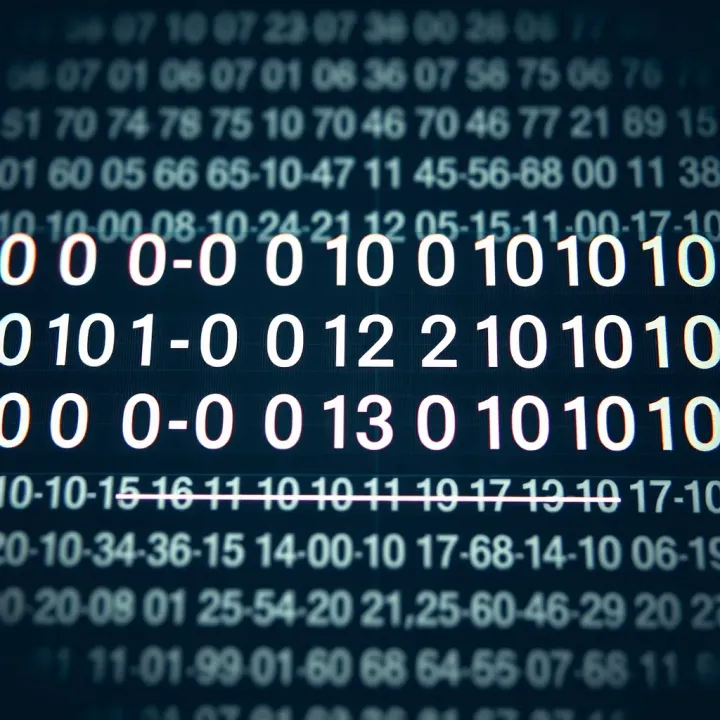
Learn how to add binary numbers step-by-step 🔢, with tips on manual methods and digital circuits, perfect for computing and electronics enthusiasts in SA 🇿🇦.

🔢 Learn how to convert decimal numbers to binary with clear steps, examples, and practical insights. Understand its role in tech and everyday digital systems. 💻
🔍 Explore binary log systems: how they track data changes, boost security, aid troubleshooting, and improve data management for local businesses and IT pros alike.
Based on 6 reviews