

Where to Study Risk Management in South Africa
Explore top South African schools for risk management 🎓. Learn about courses, accreditation & career paths to choose the best study option locally 📚.
Edited By
James Cartwright
Managing risk effectively isn't just for the big corporate players—it’s essential for anyone involved in trading, investing, or financial analysis in South Africa. Risks come in many shapes and sizes, and understanding how to spot and handle them can protect your investments and improve decision-making.
Risk management involves a series of steps that help you identify potential threats, evaluate their impact, and take action to reduce harm. This guide breaks down seven clear steps, starting from recognising risks to monitoring how well your controls are working.

For example, imagine a Johannesburg-based investor monitoring the local stock exchange. Political changes, currency fluctuations, or Eskom’s loadshedding can all shake up the market. By working through the risk management process, the investor can better prepare for these disruptions rather than be caught off-guard.
Effective risk management is about being proactive, not reactive. It helps you stay on top of challenges before they turn into problems.
This article focuses on practical, local examples relevant to South African financial markets and businesses. You’ll find real-world tips on how to spot risks like exchange rate volatility, credit risks in unsecured lending, or operational challenges during loadshedding.
Stepping through each phase ensures a comprehensive approach:
Spotting and describing risks clearly
Assessing their likelihood and potential impact
Planning and implementing control measures
Keeping a close eye on outcomes and adjusting as needed
The end goal is simple—helping you keep your financial operations steady and making decisions with confidence.
Understanding this process equips you to handle everything from market swings to broader economic shifts. Let’s get started with the first step, so you can apply this method with local insights tailored to South Africa’s unique environment.
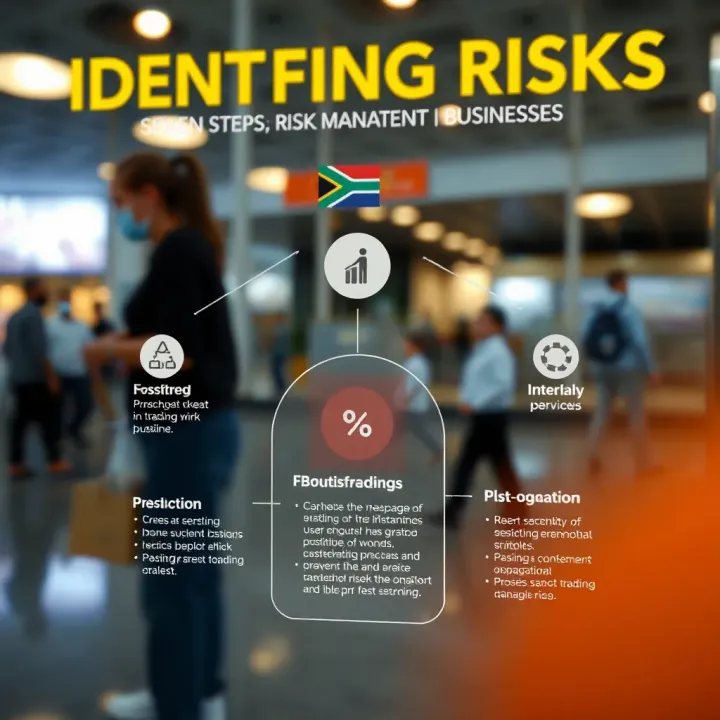
Identifying risks in your business environment lays the groundwork for effective risk management. By pinpointing potential threats early, businesses can prepare and respond before these risks escalate into serious problems. For traders, investors, and financial analysts, recognising these risks ensures that decision-making is based on a solid understanding of what could go wrong.
Operational risks stem from daily business activities and processes. For example, a manufacturing company might face machinery breakdowns disrupting production, while a financial services firm could deal with software glitches affecting transaction processing. Understanding these risks helps in maintaining smooth operations and avoiding costly downtime.
Financial risks relate to the management of capital, cash flow, and market forces. Exchange rate volatility can severely impact importers who pay for goods in foreign currencies, while fluctuating interest rates influence borrowing costs. South African traders, for instance, often face challenges when the rand weakens unexpectedly, pushing up the cost of imported equipment or stock.
Compliance and legal risks involve adhering to laws, regulations, and industry standards. Businesses must stay ahead of legislation like the Protection of Personal Information Act (POPIA) or tax requirements enforced by the South African Revenue Service (SARS). Falling short can lead to penalties, reputational damage, or legal battles that drain resources.
Environmental and social risks cover factors like community relations, environmental regulations, and social expectations. A mining company near a local community may risk protests or disruptions if environmental concerns aren't addressed properly. Similarly, a business ignoring water restrictions in a drought-prone area could face fines and public backlash.
Supply chain disruptions due to loadshedding are a daily reality for many South African businesses. Power outages can halt production lines, delay deliveries, and damage perishable goods, forcing businesses to invest in backup generators or adjust schedules to manage the impact.
Currency fluctuations affecting import costs pose a constant challenge. When the rand dips against major currencies like the US dollar or euro, the cost of imports increases, squeezing margins for retailers or manufacturers who rely on foreign suppliers.
Regulatory compliance challenges (POPIA, SARS) demand constant attention. For instance, an e-commerce platform must secure customers’ personal data according to POPIA, or face penalties. Likewise, accurate VAT submissions to SARS avoid audits and fines that could hamper cash flow.
Crime-related risks are a significant concern, particularly for businesses in high-crime areas. Theft, hijackings, or vandalism not only cause direct losses but may raise insurance premiums and add to security expenses. Employing security personnel or implementing surveillance systems often becomes necessary.
Consistently identifying and understanding these risks early allows businesses in South Africa to plan practical responses that protect their investments, reputation, and ongoing operations.
A sound analysis and assessment of risks form the backbone of effective decision-making in any business. For traders, investors, and financial analysts in South Africa, understanding which risks pose the biggest threat helps in prioritising resources and responses. Without a clear picture of risk likelihood and impact, efforts might be misdirected, leaving the business exposed or wasting valuable capital.
Risk analysis comes in two main flavours: qualitative and quantitative. Qualitative analysis uses descriptive terms like 'high', 'medium', or 'low' to rate both the chance a risk will occur and its potential effect. This approach is quicker and useful in situations where numbers aren't readily available—say, an investor gauging the reputational threat of a corruption scandal within a company. It leans heavily on expert judgement and can guide early decisions.
On the other hand, quantitative risk analysis crunches numbers, providing measurable data like the probable financial loss or statistical occurrence. For example, a stockbroker might model how currency volatility between the rand and the US dollar could impact import-heavy companies listed on the JSE. Quantitative methods demand more detailed data but give concrete figures to base decisions on, especially for sizeable investments or complex financial portfolios.
A common, practical tool in risk assessment is the risk matrix. It maps risks on a grid according to their likelihood and impact, often categorising them from green (low risk) to red (high risk). This visual helps investors or risk managers pinpoint which threats need immediate attention versus those that can be monitored.
For instance, if a retailer faces both the risk of load-shedding causing stock spoilage and fluctuations in exchange rates affecting costs, a risk matrix can help prioritise. Load-shedding might happen more frequently but cause moderate losses, while exchange rate swings may be less frequent but more costly. This method helps decide whether to invest in backup generators or hedge currency risks first.
South Africa’s unique economic and political environment requires careful consideration during risk assessment. Fluctuations in policy, shifts in governance, or economic downturns — like the narrowing rand or interest rate changes by the SARB — directly influence market stability. Investors need to factor in political uncertainties, such as impending elections or new legislation affecting industries like mining or agriculture.
Even a seemingly stable business can be caught off guard. For example, a financial analyst examining a retail company must weigh the risk of sudden municipal tariff hikes or trade disruptions spurred by protests or strikes.
Municipal service delivery issues remain a tangible risk for South African businesses. Erratic water supply, inconsistent refuse collection, and poor road maintenance affect operations daily. For a logistics company, delays from pothole-riddled roads or water shortages disrupting vehicle maintenance lead to direct costs and reputational hits.
Moreover, power outages due to Eskom’s load-shedding routines introduce operational uncertainty. Businesses must include these factors in their risk assessments rather than treat them as isolated nuisances. Recognising how local municipal performance influences risk can help in drafting more resilient strategies.
Proper analysis and assessment grounded in local realities give traders, investors, and financial analysts the clarity to make smarter, well-informed decisions — not just guesswork based on general risks.
By using both qualitative and quantitative methods, applying prioritisation tools like risk matrices, and factoring in South Africa’s economic and service issues, businesses can better navigate risks and safeguard their investments.
Planning risk responses is where strategy meets reality. After spotting and sizing up risks, businesses must decide how to tackle them to keep operations steady and finances safe. This phase isn’t just about firefighting — it’s about setting up smart, tested moves that protect the bottom line and build resilience against shocks.
For traders, investors, and financial analysts, well-planned risk responses can guard against unexpected market swings or regulatory changes. They help make sure that a business can weather challenges like currency volatility, supply interruptions, or legal hurdles without derailment.
Avoiding or eliminating risks means steering clear of activities or conditions that could trigger losses. For instance, a small manufacturing company might stop using a volatile chemical if it carries too many health and safety liabilities. Avoidance works best when risks are too costly or complex to manage.
In South African mining firms, for example, avoiding operations in certain high-crime areas can cut down theft or sabotage risks. While avoidance is straightforward, it’s not always possible if the risk is inherent to the business — you can’t avoid currency risk if you depend on imports, for example.
Reducing likelihood or impact focuses on minimising either how often a risk happens or how badly it hits. Actions like regular maintenance to prevent equipment failure or stricter credit checks to limit defaults reflect this approach. In trading, this might look like diversifying portfolios to soften the blow of market downturns.
Businesses hit by Eskom loadshedding often invest in energy-efficient machines or schedule production during off-peak hours, cutting both chances and consequences of power disruptions.
Transferring risk through insurance or contracts shifts some or all exposure to another party. Insurances for business interruption, crime, or liabilities are common tools here. Small retailers in South Africa often take out business interruption insurance to cushion losses during unexpected shutdowns caused by protests or power cuts.
Contracts can also transfer risk — for example, including penalty clauses with suppliers reduces financial impact if deliveries are late. This spreads risk rather than eliminating it outright.
Accepting and monitoring risks means knowingly bearing certain risks when the cost of control outweighs the damage they might cause. Some fluctuations, like minor currency movements, or low-likelihood events, fall into this bucket.
It’s vital to keep an eye on such risks through monitoring and be ready to act if they worsen. Investors often accept market volatility but may hedge selectively if conditions shift dramatically.
Investing in backup generators to counter loadshedding is a practical step many SMEs take around the country. Given Eskom’s intermittent outages, businesses that can maintain operations during blackouts avoid revenue loss and preserve client trust.
While generators involve upfront and running costs, the payoff can be significant — a clothing manufacturer in Durban reported keeping production ticking with a reliable generator, avoiding costly delays.
Securing business interruption insurance helps mitigate financial shocks from unforeseen stoppages. For example, a Johannesburg café closed during protests had insurance cover that helped survive two weeks without income.
Insurance terms vary, so understanding exclusions and limits — especially around political violence or force majeure — is crucial. It’s a way of transferring risk that supports survival when operations grind to a halt.
Implementing staff safety measures in high-crime areas protects employees and assets alike. In locales with elevated crime, companies invest in guard services, CCTV, secure parking, and safety training.
A Cape Town SME supplying computer parts credits staff retention to their visible commitment to safety, even on tough days. Beyond protecting workers, it creates a stability that investors notice and value.
Well-planned risk responses are not a one-off task but a continuous commitment. They reduce surprises, lower costs, and build confidence among stakeholders — all valuable for South African businesses navigating an often unpredictable environment.
Implementing controls and regularly monitoring their outcomes is where risk management truly takes shape. Without solid execution and follow-up, risk plans remain just words on paper. This phase ensures that the strategies designed to mitigate risks actually work in real life and adapt to any changes within the business environment or broader economy.
Assigning responsibilities clearly sets the foundation for effective risk control. Each individual or team must know their role in managing specific risks, which avoids confusion and accountability gaps. For instance, in a trading firm, a risk manager might be responsible for monitoring currency fluctuation exposures, while compliance officers handle regulatory risks. Defining these roles up front means no risk-related task falls by the wayside.
Integrating controls into daily operations ensures risk management is not an afterthought but part of routine business activity. Controls might include automatic checks on trade limits, real-time currency risk monitoring, or daily procedure audits. When these processes become habitual, it reduces errors and creates a culture where identifying and responding to risks is second nature. For example, a stockbroker’s daily system checks could flag unusual trading patterns that might indicate fraud or market manipulation before damage happens.
Ongoing training and awareness keep the entire team sharp and informed. Risks evolve, especially in dynamic markets like Johannesburg’s JSE or global commodities impacting South African imports. Regular workshops or refresher courses help staff recognise new threats and understand how their actions influence risk control. Even simple communication, such as weekly updates on regulatory changes from FSCA (Financial Sector Conduct Authority), help maintain vigilance.
Conducting audits and inspections confirms whether risk controls are functioning as intended or need tweaking. Independent audits, whether internal or external, provide objectivity and highlight blind spots. For example, an audit might reveal that backup power systems in an SME are insufficient during Eskom loadshedding stages, prompting upgrades.
Adjusting plans based on feedback and new threats keeps the risk management process alive and relevant. The economic or political climate in South Africa can shift quickly, and new risks like unexpected municipal service interruptions or cyber threats require swift response. Feedback from frontline staff or audit reports should lead to updates in strategies, ensuring that risk responses aren’t static but evolve with the business landscape.
Reporting to stakeholders provides transparency and builds confidence. Whether it’s shareholders, board members, or investors, timely and clear reports on risk outcomes reassure that the business stays proactive rather than reactive. For example, fund managers reporting on portfolio risk might summarise how they adapted to recent Rand volatility, explaining the impact on returns and next steps.
Implementing risk controls thoroughly and tracking their effectiveness through reviews are indispensable to protecting your business interests in a landscape as unpredictable as South Africa’s.
In summary, turning risk plans into actions and consistently reviewing their success creates a resilient business. It also earns trust from partners and regulators, ultimately supporting better decision-making and sustainable growth.
Using a real-world example helps ground abstract risk management concepts in practical reality. South African retail businesses face unique challenges, from crime to supply disruptions worsened by loadshedding, making this example especially relevant. It shows how identifying, assessing, planning, and monitoring risks work together to safeguard operations and reputation.
For retail businesses in South Africa, theft is a frequent and serious risk, whether from shoplifters or internal fraud. This directly drains profits and undermines customer trust. On the other hand, supply chain disruptions—often linked to electricity cuts, transport strikes, or port backlogs—threaten stock availability. These risks not only harm short-term sales but can also erode long-term brand loyalty if customers turn elsewhere.
When theft occurs, businesses face immediate revenue loss but also hidden costs, such as higher insurance premiums and extra security expenses. Supply chain interruptions can delay product deliveries, forcing retailers to cancel promotions or lose customer confidence. Reputational harm here can be just as damaging; customers expect shelves to be stocked and stores to feel safe. Investors and analysts tracking these factors will see how effectively a business manages such risks as an indicator of its stability.
Installing visible security cameras and electronic article surveillance tags helps deter theft while providing evidence if incidents happen. In urban centres like Johannesburg or Cape Town, upgrading lighting and access control adds further protection. The outlay for these tech solutions can be significant but often pays off by reducing shrinkage and insurance costs.
Given the erratic nature of transport and power in South Africa, securing flexible contracts with suppliers can prevent stockouts. Retailers might include clauses to allow rapid order adjustments or alternative delivery routes. These contracts cushion the blow from unpredictable interruptions, helping keep shelves stocked and customers satisfied.
Staff awareness is critical. Training employees on how to handle suspicious behaviour, emergency procedures during robberies, and product handling to minimise internal theft significantly boosts security. Well-trained teams can respond faster and reduce harm, especially in smaller stores where management resources are stretched.
Risk environments change constantly in Mzansi, so retailers must keep tabs on new threats and effectiveness of controls. Regular reviews, incident reporting, and adjusting policies help businesses stay resilient. For instance, when crime patterns shift or supply delays increase, the risk plan needs updating to reflect these realities. This ongoing vigilance not only protects revenue but also assures investors and stakeholders the business is managing its risks responsibly.
Real-world examples are invaluable. They demonstrate how practical, targeted risk measures can safeguard a business’s bottom line and reputation amid South Africa’s unique challenges.
Explore top South African schools for risk management 🎓. Learn about courses, accreditation & career paths to choose the best study option locally 📚.

🔍 Learn effective fraud and risk management strategies tailored for South African businesses to detect, prevent, and respond to threats confidently.

🔍 Learn practical fraud risk management tactics tailored for South African businesses—identify, prevent, detect, and respond effectively to reduce losses and protect your reputation.
Ready to start forex trading in South Africa? Learn market basics, find reliable platforms, understand legal rules, and get tips to overcome beginner challenges 💹🌍
Based on 13 reviews