
Forex Trading Hours in South Africa Explained
Learn the best forex trading hours in South Africa ⏰ Understand global market times, manage time zones, and boost your trading strategy effectively in SA.
Edited By
Charlotte Reed
Forex trading is a 24-hour affair, but that doesn't mean all hours are created equal, especially if you're trading from South Africa. Understanding when markets open and close globally—and how those times line up with South African Standard Time (SAST)—can give traders a crucial edge. If you don't time your trades to the market's rhythm, you might miss out on the best price moves or end up stuck in slow, choppy sessions.
This guide is tailored for traders, investors, and financial professionals in South Africa who want to make smarter decisions by syncing their trading hours with the most active market windows. We'll break down the major global forex sessions, explain how daylight saving time affects trading hours in other regions, and suggest practical tips on when to engage or step back. Essentially, this is about picking your moment wisely in a market that never truly sleeps.
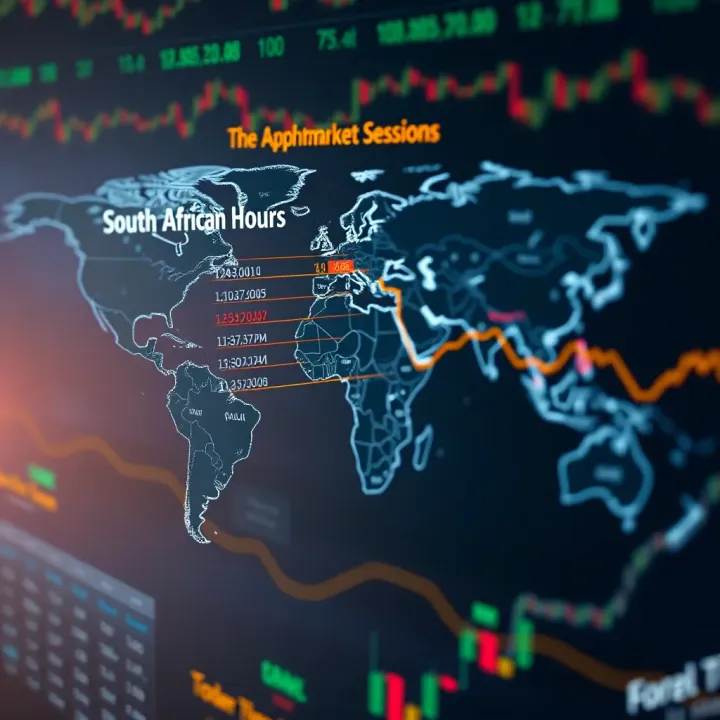
Knowing these hours isn't just about convenience—it's about maximizing opportunities while managing risks. Whether you're trading the US dollar, Euro, or emerging market currencies, timing your moves can help you avoid unnecessary volatility or illiquidity.
Let's get started by first laying out the key market sessions and see how they map onto South Africa's clock.
Understanding the structure and timing of forex trading sessions is essential for traders based in South Africa aiming to optimize their trading strategies. Since forex operates 24 hours a day, but not all hours offer the same trading opportunities, knowing the characteristics of each session helps in identifying the best times to trade. For example, a trader focused on currency pairs involving the British pound would benefit from tuning in during the London session when activity peaks.
Forex trading revolves around several major financial centers located in different parts of the world, which open and close at staggered times. The key hubs include London, New York, Tokyo, and Sydney. Each center influences trading volume and volatility during its active hours. London is often regarded as the heart of forex trading due to its high liquidity and overlap with other sessions. New York adds significant volume in the afternoon, while Tokyo and Sydney manage the Asian-Pacific trading flow.
Knowing when these centers operate enables South African traders to plan trades more effectively. For instance, a currency pair like USD/ZAR might see more movement during the New York session compared to Tokyo. Monitoring these hubs allows traders to anticipate shifts in market sentiment and liquidity.
Each trading session has its own personality shaped by the dominant market participants and regional economic factors. The London session is known for sharp price movements and high liquidity, often setting the tone for the day. The New York session tends to continue or reverse London’s trends, influenced by U.S. economic news releases.
Asian sessions, particularly Tokyo, are generally calmer with lower volatility, which can be useful for traders preferring steadier price action. Sydney plays a smaller role but kicks off the trading day for Asia-Pacific currencies. Recognizing these session traits can help traders decide when to expect pinch points or smoother trends, aligning their tactics accordingly.
Liquidity and volatility vary across sessions and directly impact trading conditions. High liquidity typically means tighter spreads and easier order execution, which you'll find during the London and New York overlaps. Conversely, the Asian session often shows thinner markets, which might result in wider spreads and less predictable price swings.
For example, during the London-New York overlap—roughly 15:00 to 18:00 South African time—both centers are active, pushing volumes up. This period offers the best liquidity for major pairs like EUR/USD or GBP/USD, making it an attractive window for traders seeking quick entries and exits.
The overlaps between trading sessions create spikes in market activity and volatility. The most notable is the London-New York overlap due to the sheer volume of transactions from both regions. South African traders can capitalize on this by scheduling trades during these hours for tighter spreads and increased price movement opportunities.
Another example is the Sydney-Tokyo overlap, growing in interest for traders focused on commodity currencies like the AUD or NZD. While these overlaps bring more volatility, they also come with increased unpredictability, so traders should monitor risk closely.
Trading during session overlaps often provides the best balance between liquidity and volatility, allowing for potentially more profitable trades with manageable risks. Understanding when these overlaps occur in South African time helps traders make smarter, well-timed decisions.
Understanding how time zones impact forex trading is key for South African traders. Since the forex market operates globally, trading hours are anchored to major financial centers around the world. South Africans need to know exactly when these sessions start and end in their local time to plan trades effectively and avoid missing out on high-volume periods.
At its core, forex trading involves different sessions that overlap and influence liquidity and volatility. Knowing time zone differences is practical: it helps traders target the busiest hours, avoid low-activity periods, and align with economic events happening in other parts of the world. For example, the London and New York sessions are critical because they represent the biggest market activities, and their timing in South African Standard Time (SAST) directly affects when to watch for price moves.
South African Standard Time is two hours ahead of Coordinated Universal Time (UTC+2). This consistent time zone makes it straightforward for traders since South Africa doesn’t observe daylight saving time, avoiding the biannual confusion common in other countries. For forex traders, knowing SAST helps in translating global market hours into a schedule that matches their daily routine.
Suppose the London session opens at 8:00 AM GMT. Since SAST is GMT+2, the London market opens at 10:00 AM local time for South African traders. This kinda conversion means you know exactly when you’re stepping into the action.
Here’s a quick snapshot to put things in perspective:
London Market: Opens at 10:00 AM SAST and closes at 7:00 PM SAST.
New York Market: Opens at 3:00 PM SAST and closes at 12:00 AM SAST.
Tokyo Market: Runs from 4:00 AM SAST to 1:00 PM SAST.
Sydney Market: Opens at 2:00 AM SAST and closes at 11:00 AM SAST.
So, if you’re a South African trader, the prime time to trade usually falls between 10:00 AM and midnight SAST, when London and New York sessions overlap or individually dominate.
Trading during these overlapping sessions tends to offer higher liquidity and better price movements, which can mean more trading opportunities and tighter spreads.
Unlike South Africa, which does not adjust its clocks, other countries like the UK and the US adopt daylight saving time (DST). This means their clocks jump forward or back by an hour depending on the season. In London, DST starts in late March and ends late October, shifting from GMT to BST (British Summer Time). The New York markets switch between EST and EDT.
This shift causes the time difference between South Africa and these forex centers to change temporarily. For instance, when London moves from GMT to BST, the market opens at 9:00 AM SAST instead of 10:00 AM. This can be a curveball if you don’t adjust your trading schedule accordingly.

To avoid missing key trading windows, South African traders must track DST changes in major financial hubs. One useful approach is to mark the DST start and end dates in your calendar and update your trading routine to match.
Some brokers automatically adjust their platform times; however, it’s always smarter to double-check. Setting reminders or using reliable trading apps that display sessions in SAST can save you from costly mistakes.
Remember, a one-hour difference might seem small, but in the fast-paced forex market, missing it could mean trading during low liquidity periods or missing out on major price moves.
By keeping these time zone nuances and daylight saving shifts in mind, South African traders can better align their strategies with global market rhythms, maximizing trading effectiveness and minimizing surprises.
Understanding the main Forex trading hours is essential for South African traders looking to make the most of market movements. The global Forex market operates round the clock, but not all hours offer the same opportunities. For traders in South Africa, knowing when major international markets open and close helps plan trades more efficiently and avoid periods of low liquidity that can lead to unpredictable price swings.
By focusing on these core sessions, South African traders can align their activities with peak trading times, securing tighter spreads and better price executions. For example, trading during the London session tends to offer high liquidity due to the sheer volume of trades from Europe, and the overlap with New York opens up even more chances for profit.
In practical terms, this means adjusting your schedule around these hours rather than trading nonstop or during sleepy market phases. Let's dive into what these sessions look like in South African Standard Time (SAST).
The London session, the heartbeat of the Forex market, typically runs from 09:00 to 18:00 SAST. While those nine hours might seem long, the market activity fluctuates within this window. This session overlaps with the tail end of the Asian markets and the early New York session, fuelling high liquidity and sharper price movements.
For South African traders, this period often coincides with their daytime hours, enabling active monitoring without burning the midnight oil. It’s quite handy for someone who prefers trading during the day and wants to avoid after-hours stress.
Market behavior during the London session is generally marked by sharp price movements, especially in the first few hours. Currency pairs involving the British pound (GBP), the euro (EUR), and the Swiss franc (CHF) tend to see the most action. Sudden spikes and drops are common right after the session opens, as traders react to overnight news and economic data releases.
Traders often see the London session as where the big money moves—because large institutional players from Europe dominate this timeframe — so there's potential for meaningful price swings that seasoned traders can take advantage of.
The New York Forex session runs from 15:00 to 00:00 SAST. It starts in the mid-afternoon for South Africans, extending traders’ opportunities well into the evening. For many local traders, this timing is ideal to catch the market after work.
This session primarily influences currency pairs involving the US dollar (USD), such as USD/ZAR, USD/EUR, and USD/JPY. Because the U.S. dollar is involved in nearly 90% of all trades, the New York session sees significant volume.
One key highlight is the 3-hour window (15:00 to 18:00 SAST) where the London session overlaps with New York. This overlap period accounts for the highest liquidity and volatility during the day, making it a prime time for traders to execute their strategies.
Many brokerages recommend focusing on this window if you want to catch moves with more volume backing them up, which usually leads to smaller spreads and greater ease in entering or exiting positions.
The Tokyo session typically runs between 01:00 and 10:00 SAST while the Sydney session opens earlier, from about 23:00 to 08:00 SAST. These times mean that the Asian and Pacific sessions occur mostly during nighttime hours for South African traders.
Despite this off-hours timing, this session is crucial for trading currency pairs involving the Japanese yen (JPY), Australian dollar (AUD), and New Zealand dollar (NZD).
Volatility during the Asian and Pacific sessions is generally lower than during London or New York. However, significant price moves can occur, especially around major economic announcements from Japan, Australia, or New Zealand.
For example, if Japan releases GDP figures during Tokyo session hours, expect sharp reactions in USD/JPY or EUR/JPY. Traders should keep an eye on the economic calendar to spot these windows.
Lower volatility may suit day traders looking for more stability or swing traders preferring less erratic markets. However, some might find the slower pace less thrilling for short-term scalping.
In summary, understanding these session timings and their characteristics helps South African Forex traders work smarter. By aligning their trading hours with the most active global sessions, they can optimize market exposure, potentially boosting profitability while managing risk more effectively.
Picking the right time to dive into forex trading isn't just about convenience; it's about capitalizing on market conditions that can make or break your trades. For South African traders, understanding when the market offers the most activity and liquidity is key to maximizing opportunities. This section sheds light on how aligning your trading hours with the busiest times can boost your chances of success, while also pointing out when it might be safer — or more risky — to trade.
Trading during peak market hours usually means better liquidity—more buyers and sellers actively trading. This translates to smaller spreads and faster execution of orders, which is a big deal if you want to get in and out of positions quickly. For instance, when the London and New York sessions overlap, typically between 16:00 and 20:00 SAST, the forex market is buzzing. Traders find tighter spreads on pairs like EUR/USD and GBP/USD, which means you’re not losing as much to the broker and your trades often fill at your desired prices.
Another upside is increased volatility during these busy periods, which creates more profitable opportunities. Say you want to catch a quick move in the USD/ZAR pair; trading during these peak hours gives you the price swings you need to make gains.
Conversely, trading during quieter hours, like late at night in South Africa when the Asian session is winding down and the European markets haven’t picked up yet, can expose you to wider spreads and slippage. The market becomes more sluggish, and prices might jump unexpectedly because fewer participants are around to absorb large orders. This can be frustrating if you rely on tight execution to protect your capital.
You might also run into ‘ghost’ liquidity, where it looks like there’s volume on the screen, but the actual market depth is shallow. Trades placed during these times on less popular pairs may get stuck or fill at unfavorable prices. So, it’s generally best to stay out of the market or use smaller position sizes during these slow periods to manage risk.
Economic news releases can drastically shake up the forex market in minutes. For South African traders, timing trades around these announcements is a smart move. Big reports like the US Non-Farm Payrolls or UK GDP figures often trigger sharp moves, so it’s wise to plan ahead and decide whether you want to ride the volatility or avoid it altogether.
You might choose to close positions before these announcements to avoid getting caught in unpredictable swings, or you might position yourself to catch a breakout, depending on your strategy. A good practice is to track a reliable economic calendar and mark key events, adjusting your trading schedule accordingly to prevent surprises.
London, New York, and Asia are the giants when it comes to forex news. London’s big-ticket releases include the Bank of England interest rate decisions and inflation reports, influencing GBP pairs heavily. New York churns out the US jobs data, retail sales, and Federal Reserve announcements that affect USD pairs. Over in Asia, Japan's Tankan survey and China’s PMI data often move the JPY and CNY accordingly.
Because these news events happen at specific times—like the US NFP report typically at 15:30 SAST—knowing when they hit the market helps you avoid surprise volatility or catch splendid moves. For example, if you trade EUR/USD, lurking around during London and New York’s overlapping trading session and major news releases might be your best bet.
Understanding market liquidity and news releases isn’t just academic; it’s practical knowledge that guides when to trade smarter, manage risk better, and ultimately improve your odds in the forex market.
Navigating the forex market can be tricky, especially when juggling different time zones and the unique rhythm of South African trading hours. Practical tips tailored for South African traders not only help smooth out the learning curve but also sharpen your trading tactics. These guidelines focus on making the most of market timing, managing your tools, and fitting your trading activities neatly into your daily life.
Session indicators and alerts are game changers for most traders. These tools give you a clear, real-time visual of when different forex markets open and close. For example, something like the MetaTrader 4 or TradingView platforms offers session highlights that can be set up to alert you as the London or New York sessions begin. This helps you plan your trades and avoid entering the fray when markets are quieter or more volatile, which South African traders find especially useful because it syncs with local time without the constant need to calculate offsets.
Calendar apps for economic events keep you in the loop when big market movers are about to drop. Economic releases, such as the US Nonfarm Payroll or Bank of England interest rate decisions, can send currency pairs into sudden swings. Using apps like Forex Factory or Investing.com calendars lets you mark these dates ahead, so you can decide whether to step away or capitalize on the volatility. Setting reminders for these events ensures you won’t miss opportunities or get caught off guard by sharp moves outside optimal trading hours.
Balancing trading time with daily routines is crucial, especially when South African traders have to deal with forex sessions spanning early mornings or late nights. A smart approach is to identify which session suits your lifestyle best—London's session might start early, but it offers good liquidity and predictable patterns. Schedule your trading hours when you’re alert and ready rather than forcing trades during less optimal times. Keeping a consistent trading routine helps you stay disciplined without burning out, for instance, focusing on London and New York overlaps which fall conveniently in mid to late afternoon South African time.
Avoiding fatigue during extended sessions cannot be overstressed. It’s tempting to chase every market move when trading spans many hours, but this often leads to slipping judgment and loss. Break up your sessions into manageable chunks. Say, if you catch the London opening from 9 AM SAST to noon, you can rest before the New York session kicks in around 3 PM. Take regular breaks, hydrate well, and avoid trading on tired instincts. Using features like stop-loss orders lets you protect capital without constant supervision, easing stress during those long stretches.
Smart use of tools and a well-planned schedule can make forex trading less of a grind and more of a strategic activity. The goal is to trade smarter, not harder, especially in a 24-hour global market that sits outside your local time comfort zone.
In summary, South African forex traders benefit hugely from adopting practical tools like session indicators and economic calendars, alongside thoughtful time management strategies. These help enhance focus, reduce errors, and make sure trading fits smoothly into everyday life rather than dominating it.
Knowing the answers to common questions about forex trading hours is a game changer for traders in South Africa. It clears up confusion about when markets are open, how the continuous nature of forex markets impacts trading, and how broker-specific times can affect traders’ strategies. FAQs tackle practical points that often trip up beginners and even some seasoned traders, such as why trading 24/7 doesn’t mean the market is equally active all the time or why the chart times on one broker’s platform might differ from another.
For example, it’s common for traders to ask if forex trading truly runs round the clock here and how they should adjust scheduling around broker time zones. Answering these helps avoid missed opportunities and better risk management, making trading less guesswork, more strategy.
Forex markets operate nonstop from Sunday evening to Friday evening, giving South African traders access to trading any time of day or night. This continuous cycle is due to the market being global—when one major financial center closes, another opens somewhere else in the world. So if London winds down, Tokyo gears up, keeping currency pairs moving.
This nonstop aspect is great because you can tailor trading to fit your own schedule, whether you’re a morning person or a night owl.
However, just because trading is 24/5 doesn't mean every hour has the same activity level. There are lulls, often in between the major sessions, when liquidity can drop, leading to wider spreads and less predictable price movements. For example, between the New York close and the Asian open (late evening South African time), forex volumes usually thin out.
Understanding these quiet patches prevents traders from entering trades when markets are slow and prone to sudden, erratic price swings due to low participation. The wise move is to focus trading during overlapping sessions, like London-New York, where volumes, and thus opportunities, ramp up.
Broker time settings can seem like a small detail but they’re actually pretty important. Each broker chooses a specific time zone for their platform’s clock, which might be GMT, New York time, or even a set offset. This affects when you see daily candles start or when sessions appear to open and close on your charts. For example, a candle that starts at midnight GMT on one platform might actually begin an hour earlier or later on another broker’s platform.
Understanding this helps avoid confusion during backtesting or live trading, especially when you want to trade at session opens or closes. That’s why it’s vital to know your broker’s reference time and how it relates to South African Standard Time (SAST).
To verify correct session timing with your broker:
Consult their FAQ or support to confirm the time zone they use.
Cross-check trading session times using a forex market clock like those found on MetaTrader or TradingView.
Use economic calendars set to your broker’s time zone to track news releases accurately.
This attention to detail ensures you’re not caught off guard by session shifts or news spikes that impact your trading plan. It gives you a solid foundation for aligning your trades with market rhythms.
In summary, getting common questions around forex trading hours right sets a solid base for South African traders. Knowing the market isn’t always busy—even if it’s open—and how broker time zones shape your experience can improve timing and risk management. Practicing these insights makes forex trading less like shooting in the dark and more like hitting a moving target with precision.
Learn the best forex trading hours in South Africa ⏰ Understand global market times, manage time zones, and boost your trading strategy effectively in SA.

Find the ideal forex trading platform in South Africa 🇿🇦 with tips on features, costs, reliability, and usability to match your trading style and goals.
📈 Explore forex trading in South Africa with a clear guide on currency markets, trading strategies, risks, and practical tips to help you trade smarter today.
📈 Master forex trading in South Africa with our guide! Learn key strategies, risk tips, and where to find top local training resources. Trade smarter!
Based on 11 reviews