
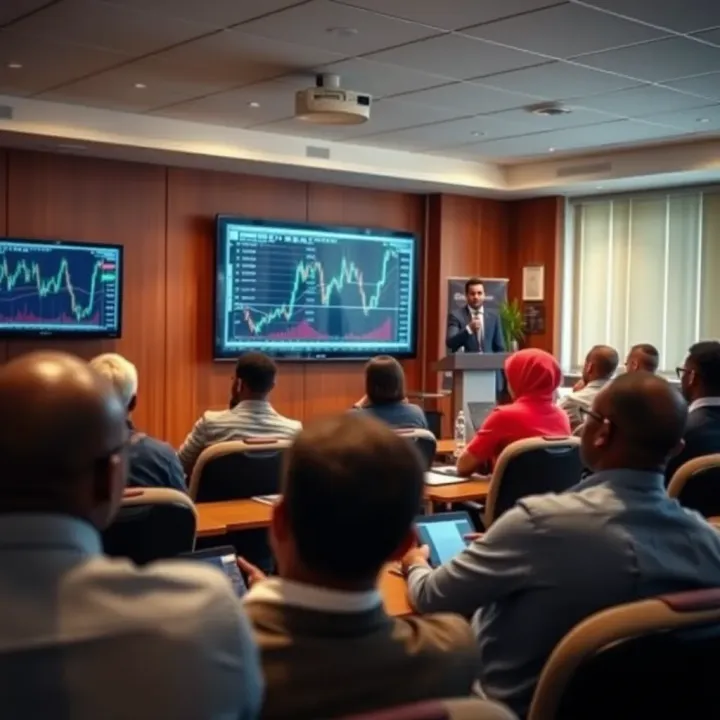
Forex Trading Seminars in Durban: What to Know
🌍 Discover forex trading seminars in Durban! Learn strategies, local market insights, and tips to boost your trading skills at these expert-led events.
Edited By
Ethan Hughes
Forex trading in Durban offers an exciting opportunity for local traders to engage with one of the world's largest financial markets. With its unique economic landscape, South African regulation, and access to global trading platforms, Durban presents both possibilities and challenges.
Understanding forex markets means grasping the fundamentals: currencies are traded in pairs, and their value fluctuates based on economic indicators, geopolitical events, and market sentiment. In Durban, many traders focus on major currency pairs like USD/ZAR or EUR/ZAR due to South Africa’s economic ties and export-import activities.
Choosing the right broker is a major step. Local traders should prioritise brokers regulated by the Financial Sector Conduct Authority (FSCA) to ensure compliance and security. International brokers operating in South Africa must also meet regulatory standards to protect traders from scams or unfair practices. Look out for brokers offering transparent pricing, a user-friendly platform, and solid customer support.
Risk management is crucial in this fast-moving market. Using stop-loss orders, trade size control, and diversified strategies can help keep losses within manageable levels. For instance, a Durban trader might split capital between short-term scalping on the USD/ZAR and longer-term positions in EUR/USD to balance risk.
Trading costs matter — spreads, commissions, rollover fees, and withdrawal charges can all cut into profits. It pays to compare brokers carefully. Some charge fixed spreads but higher commissions, while others offer variable spreads but no commission.
Economic factors, like South Africa’s inflation rate, interest decisions by the South African Reserve Bank (SARB), and commodity price swings, directly impact forex prices. Durban traders must keep an eye on local economic news and global events to anticipate currency moves.
Starting forex trading without understanding these aspects is like driving a bakkie blindfolded — you might move, but you won’t get far safely.
This guide will equip Durban traders with practical steps and insights to navigate the forex market confidently and responsibly, helping them make informed decisions in their trading journey.
Forex trading, or foreign exchange trading, involves buying and selling currencies to profit from fluctuations in exchange rates. Durban traders find this market especially relevant given the city's dynamic business environment and the South African Rand's (ZAR) volatility. Grasping the basic mechanics and what draws people here to forex will help you understand whether this fast-paced market fits your trading style.
Forex trading is based on currency pairs, such as ZAR/USD or EUR/ZAR. Each pair represents how much one currency is worth in terms of another. In practical terms, if you buy the ZAR/USD pair, you're buying rands and selling US dollars, betting the rand will strengthen. The forex market operates over-the-counter (OTC), meaning trading happens directly between parties, without a central exchange. This global setup allows continuous price movements across multiple hubs, such as London, New York, and Tokyo.
Leverage lets traders control large positions with a relatively small amount of capital, known as margin. For instance, with 1:100 leverage, a trader can control R10,000 with just R100. This magnifies both potential profits and losses, so it requires careful risk management. Durban traders must understand how leverage affects margin calls and the chance of losing more than their initial investment.
Unlike stock markets, forex runs 24 hours from Monday to Friday, as it moves with major financial centres opening and closing worldwide. For a Durban trader, this means you can trade outside usual office hours, fitting around your daily routine. Notably, the overlap between London and New York sessions often brings highest volatility, offering trading opportunities for local traders watching global economic news.
Forex trading attracts Durban locals because it requires low starting capital and no lengthy registration as with some other investments. Many brokers accept account deposits as low as R500, and all you need is a laptop or mobile with internet access. This accessibility opens the market to individuals who can't afford traditional asset investments or want to trade alongside other work.
Because the ZAR is included in many forex pairs, Durban traders gain exposure to both local and international market moves. For example, changes in South Africa's interest rates often affect ZAR crosses, while global events influence USD or EUR pairs. This variety helps traders diversify strategies and respond to different types of news affecting currencies.
Many Durban traders start forex on the side to earn extra income beyond their regular jobs, especially given the economic pressures locally. While it’s no guaranteed cash cow, disciplined trading using sound strategies can create a supplementary revenue stream. This flexibility suits those balancing family, work, and study commitments.
Forex trading in Durban suits those ready to learn market mechanics, budget for risk, and leverage the city's unique position to trade both local and global currency pairs effectively.
Navigating South Africa's regulatory environment is vital for anyone trading forex from Durban. The landscape can be tricky without the right guidance because compliance isn't just about following rules — it's about protecting your capital and ensuring your trades are legal under South African law. Understanding the role of local regulators, tax implications, and verification processes helps traders operate smoothly without nasty surprises.
The Financial Sector Conduct Authority (FSCA) is the watchdog overseeing forex brokers in South Africa. If you’re considering trading with a broker, it’s essential to check that they're licensed by the FSCA. This licence means the broker meets minimum standards for transparency, financial health, and fair treatment of clients. For example, an FSCA-licensed broker must segregate client funds, so your money isn’t mixed with their own.
On top of that, trading on a platform regulated by the FSCA grants some protections that can be lifesavers. This includes access to dispute resolution services if your broker acts unfairly or goes under. FSCA regulation also means brokers must maintain clear records and operate honestly, limiting the risk of scams — a frequent issue in the global, unregulated forex space.
When trading forex, anticipating the tax impact is crucial. South African Revenue Service (SARS) treats forex profits as either income or capital gains, depending on your trading style. If you’re active daily or weekly, SARS might expect income tax treatment, which means including profits in your tax return and paying tax at your marginal rate. On the other hand, casual or longer-term trading might fall under capital gains tax, which only taxes 40% of the net gain at your marginal rate. Keeping detailed records of each trade is non-negotiable for clear SARS reporting.
Beyond tax, compliance with Exchange Control Regulations is another hurdle. South Africa has strict controls on cross-border currency movement to stabilise the rand. This means when your forex trades involve converting rand (ZAR) into other currencies or vice versa, you must ensure the transactions fall within allowed limits or obtain the necessary approvals. Ignoring this can lead to penalties or complications accessing your funds.
Lastly, the Regulation of Interception of Communications and Provision of Communication-Related Information Act (RICA) plays a practical role in account verification. Brokers often require RICA compliance to confirm your identity and address, reducing fraud risk. For Durban traders, this means having your SA ID book, utility bill, or bank statement ready when opening a forex account. Meeting RICA standards not only speeds up account activation but also boosts overall market trust.
Keeping these regulations in mind helps you trade smarter and safer while avoiding common pitfalls in the South African forex scene. Understanding the FSCA's role, tax responsibilities, exchange control rules, and RICA verification creates a solid foundation for sustainable trading.
By familiarising yourself with these regulatory elements, you ensure your trading activities stay above board — and that your hard-earned rand is protected.
Picking the right forex broker is a key step for Durban traders. The broker acts as your gateway to forex markets, so choosing one with the right balance of security, cost, and support can shape your trading experience significantly. An unsuitable broker might lead to unnecessary costs, poor trade execution, or even regulatory headaches.
It’s vital your broker is authorised by the Financial Sector Conduct Authority (FSCA), the watchdog ensuring fair practices in South Africa’s financial markets. FSCA authorisation means the broker meets minimum regulatory standards protecting your funds and promoting transparency. Durban traders should avoid unregulated brokers offering tempting deals because they often compromise safety and legality.
A broker’s reputation also matters. Look for firms with a solid track record and positive reviews from other South African clients. For example, brokers like IG and CM Trading are well-established names with FSCA authorisation, making them trustworthy choices for Durban-based traders.
The choice of trading platform can influence how efficiently you trade. The platform should be user-friendly, stable, and offer features like real-time charts, technical indicators, and easy order execution. MetaTrader 4 (MT4) and MetaTrader 5 (MT5) are popular worldwide and supported by many brokers here, thanks to their reliability and customisability.
Durban traders also benefit from brokers providing mobile apps, especially when unpredictable loadshedding can mess with desktop access. Some platforms even offer automated trading options and copy trading, allowing beginners to learn by following seasoned traders’ moves.
Trading costs impact your overall profitability—these include spreads (the difference between buy and sell prices), commissions, and overnight (swap) fees if positions are held beyond trading hours. Some brokers offer fixed spreads; others have variable spreads that fluctuate with market volatility.
Durban traders should shop around to compare these costs because they can differ widely between local and international brokers. For example, a broker with low spreads but high commissions might be pricier overall. Also, understanding overnight fees matters if you hold trades for several days or weeks.
Good customer support tailored to South African clients can save you headaches. Ideally, brokers provide accessible support via phone, email, and live chat, with prompt responses during local trading hours.
Educational materials are equally important, especially for less-experienced traders. Many brokers offer webinars, tutorials, and demo accounts, allowing Durban traders to build skills without risking capital.
Durban traders can choose between locally based brokers like CM Trading or international brokers with South African offices, such as IG and FXTM. Local brokers often provide easier deposit and withdrawal options and understand South African trading environments better, including load-shedding realities.
International brokers may offer a wider range of currency pairs and advanced platforms but might charge higher fees or have less tailored customer support. Weighing these pros and cons helps you decide which aligns with your trading style and needs.
Easy access to funds is crucial. Popular payment methods include EFT (Electronic Funds Transfer), credit/debit cards, and increasingly, e-wallets like PayPal and Skrill. Some local brokers even allow payments via SnapScan or Zapper, reflecting South African daily payment habits.
Understanding withdrawal processing times and any fees involved helps avoid surprises. For example, international brokers might take longer to process withdrawals or charge hefty fees, impacting your trading cash flow.
Most brokers offer various account types, tailored to different traders. Beginners might start with a micro or demo account to practise with small amounts or virtual funds. Standard accounts suit regular traders, while professional or VIP accounts offer tighter spreads and more leverage but require higher minimum deposits.
Durban traders benefit from selecting accounts that reflect their risk appetite and capital. For instance, if you want to trade ZAR pairs actively but have limited capital, a micro account with low minimum deposits is a sensible starting point.
Choosing the right broker isn't just a formality — it’s the foundation of a successful trading journey in Durban. Always check FSCA authorisation, test platforms, compare fees, and ensure support meets your expectations before committing.
Forex trading isn't just about picking a currency pair and hoping it moves in your favour. Good strategies and solid risk management form the backbone of successful trading, especially in Durban where local economic factors and market peculiarities come into play. Understanding and applying practical approaches can help you protect your capital while capitalising on opportunities.
Swing trading focuses on capturing short- to medium-term price moves that can last from a few days to a couple of weeks. For Durban traders, this style suits well because it balances trading frequency and time commitment. Given Eskom’s loadshedding schedules, swing trading lets you avoid the stress of constant monitoring during power outages while still catching meaningful trends in the rand (ZAR) against other currencies. You could, for example, take a position on the USD/ZAR pair anticipating a move after a South African Reserve Bank (SARB) interest rate announcement, holding it over several days rather than hours.
Scalping and day trading demand fast decision-making and constant screen time, aiming for small profits over multiple trades within a day. Durban traders tempted by this approach must consider factors like internet reliability and power stability. A sudden outage can close your positions at an unwanted price. Those with backup solutions like generators or uninterrupted power supplies (UPS) can participate more safely. Plus, because liquidity is higher during global market overlaps (e.g., London and New York sessions), local traders should plan their scalping sessions around these times to benefit from tighter spreads.
Fundamental analysis means studying economic indicators, political events, and market news to forecast currency moves. For Durban traders, understanding local factors such as SARB’s monetary policy, South Africa’s GDP growth, inflation rates, and political developments helps in predicting the direction of the rand. For instance, rising fuel prices or new trade tariffs can weaken the ZAR, influencing forex trades. Following news from credible SA sources and setting alerts for key announcements can improve your timing and trade rationale.
A stop-loss order automatically closes your position at a set price, limiting potential losses. For Durban traders, this tool is crucial to protect against sudden market moves, especially when power or internet could cut out unknowingly. Setting stop-loss points thoughtfully—neither too tight to cause frequent unnecessary exits nor too loose to risk heavy losses—can prevent one bad trade from wiping out your capital. For example, if trading EUR/ZAR at 19.50, a 1% stop-loss might be set around 19.30, safeguarding you from deeper dips.
How much you risk on each trade matters as much as the strategy itself. Position sizing means deciding the right amount of your capital to commit per trade. In South Africa, where volatility in ZAR pairs can spike unexpectedly, keeping position sizes smaller helps manage risk. Leverage amplifies both gains and losses, so using lower leverage levels reduces the chance of rapid account depletion. A Durban trader using R50,000 should think twice before risking more than 1-2% (R500 to R1,000) on any single trade.
Forex markets can be a rollercoaster. Staying calm and sticking to your trading plan is critical. Durban traders especially need to manage emotions around local uncertainties — like political noise or SARB decisions — which might tempt impulsive trades. Developing discipline through methods like keeping a trading journal and setting realistic profit targets helps avoid chasing losses. Remember, trading isn’t about quick wins but consistent decision-making over time.
Effective strategies and risk management aren’t luxuries but essentials, especially when local conditions test your patience and preparation. Planning your trades, managing exposure, and maintaining discipline are what make the difference between enduring losses and lasting success.
Trading forex in Durban comes with its own set of expenses and regulatory considerations that every trader needs to understand upfront. Managing costs effectively can protect your profits, while knowing how SARS taxes forex income will help you avoid surprises during tax season. On top of these, practical tips centred on Durban’s unique challenges—like loadshedding or internet hiccups—can improve your trading consistency. Let’s unpack these important elements.
Spreads—the difference between the buying and selling price—vary between brokers and currency pairs, directly affecting your trading costs. For instance, trading the ZAR/USD pair typically comes with wider spreads compared to major pairs like EUR/USD. This means that if the spread is R10, you need the market to move beyond that before you start making profits. Choosing a broker with tight spreads can save you a noticeable amount over time, especially if you trade often.
Overnight swap charges are another cost to factor in. These are fees or credits you receive for holding positions past the trading day, depending on interest rate differences between the two currencies. For Durban traders, this can be significant when dealing with currency pairs involving the Rand because of fluctuating South African Reserve Bank (SARB) rates. If you’re a swing trader or hold positions long-term, be mindful of swap costs as they might erode your gains.
Then there are deposit and withdrawal fees. Some brokers charge a flat fee or a percentage for moving funds, especially when converting between Rand and foreign currencies. For example, international brokers often levy fees for withdrawal to South African bank accounts or via credit cards. It pays to review these costs beforehand, as frequent deposits or withdrawals can gradually reduce your funds available for trading.
The South African Revenue Service (SARS) treats forex profits either as income tax or capital gains tax, depending on your trading nature. If trading forms your main source of income or you trade regularly like a business, SARS will likely tax your profits as income. Casual or occasional traders might fall under capital gains tax, which has different rates and allowances. Knowing this distinction can help plan your tax effectively.
Keeping accurate records is non-negotiable for SARS reporting. Maintain logs of every trade, including dates, currency pairs, amounts, and gains or losses. Digital spreadsheets or accounting software tailored for forex trading come in handy here. Proper paperwork simplifies tax submissions and reduces issues during audits.
Seeking professional advice is wise, especially if forex trading forms a significant part of your income. Tax consultants familiar with forex can guide how to declare income, claim deductions, and comply with SARS regulations. They also keep up with evolving tax rules to keep your filings airtight.
Durban traders often face internet connectivity issues and loadshedding disruptions. Unstable internet can cause delayed trade execution or disconnections mid-trade, risking losses. Consider investing in backup solutions like mobile data from Vodacom or MTN, and a UPS (uninterruptible power supply) to keep your trading setup online during brief power outages.
Staying updated with local economic news helps anticipate Rand volatility. For instance, announcements from SARB, political developments in KwaZulu-Natal, or shifts in commodity prices directly influence the Rand’s strength. Following reliable news sources and economic calendars ensures your trades align with market-moving events.
Lastly, tailor a trading plan specific to Durban conditions. Incorporate risk limits considering local infrastructure uncertainties and set realistic profit targets that account for wider spreads on Rand pairs. A personalised plan helps maintain discipline and adapt to the ebb and flow of both local and global markets.
Managing costs and taxes while adapting to Durban’s unique environment lays a solid foundation for consistent forex trading success.
By focusing on these practical aspects, Durban traders can sharpen their edge and trade with more confidence and clarity.
🌍 Discover forex trading seminars in Durban! Learn strategies, local market insights, and tips to boost your trading skills at these expert-led events.
Discover how to use forex trading signals effectively 📈 Learn to evaluate providers and key factors for smarter trades in South Africa and beyond 🌍

Explore Forex Trading in Yokohama 🇯🇵 with practical tips, regulatory insights, and platform guidance for traders in South Africa 🇿🇦 ready to grow their skills.
📊 Discover key insights into forex trading seminars in South Africa. Learn how to pick the right one and boost your trading skills effectively.
Based on 7 reviews