

Forex Trading Guide for South Africans
📈 Learn forex trading in South Africa with this practical guide! Master market basics, local rules, and risk strategies for smarter trading decisions.
Edited By
Sophie Bennett
Day forex trading involves buying and selling currencies within the same trading day to capitalise on short-term price movements. Unlike longer-term investing, day trading demands swift decision-making and a solid grasp of market behaviour to avoid significant losses.
South Africa’s forex market is intertwined with global currency flows, yet local factors like the Rand's volatility, interest rate changes by the South African Reserve Bank (SARB), and ongoing economic challenges can influence daily trades significantly. For instance, a trader might spot an opportunity when the Rand weakens against the US dollar amid rumours of changes in SARB’s repo rate, a key interest rate affecting lending.

Successful day trading isn’t about luck but about controlling risk and executing strategies with discipline. Without this balance, rapid market moves can wipe out gains just as quickly as they appear.
Forex trading is around the clock, but liquidity peaks during overlapping trading hours, such as the London and New York sessions. South African traders need to adjust their schedules to these windows, where volume and volatility create the best conditions for intraday profits.
For example, trading during Tokyo hours might offer less volatility in USD/ZAR pairs compared to the London session, where heavy financial centre activity triggers sharper price moves.
Day traders often rely on:
Scalping: Executing numerous quick trades for small profits, requiring fast reflexes and low spreads
Momentum trading: Riding strong price trends triggered by news or market sentiment
Range trading: Buying at support and selling near resistance within predictable price channels
Each tactic demands constant market monitoring and often the use of technical indicators like moving averages, Bollinger Bands, or RSI (Relative Strength Index). Setting stop-loss orders protects your position from unexpected price swings.
Avoid risking more than 1–2% of your trading capital per position. Use position sizing and stop-loss limits to protect against larger drawdowns. Given South Africa’s market realities, traders must also factor in overnight spreads, data speed, and even intermittent power outages due to loadshedding.
A practical trading routine requires:
Defining clear entry and exit points based on strategy
Monitoring economic calendars for global events like US interest rate announcements or Chinese trade data that can disrupt currency pairs
Keeping a trading journal to record performance and learn from mistakes
By structuring your day trading approach around these principles and adapting to local market conditions, you stand a better chance of turning daily fluctuations into consistent returns.
Getting to grips with the basics of day forex trading delivers a solid foundation for anyone aiming to navigate South Africa’s vibrant currency markets with confidence. This knowledge helps you spot opportunities, avoid common pitfalls, and make decisions based on facts, not guesswork. You’ll get clear on how the market flows throughout the day, which currencies move hand-in-hand, and the tools needed to get started.
Day forex trading means buying and selling currency pairs within a single trading day, rather than holding positions over several days or longer. The goal is to profit from small price changes that happen during the day’s volatility. For example, a trader in Johannesburg might open a position in the USD/ZAR pair early in the Forex session and close it a few hours later, aiming for a quick, practical gain rather than a long-term investment.
Unlike swing trading or positional trading, day traders rarely keep trades open overnight, minimising exposure to unexpected overnight news or global shocks that can affect prices. This fast-paced style requires close attention and quick reaction times, demanding a hands-on approach compared to more laid-back strategies. While swing traders might analyse weekly charts, day traders focus on minute- or hourly charts to exploit short-term price moves.
For South Africans, key currency pairs include USD/ZAR, EUR/ZAR, and GBP/ZAR. These pairs reflect South Africa’s trade relationships and capital flows. For example, the Rand tends to react to shifts in the US dollar because of commodity prices and international trade. Understanding these pairs allows you to anticipate moves influenced by local economic data like trade balance reports or interest rate changes announced by the South African Reserve Bank (SARB).
The Forex market operates 24 hours from Sunday evening to Friday evening SAST, cycling through major sessions in Asia, Europe, and North America. For day traders in South Africa, the overlap between the London and New York sessions (2 pm to 4 pm SAST) often offers the highest liquidity and volatility, presenting prime times for active trading. Weekends are closed, so gaps can appear when the market opens after break, affecting prices.

Choosing the right broker and platform is critical for seamless trading. South African traders should look for brokers licensed by the Financial Sector Conduct Authority (FSCA) to ensure regulatory protection. Key factors include competitive spreads, fast execution speeds, and intuitive platforms like MetaTrader 4 or cTrader. These platforms offer charting tools and order types essential for day trading. Plus, transparent fees and responsive support can make a big difference when you need quick action or assistance.
Day trading isn’t just about knowing which buttons to press – understanding market rhythm, currency behaviour, and your trade environment is what truly sets the foundation for success.
By mastering these basics, you’ll be better placed to develop strategies tuned to South African market realities, helping you trade forex smartly within a day’s timeframe.
Intra-day trading demands quick thinking and precise techniques to capitalise on short-term price movements in the forex market. Developing effective strategies helps you navigate the market’s rapid changes, especially given the volatility seen in currency pairs like USD/ZAR and EUR/ZAR. South African traders benefit most from approaches that balance technical signals with disciplined risk management, allowing them to act swiftly but sensibly during active market hours.
Chart patterns and candlestick reading are fundamental tools for spotting potential entry and exit points in the market. Candlestick charts provide visual cues through patterns like dojis, hammers, and engulfing candles, which reveal trader sentiment and possible reversals or continuations. For example, a hammer pattern appearing after a downtrend could hint at a soon-to-come price bounce, useful for timing a quick buy.
Chart patterns, such as head and shoulders or double bottoms, offer traders a broader view of potential trend shifts or consolidation phases. Recognising these patterns on shorter time frames, like 15-minute or 30-minute charts, allows day traders to plan entries just ahead of expected price moves, keeping trades aligned with market momentum.
Using moving averages and indicators adds a layer of confirmation to chart pattern signals. Moving averages smooth out price fluctuations and help identify trend direction; commonly used periods include the 20 and 50 EMAs (exponential moving averages). When a faster moving average crosses above a slower one, it suggests a bullish signal, and vice versa.
Indicators like the Relative Strength Index (RSI) and Moving Average Convergence Divergence (MACD) show momentum and potential overbought or oversold conditions. For instance, an RSI dipping below 30 might alert a trader to a temporary market exhaustion, signalling a chance to go long. These tools, combined, refine entry decision-making and reduce guesswork.
Scalping method focuses on making multiple small profits throughout the trading day. Scalpers typically hold positions for minutes or sometimes seconds, aiming to catch minor price fluctuations. This approach demands disciplined execution and low spreads, making brokers with tight spreads like those popular among South African traders more suitable. For example, scalping the USD/ZAR during the London and New York session overlap can yield small but consistent gains amid liquidity.
Momentum trading involves jumping onto a currency pair showing strong movement in one direction and riding that wave until signs of a slowdown. Traders often look for confirmed breakouts or news-driven surges. Say the SARB (South African Reserve Bank) unexpectedly changes interest rates — momentum traders might seize the immediate spike in ZAR volatility to open positions aligned with the move.
Breakout trading centres on identifying key support and resistance levels and opening trades when price breaks beyond these boundaries. This technique captures the volatility surge following these breakouts. For example, if USD/ZAR is consolidating between 15.00 and 15.20, a breakout above 15.20 with volume could signal a good buying opportunity. Breakouts require quick reaction but also patience; false breakouts can happen, so confirmation from volume or other indicators is prudent.
Successful intra-day trading hinges on matching strategy to market conditions and your personal trading style. Both technical tools and chosen approaches must work hand in hand, especially in South Africa’s unique market environment influenced by global events and local economic factors.
Managing risk is the backbone of successful day trading, especially in the fast-moving forex market where prices swing in seconds. Without clear risk controls, even a solid trading strategy can quickly turn sour, wiping out profits or even your entire trading capital. In South Africa, where traders often face unique challenges like volatile currency pairs influenced by local and global factors, managing risk daily isn’t just smart – it’s necessary.
Stop loss and take profit orders help you cap potential losses and lock in gains without having to watch the market every second. For instance, if you buy USD/ZAR at R15.00, setting a stop loss at R14.90 instantly prevents a bigger loss if the rand unexpectedly strengthens. Similarly, a take profit set at R15.10 automatically secures your profit should the price hit your target.
These limits guard your capital against sudden price moves and emotional trading decisions. Without them, traders might hold losing positions for too long or exit winning trades prematurely, harming overall performance.
One popular method is using recent support and resistance levels, which act as natural price barriers. If the USD/ZAR recently bounced off R14.85, a stop loss just below that can be effective. Another approach uses technical indicators like the Average True Range (ATR) to set stop loss distances proportionate to recent market volatility. For example, if ATR shows a typical daily move of 100 pips, placing a stop loss 50 pips away may balance risk and room for price fluctuation.
Take profit targets often mirror stop loss distances for a risk-to-reward ratio of 1:1 or better, though some traders aim for higher ratios to improve long-term profits.
Determining how much to invest in each trade based on your risk appetite is critical. Many South African traders set a fixed percentage of their total capital to risk per trade—typically 1% or less. So, with a R50,000 trading account, risking 1% means a maximum loss per trade of R500.
If your stop loss is 50 pips, you calculate the position size that translates to R500 risk. This might mean trading 0.1 lots instead of 1 lot, ensuring losses stay manageable and consistent across trades.
Besides individual trade sizing, it’s essential to avoid piling on too many positions simultaneously or overly concentrated in correlated pairs. For example, holding multiple trades all exposed to USD/ZAR fluctuations can amplify risk unintentionally.
Diversifying positions or reducing overall leverage helps protect your capital during volatile sessions, like just before interest rate announcements by the South African Reserve Bank (SARB). Overexposure can quickly drain your account during unexpected market swings, so keeping exposure balanced keeps you in the game longer.
Effective risk management isn’t about avoiding losses altogether – that’s impossible. Instead, it means controlling losses so they’re small and predictable, allowing disciplined traders to thrive over time.
Global events shape forex markets daily, particularly for a trader focused on short-term moves. Understanding how these broad developments sway currency values is essential to making informed decisions. When you trade forex in South Africa, keeping an eye on economic indicators and geopolitical events worldwide helps anticipate volatility and price swings, which can either open opportunities or demand caution.
Interest rate announcements play a significant role in currency valuation. Central banks like the South African Reserve Bank (SARB) or the US Federal Reserve influence the forex market through changes in policy rates. When SARB adjusts the repo rate, it directly affects the rand's strength, often causing sharp price movements within minutes. For example, a hike in interest rates typically boosts the rand as foreign investors seek higher yields, while a cut might weaken it. Day traders monitor these announcements closely to time entries and exits, especially around scheduled statement releases.
Employment data releases provide another crucial window into economic health. Monthly job reports, such as the US Non-Farm Payrolls, often trigger substantial volatility across many currency pairs, including USD/ZAR. Strong employment figures suggest economic growth and can strengthen the currency, while disappointing data tend to have the opposite effect. For South African traders, being aware of these reports' timings means you can prepare for potentially volatile sessions or avoid trading during uncertain moments to protect your capital.
The forex market reacts noticeably to geopolitical developments. Events such as elections, trade disputes, or conflicts can cause sudden, unpredictable currency swings. For instance, the escalation of trade tensions between China and the US has influenced emerging market currencies, rand included, creating bouts of volatility. Traders who keep an eye on news feeds and sentiment indicators tend to anticipate these shifts better, allowing them to either capitalise on opportunities or minimise losses.
Adjusting your trading during uncertain periods means adopting a more cautious approach. Volatility might spike, spreads widen, and liquidity dries up, making it riskier to hold positions for long. Strategies such as reducing trade size, setting tighter stop-loss orders, or temporarily stepping aside until clarity returns can safeguard your funds. For example, during the early days of the Russia-Ukraine conflict, many forex traders scaled back activity to avoid choppy price action. Recognising these times and adjusting accordingly can be the difference between profit and loss.
Staying informed about economic announcements and geopolitical shifts isn’t just for long-term investors — it’s vital for day traders looking to navigate sudden moves and protect their positions effectively.
Understanding these external influences sharpens your sense of when the market might pulse or pause, equipping you with a practical edge in the fast-paced world of intraday forex trading.
Creating a solid routine is key to lasting success in day forex trading, especially in South Africa’s fast-moving market. Without a structured approach, it's easy to get overwhelmed or make impulsive decisions. A sustainable routine helps you stay focused, manage risks, and learn from each trading session. It also sets a rhythm that aligns with your personal life and the trading hours of the forex market.
When you're trading throughout the day, the platform must offer fast execution and minimal downtime. A reliable demo account for practice is just as important, giving a safe space to test strategies without risking real capital. Look for platforms that support customisable charts, easy access to technical indicators, and quick order entries. For instance, platforms like MetaTrader 4 and MetaTrader 5 remain popular due to their versatility and speed, both critical for day traders who need to react instantly.
Additionally, real-time data feeds can make a big difference. If you’re trading from South Africa, consider platforms providing live pricing for major pairs like USD/ZAR with low latency. Features like one-click trading let you jump on opportunities without delay—a must-have when market moves last seconds.
Choosing a broker registered with the Financial Sector Conduct Authority (FSCA) is essential to protect your funds and ensure compliance with local regulation. South African brokers offer easier deposits and withdrawals using local banks, which avoids hefty fees and delays tied to international transfers.
Furthermore, check the broker’s spreads and commissions, especially for frequently traded pairs. Lower costs can add up to significant savings when you have multiple trades daily. Also, confirm customer support availability in South Africa’s time zone, because quick help during trading hours can save you trouble.
A trading journal isn’t just a record of wins and losses—it’s your personalised toolkit for growth. Write down the reasons behind every trade, how you felt, and the eventual outcome. This habit shines a light on emotional triggers and recurring mistakes, allowing you to adjust strategies over time.
For example, if you notice a pattern of entering trades too close to South African economic data releases without clear signals, your journal should flag this weak spot. It’s practical, turning lessons into improvements that prevent repeating costly errors.
Losses are part of trading, and they hit hardest without emotional control. Accept them as learning moments rather than failures. Keep your risk low per trade to protect your capital, which helps you bounce back without panic.
On the flip side, winning streaks can tempt traders into overconfidence and bigger bets. Stay grounded by sticking to your trading plan and risk limits—even when things look good. Practically, this means deciding in advance how much risk you’ll take and not increasing it just for a feeling of ‘being on a roll’.
Consistency in both your tools and mindset will build resilience for day trading. It’s about managing the full picture, from platform choice to emotional discipline, for steady progress.
In all, a sustainable routine blends practical resources with mental habits, tailored carefully to South African market rhythms and realities. It forms the backbone that supports safe, savvy, and ultimately profitable day trading.
📈 Learn forex trading in South Africa with this practical guide! Master market basics, local rules, and risk strategies for smarter trading decisions.

📉 Explore forex trading fundamentals from a South African perspective. Learn market dynamics, strategies & risk tips to trade with confidence.
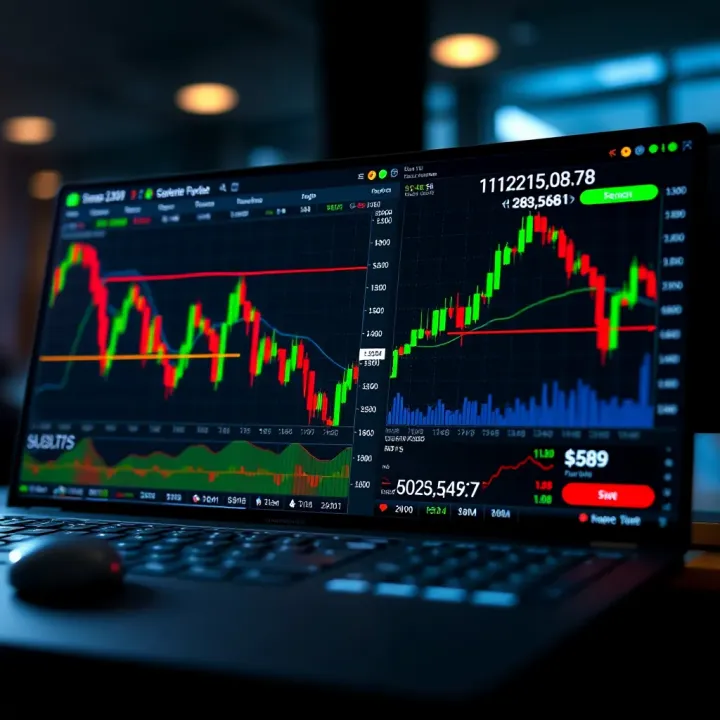
Explore forex trading software in South Africa 🇿🇦: types, features, pros & cons, top platforms, plus security & regulations every trader should know.
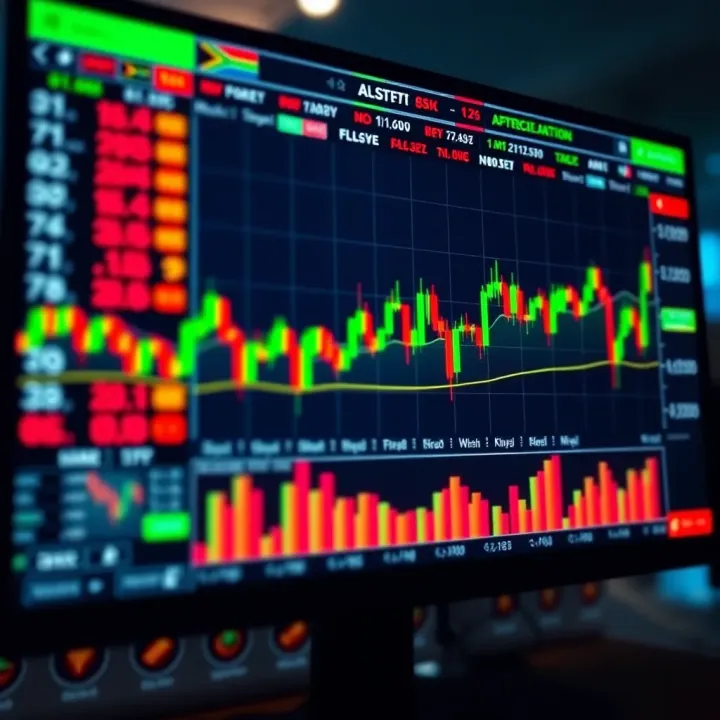
Learn how to trade forex in South Africa with zero fees! Explore trusted platforms, local regulations, risks, and tips to boost your skills 📈💸
Based on 10 reviews