

How to Convert Hex to Binary Easily
🔢 Learn how to convert hex to binary with clear steps, useful tools, and examples perfect for students and pros handling digital data in South Africa.
Edited By
Henry Lawson
Complete binary trees are a specific kind of binary tree that holds a special place in computer science and data structures. Unlike a regular binary tree, which can be irregular and sparse, a complete binary tree fills each level fully from left to right, except possibly the last level. This structure ensures balanced and compact representation, which makes operations like insertion, deletion, and traversal more efficient.
In finance and trading systems, where speed and efficient data handling are crucial, understanding complete binary trees can improve how heaps and priority queues are employed. These structures often underpin real-time decision systems used in algorithmic trading or risk assessment models.
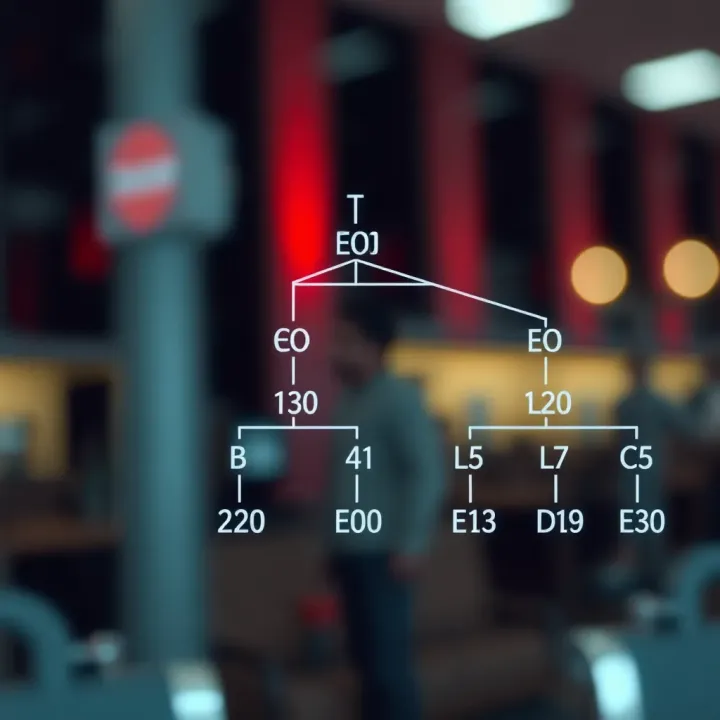
A complete binary tree maintains an organised form, allowing predictable data storage and quicker access, qualities vital in fast-paced financial environments.
Levels Filled Completely: All tree levels, except possibly the last, have their nodes fully populated.
Left-to-Right Filling: Nodes appear from left to right without gaps at any level.
Height Minimisation: This ensures the tree is as balanced and shallow as possible, improving search and update times.
Consider a priority queue used for managing buy and sell orders in a stock exchange. This queue can be represented by a complete binary tree, ensuring that the highest priority order is easily accessible and the entire queue remains balanced as orders are placed and removed.
Similarly, heaps—a fundamental part of many financial algorithms—are implemented as complete binary trees. This structure supports quick extraction of the largest or smallest element, important when managing portfolios or risk thresholds.
Familiarity with complete binary trees arms you with the knowledge to understand how critical data structures support the financial software you rely on daily. From performance optimisation to smoother operation execution, grasping these trees' properties can help you assess and even influence software tools and trading platforms better.
Next, we'll look at how these trees differ from other binary trees and unlock their unique advantages in financial computing.

Understanding the structure of complete binary trees is foundational for grasping how they function and why they're so useful, especially in fields like data processing and algorithm optimisation. These trees strike a balance between order and efficiency, making them particularly relevant for data structures such as heaps and priority queues.
A binary tree, simply put, is a hierarchical structure in which each node has up to two children—commonly termed the left and right child. This concept is straightforward but powerful in organising data so that it can be accessed and manipulated efficiently.
A binary tree is deemed complete when all levels except possibly the last are fully filled, and all nodes in the last level are packed as far left as possible. This means no gaps are left between the nodes on the bottom row towards the left side. Practically, this guarantees a compact layout, which is crucial for optimising memory usage and traversal times.
Visualising a complete binary tree helps cement this idea. Imagine a row of empty seats filling from left to right: the tree fills each level completely, like a theatre filling rows of seats. For example, a complete binary tree of height three has all its first two levels filled, and the third level filled starting from the left, with no empty spaces in between nodes.
It's easy to confuse complete trees with full and perfect binary trees, but the distinctions matter greatly. A full binary tree means every node has exactly zero or two children—no nodes with just one child. Conversely, complete binary trees allow the last level to be partially filled but only from left to right, meaning a node might have one child if the tree still meets the completeness criteria.
A perfect binary tree is a stricter structure—it must be both full and complete, with all levels fully filled and every node having two children, except the leaf nodes. This means a perfect tree of height three has exactly 2³ - 1 = 7 nodes, perfectly balanced.
Why do these distinctions matter? Well, algorithms and data structures often depend on specific tree types for efficiency. For instance, heaps rely strictly on complete binary trees to maintain predictable shape and insertion time. Using a full or perfect tree might impose unnecessary constraints or complexity. Recognising these differences can also guide implementation choices and influence the performance of tree-based operations.
Complete binary trees offer a practical middle ground by ensuring balance and efficiency without being as rigid as perfect trees, which suits many real-world computing needs.
Each tree structure serves particular roles, and knowing which suits your use case can save time and resources in development and execution.
Understanding the key characteristics and mathematical properties of complete binary trees helps clarify why they're so widely used in computing, especially in financial software and data systems. These properties ensure efficient memory use and predictable time complexity when managing structured data.
A complete binary tree fills each level from left to right before starting a new one. This neat filling rule means no gaps appear in the sequence of nodes at any level, except possibly the last. This is handy because it guarantees a compact structure, which reduces overhead and improves cache performance in practical applications like heaps.
In a typical scenario, imagine a complete binary tree storing stock price updates. If a new price comes in, it simply adds to the next available leftmost position at the lowest level. This way, it avoids needless movement across the tree and keeps the data structure balanced, allowing faster reads and inserts compared to random or sparse node distribution.
Because of their defined node distribution, complete binary trees maintain minimum height compared to other binary trees with the same number of nodes. This balance is crucial in operations like search, insert, and delete where time complexity depends on tree height.
For instance, if you're processing large financial datasets, maintaining a minimal height ensures quicker lookups. An imbalanced tree could dramatically increase processing time. Complete trees avoid that trap by structuring nodes evenly across levels, making traversals and updates more predictable and efficient.
In a complete binary tree, each level i can hold up to 2^i nodes, where the root level is 0. So the first level holds one node, the second up to two, the third up to four, and so on. This predictable growth helps estimate memory requirements upfront, which is valuable when handling large heaps or priority queues in financial algorithms.
Take a heap managing incoming orders; knowing the max number of nodes per level lets you allocate array sizes efficiently. This estimation prevents over-allocating memory, which is a real concern for trading platforms where resources need to be optimised actively.
The total nodes N in a complete binary tree of height h relate through the formula:
math N \leq 2^h+1 - 1
This means the node count grows exponentially with height. For example, a height of 3 can have up to 15 nodes. This formula helps gauge the tree’s compactness and informs decisions on balancing performance against storage.

> Understanding this formula allows you to quickly assess the scalability of data structures underpinning your applications. You can predict how many levels your binary tree will need for handling a certain number of nodes, helping optimise algorithm performance and memory usage.

By knowing these key characteristics and mathematical properties, you're better equipped to select or design tree structures fit for the demands commonly faced in trading, data analytics, and financial computing.

## Benefits and Practical Uses of Complete Binary Trees

Complete binary trees form the backbone of several essential data structures and algorithms widely used in computing and finance. Their balanced nature ensures efficiency in storage and operation times, which is particularly critical when dealing with large datasets and real-time processing in financial markets.

### Applications in heap data structures

#### Min heaps and max heaps

Complete binary trees naturally underpin min heaps and max heaps. These heaps maintain a specific order: in a min heap, each parent node is smaller than its children, while in a max heap, the parent is larger. This property guarantees quick access to the smallest or largest element, respectively. For [traders](/articles/understanding-free-binary-signals-for-traders/), this means priority access to, say, the lowest bid or highest offer during order book management.

#### Implementation advantages

Using complete binary trees simplifies the storage of heaps, as they can be efficiently represented using arrays without pointers. This reduces overhead and boosts cache performance, speeding up insertions and deletions. For example, in algorithmic trading systems, where rapid execution is essential, these efficiencies can translate into tangible competitive advantages.

### Role in priority queues and sorting algorithms

#### How complete trees optimise performance

Priority queues often rely on complete binary trees to manage elements with dynamic priorities effectively. The balanced filling of levels ensures operations like insertion, deletion, and priority update run in logarithmic time, preventing bottlenecks during high-frequency trading or risk management tasks. This predictable performance is vital for financial analysts monitoring real-time data flows.

#### Heap sort fundamentals

Heap sort exploits the structure of complete binary trees to sort arrays efficiently in O(n log n) time. Unlike some sorting techniques, it offers consistent performance even with large datasets, making it suitable for end-of-day data processing or portfolio rebalancing operations. Deftly managing data sorting with heap sort ensures timely insights and decision-making.

> Leveraging the properties of complete binary trees offers clear practical benefits in data structure performance, crucial for financial systems requiring speed and reliability.

In summary, complete binary trees provide the structural base enabling heaps, priority queues, and efficient sorting—all key tools for traders, analysts, and others in the financial field seeking maximum efficiency and responsiveness.

## Building and Navigating Complete Binary Trees

Understanding how to build and navigate complete binary trees is crucial, especially for those dealing with data structures underpinning priority queues and heaps. Efficient construction methods ensure the tree maintains its completeness property, which directly affects performance in real-world applications like financial modelling tools that rely on optimised sorting and quick access.

### Common methods to construct complete binary trees

**Level-order insertion** is the most straightforward approach. Nodes are added from left to right, level by level, ensuring each level is fully filled before moving to the next. For instance, when adding elements to a heap, this method helps maintain the complete shape, preventing gaps that could disrupt efficient retrieval.

This technique is practical in applications where data arrives sequentially, such as live market feeds updating a priority queue. It avoids complex rearrangements by simply placing new nodes as the next available slot when traversed in level order.

**Array-based representation explained** simplifies the construction and navigation of complete binary trees further. Since the tree fills levels completely from left to right, its nodes can be stored in an array without empty spaces. The parent-child relationships correspond to simple index calculations: the left child of a node at index *i* is at *2i + 1*, and the right child at *2i + 2*.

This arrangement is space-efficient and eliminates the need for pointers or references, which can slow down access in traditional linked representations. For example, algorithmic trading systems often use array-based heaps to efficiently manage orders with different priorities.

### Traversal techniques and their purposes

**Level-order traversal** reads nodes level by level, from the root down. It's particularly useful for verifying the tree structure or performing operations that require processing nodes in order of their depth. This traversal ensures that the complete binary tree's shape remains intact during updates.

In financial applications, level-order traversal can be used to analyse hierarchical data like decision trees in risk assessment models, where processing each decision level sequentially is essential.

**Preorder, inorder, and postorder traversals** offer alternative ways to navigate the tree, focusing on different sequences of node visits. Preorder processes the current node before its children, useful for copying trees or serialising data. Inorder traversal visits the left child, then the node, then the right child, which is commonly used in binary search trees to retrieve sorted data, although less so in complete binary trees since they don't maintain the binary search tree property. Postorder visits children before the parent, helpful in tasks like deleting trees or evaluating expression trees.

While the application of these traversals in complete binary trees might be less frequent compared to binary search trees, understanding them is beneficial for complex operations and ensuring compatibility across various algorithms.

> Building and navigating complete binary trees efficiently impacts system responsiveness, especially in time-sensitive financial software managing large data streams.

In summary, using level-order insertion combined with array-based representation provides a reliable foundation for maintaining complete binary trees. Traversal methods offer the tools necessary for manipulating and interpreting these structures in financial and data-driven contexts.🔢 Learn how to convert hex to binary with clear steps, useful tools, and examples perfect for students and pros handling digital data in South Africa.

🔢 Learn how to convert hexadecimal numbers to binary step-by-step, with clear tips and real-world examples to master this essential computing skill. 💻

🔢 Learn how to convert fractional decimal numbers to binary with clear steps, tips, and examples. Master precision and rounding for accurate results.

📘 Learn step-by-step how to convert hexadecimal numbers to binary. Perfect for beginners in computing and digital systems wanting clear, practical guidance.
Based on 13 reviews