
Choosing Forex Trading Software in South Africa
Explore top forex trading software in South Africa 🇿🇦. Learn about key features, regulations, and practical tips to pick the best platform for your trades 📈💻.
Edited By
Amelia Turner
Choosing the right forex trading broker is a key first step for any trader looking to enter the foreign exchange market. With so many options available, understanding what sets one broker apart from another can save you headaches and money down the line. This guide unpacks practical considerations with a particular focus on South African traders navigating local and global markets.
A forex broker acts as the middleman between you and the currency markets. They provide platforms to buy and sell currency pairs like USD/ZAR or EUR/USD and often offer leverage to increase your buying power. However, not all brokers are created equal, and some might not be suited to your trading style or regulatory comfort.
South African traders should start by looking for brokers regulated by recognised bodies such as the Financial Sector Conduct Authority (FSCA). This regulation ensures basic consumer protection and minimises the risk of fraud. Beware of offshore brokers lacking proper licensing; they often promise low fees but could expose you to higher hidden risks.
Fee structures vary widely—from spreads built into currency pair prices to commissions per trade. Some brokers offer fixed spreads, which allow you to plan costs easily, while others use variable spreads that depend on market volatility. For example, a broker might charge a spread of 1.5 pips on USD/ZAR, but during times of high volatility, this could widen.
Trading platforms are another important factor. Popular options like MetaTrader 4 and 5 offer advanced charting and automation features. Local brokers sometimes provide tailored platforms or access to South African rand pairs which can influence execution speed and trading costs. Make sure the platform suits your needs, whether you prefer manual trading or automated scripts.
Always test brokers using demo accounts before committing funds. This allows you to experience order execution speeds, platform usability, and customer service responsiveness without risking actual capital.
To narrow down your choice, consider this checklist:
Regulation: FSCA-approved or equivalent licence
Fees: Spreads, commissions, overnight costs
Platform: User-friendly with essential tools
Currency pairs: Includes pairs relevant to your trading goals
Customer support: Accessible and knowledgeable
By weighing these factors carefully, you can make an informed decision that balances cost, convenience, and security. This approach helps you focus on building your trading strategy with confidence rather than worrying about the broker’s reliability.
Next, we will explore the different types of forex brokers and how their business models impact you as a trader.
Forex trading brokers serve as the essential link between traders and the vast currency markets worldwide. Grasping how these brokers operate helps investors navigate the market more effectively, particularly in a complex, fast-moving environment such as forex.
Forex brokers act as intermediaries that connect retail traders to the interbank forex market, where currencies are bought and sold. Since individuals and small investors cannot directly access this large and fragmented marketplace, brokers provide the platform and infrastructure to trade. Their role ensures that buy and sell orders are executed reliably. For example, a South African trader will place currency orders through their chosen broker, who then matches these orders with liquidity providers or market participants.
This intermediary position means that brokers often handle critical elements like order execution, margin requirements, and trade settlement on behalf of the trader.
Brokers open the door to a truly global market that operates 24 hours a day across different continents. Through their trading platforms, brokers offer access to major currency pairs like USD/ZAR, EUR/USD, and exotic pairs which might otherwise be difficult to trade from South Africa.
This broader market access also means traders can take advantage of movements in currencies affected by economic events in other countries, adding flexibility to trading strategies. Without brokers, retail traders would be locked out of this expansive market.
Market makers set their own bid and ask prices and take the opposite side of a trader's position. By doing so, they create liquidity in the market and control spreads. This means they can profit from the difference between buying and selling prices.
For a trader, choosing a market maker broker might mean guaranteed order execution, but it also raises potential conflict-of-interest concerns since the broker benefits when the trader loses. As a practical example, a market maker might widen spreads during volatile periods, impacting trading costs.
ECN brokers link traders directly to other market participants, such as banks and hedge funds, allowing orders to be matched anonymously. This offers faster execution speeds and typically tighter spreads.
Traders benefit from more transparent pricing and reduced risk of price manipulation. For instance, an ECN broker might charge a commission per trade instead of marking up spreads, which can be more cost-effective for high-frequency traders.
STP brokers send clients’ orders straight to their liquidity providers without any dealing desk intervention. This means trades are executed faster and there’s less chance of requotes or manual intervention.
For traders, STP brokers usually offer variable spreads sourced from multiple liquidity providers. A practical example: a South African trader executing a large USD/ZAR order through an STP broker benefits from competitive pricing but should be cautious of spread widening during peak volatility.
Understanding the differences between these broker types helps you choose one that aligns with your trading style, risk tolerance, and cost preferences.
Selecting the right forex broker first requires knowing exactly what role they play in your trades and how they earn their income. This knowledge lays the groundwork for making informed, effective trading decisions.
Understanding the regulatory landscape governing forex brokers in South Africa is essential for traders aiming to protect their investments and operate within a secure trading environment. Regulation not only enforces standards but also helps ensure brokers act fairly and transparently. In South Africa, the Financial Sector Conduct Authority (FSCA) plays a central role in supervising forex brokers.
The FSCA requires all forex brokers operating within South Africa to obtain a licence that confirms compliance with specific criteria. This includes maintaining adequate capital reserves, adhering to risk management protocols, and submitting regular financial reports. A practical reason for this is to weed out poorly managed or fraudulent companies that could endanger traders’ funds. For example, a broker licensed by the FSCA must prove its financial soundness, which reduces the risk of insolvency impacting client accounts.
Beyond licensing, the FSCA implements rules designed to protect traders’ interests. These include requirements for brokers to keep client funds in segregated accounts, separate from their operational finances. This setup ensures that, should the broker encounter financial trouble, client monies remain insulated and retrievable. Additionally, the FSCA mandates transparent disclosure of trading terms, risks, and fees, helping traders make informed decisions.
Opting for an FSCA-regulated broker provides a significant safety net for your money. Because of segregation rules and periodic audits, your funds are less exposed to misuse or misappropriation. As an example, if a broker goes bankrupt, clients are more likely to recover their investments compared to dealing with an unregulated entity. This peace of mind proves valuable in a market where speed and leverage can amplify gains but also risks.
Regulated brokers must adhere to clear standards regarding their operations and client communications, which include honest advertising and fair execution of trades. For instance, they can’t suddenly change spreads without warning or engage in practices that disadvantage traders, such as requotes or hidden fees. This transparency fosters trust and allows traders to evaluate costs and risks upfront.
Without regulatory oversight, unregulated brokers may engage in fraudulent behaviour—ranging from manipulating prices to refusing withdrawals. There have been cases where clients deposit funds only to find themselves locked out or scammed. Such brokers operate outside South African law, making it easier to disappear with clients’ money or misappropriate funds without accountability.
Dealing with an unregulated broker also means minimal protection if problems arise. Since they don’t fall under FSCA jurisdiction, traders have little legal or regulatory support to resolve disputes. Recovering lost funds can become a lengthy, costly ordeal with few guarantees. By contrast, using a regulated broker opens access to official complaints procedures and dispute resolution mechanisms.
Choosing a broker regulated by the FSCA isn’t just a legal formality—it’s a practical step to safeguard your trading capital and ensure fair treatment in the volatile forex market.
Understanding these regulatory aspects will help you avoid unnecessary risks and select brokers with integrity and accountability in mind.
Choosing the right forex broker is no small matter. Trading fees, available platforms, account types, and support quality can all impact your trading experience and outcomes. Understanding these key factors helps you avoid unnecessary costs, access the right tools for your style, and trade with confidence. Whether you're new to forex or a seasoned trader, knowing what to look out for makes a world of difference.
Spreads represent the difference between a currency pair's bid and ask price. Brokers typically offer fixed or variable spreads. Fixed spreads stay the same regardless of market conditions, providing predictability — handy for traders who prefer stable costs, especially during volatile times. Variable spreads fluctuate with market liquidity. They can be narrower during regular hours, reducing trading costs, but widen during economic events or off-hours, increasing fees.
Commissions are fees charged per trade, often separate from spreads. Some brokers offer zero commission but charge higher spreads instead. Rollover fees come into play when keeping positions open overnight — essentially interest paid or earned based on currency interest rate differentials. Understanding these charges upfront helps you estimate true trading costs, so you’re not caught off guard when reviewing monthly statements.
The trading platform is your gateway to the forex market. MetaTrader 4 (MT4) and MetaTrader 5 (MT5) are the most popular platforms worldwide, including in South Africa. MT4 remains favoured for its simplicity and vast library of custom indicators. MT5 offers enhanced features like more timeframes and an economic calendar, suiting traders wanting deeper analysis.
Mobile trading apps let you manage trades on the go, crucial given South Africa’s sometimes unpredictable schedules. These apps mirror desktop platforms’ functions, allowing order placement, monitoring, and quick reaction to market moves wherever you are.
Technical analysis tools and charting capabilities equip you to spot trends and price patterns. Brokers that provide advanced charting, drawing tools, and access to economic news give you the edge to make informed decisions — whether you prefer simple trendlines or complex indicators like Bollinger Bands.
Brokers offer various account types like standard, mini, and micro accounts. Standard accounts usually require higher minimum deposits but offer bigger trade sizes suited to experienced traders. Mini and micro accounts allow smaller trade sizes and lower deposits, ideal for those testing strategies or with limited capital.
Beginner traders generally benefit from micro or mini accounts because the smaller stakes reduce risk while learning the ropes. Experienced traders might opt for standard accounts where they can leverage larger positions and access better trading conditions.
Good customer support is often overlooked but essential. Availability matters; you want a broker whose support team operates during South African trading hours and responds swiftly to queries. Quick support can save you from missing critical trades or navigating technical hiccups.
Multiple support channels — phone, email, and live chat — add convenience. Phone support is useful for complex or urgent issues, while live chat offers quick answers without holding. Email is better for detailed queries or complaints. Reliable brokers maintain all these channels and train staff to handle forex-specific concerns efficiently.
Remember, the best broker fits your trading style, budget, and expectations on service. Taking time to weigh these factors carefully means fewer surprises and a smoother trading experience.
Choosing a forex broker isn't just about fees or platform features — their reliability and reputation are just as vital. A broker’s trustworthiness affects your safety, trading experience, and ability to withdraw profits without hassle. South African traders, in particular, should approach broker selection cautiously given the rise in scams and unlicensed operators.
It helps to look beyond the broker’s website and hunt for honest user reviews on independent forums and communities such as Forex Factory or MyBroadband’s trading section. These platforms show unfiltered experiences from traders who’ve put brokers to the test over time, highlighting recurring issues or strengths. Pay attention to comments on withdrawal speeds, slippage during volatile periods, and customer support responsiveness.
However, not all feedback is genuine. Spotting fake or biased reviews is key. An overly positive review that lacks specifics or pushes only certain brokers could be planted marketing. Conversely, fake negative reviews often appear as vague complaints without context. Balance is essential — cross-check multiple sources and trust detailed accounts that mention verified transactions or proof.
Clear terms and conditions protect traders from unexpected charges or trading restrictions. Reliable brokers openly publish their policies on spreads, commissions, rollover fees, and margin requirements. For example, knowing that a broker charges a rollover fee for holding positions overnight helps you factor in costs upfront. Also, check if the broker clearly states how client funds are handled — segregation of accounts is a positive sign.
Disclosure of risks and fees shows integrity. Brokers must highlight that forex trading carries a high risk of loss and isn’t suitable for every investor. If you find a broker that downplays these risks or doesn’t visibly disclose all fees, tread carefully. Transparency builds trust and keeps you informed so you can make decisions based on complete information.
A demo account gives you a chance to try out a broker’s platform with fake money. This risk-free environment is ideal for getting comfortable with order types, charting features, and executing trades without financial pressure. For South African traders learning to navigate forex, demos are especially helpful as they can simulate local market conditions without consequences.
Besides just practising, demo accounts let you assess platform usability. Is the interface straightforward or cluttered? Can you easily set stop losses and take profits? A broker with an intuitive and reliable platform saves you headaches when real money is on the line. At times, poor execution on the demo version can hint at slippage or lags during volatile sessions in the live market.
In short, taking time to evaluate a broker’s reliability through reviews, transparent practices, and demo testing can shield you from common pitfalls and improve your trading confidence in South Africa’s dynamic forex scene.
When choosing a forex broker, understanding the payment options and how transactions are handled can save you from costly delays or unexpected fees. These factors affect your trading experience directly, especially in South Africa where payment infrastructure and currency considerations come into play.
South African traders typically use several convenient payment methods such as EFT (electronic funds transfer) from local banks, credit or debit cards, and increasingly, e-wallet services like PayFast or Skrill. EFTs are popular because they're reliable and familiar, but some brokers also accept deposits via international wire transfers or cryptocurrencies for those comfortable with digital currencies.
Withdrawal options should be as flexible as deposits. A broker that processes withdrawals swiftly—within one to three business days—is preferable. Some brokers charge withdrawal fees, particularly for credit card or international transfers, so it’s wise to check these costs upfront to avoid surprises when moving profits back into your bank account.
Trading directly in South African Rand (ZAR) can simplify matters, reducing conversion time and fees. However, not all brokers offer ZAR accounts; many operate primarily in major currencies like the US dollar or euro. If your trading account operates in foreign currency, your deposits and withdrawals will incur exchange rate costs when converted to ZAR.
These conversion fees might seem small on each trade, but they add up over time, eating into your profits. For example, a 2% difference in exchange costs on a R10,000 transaction equates to R200 lost unnecessarily. Choosing a broker that allows trading or account holding in ZAR can minimise these charges and improve your bottom line.
Robust security on payment transactions isn’t just a bonus; it’s a necessity. Reliable brokers use encryption technologies such as Secure Socket Layer (SSL) to protect your sensitive information during deposits and withdrawals. Encryption scrambles data, making it unreadable to outsiders.
Additionally, verification procedures deter fraud and money laundering. Brokers typically require KYC (Know Your Customer) documents—a certified copy of your ID, proof of address, or bank statements—to confirm your identity. While this might feel like a hassle, it safeguards your funds and maintains the broker’s compliance with South African regulations, creating a safer trading environment.
A secure and transparent payment process protects you from fraud risks and ensures your funds move efficiently, so always prioritise brokers with clear security protocols and prompt transaction handling.
By keeping these practical points in mind, you’ll avoid pitfalls related to payment and transaction handling, giving you greater confidence as you trade forex locally or globally.
Explore top forex trading software in South Africa 🇿🇦. Learn about key features, regulations, and practical tips to pick the best platform for your trades 📈💻.
🔍 Finding the best free forex trading platform in South Africa? Discover essential features, top options, and safety tips to trade confidently and cost-effectively.
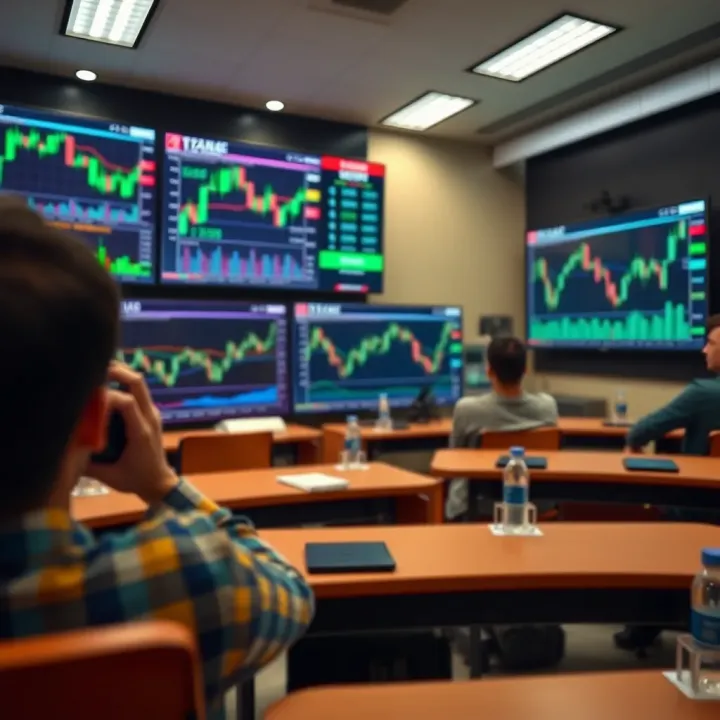
📚 Discover how to pick the best forex trading school in South Africa! Learn course benefits, key selection tips, and boost your trading skills effectively.
🚨 Learn to spot and avoid common forex trading scams in South Africa. Stay informed on warning signs and protect your investments confidently. 💼💡
Based on 6 reviews