

Forex Trading: Starting with $100 Made Simple
Start forex trading with $100 💸 using smart strategies, solid risk management, and practical tips to grow your investment steadily in the South African market 📈.
Edited By
Henry Wallace
Starting your forex trading journey with $100 requires a clear, realistic plan to protect your capital while seeking steady growth. This relatively small amount forces discipline and careful risk management, as the margin for error is tight. Without a concrete plan, it's easy to blow such an account quickly, especially in a volatile market.
A solid trading plan for a $100 account focuses on capital preservation, effective risk control, and selecting trading styles that match the limited funds. For example, scalping or day trading might eat up spreads and fees too quickly, which is why many small-account traders lean towards swing or position trading where fewer transactions reduce costs.
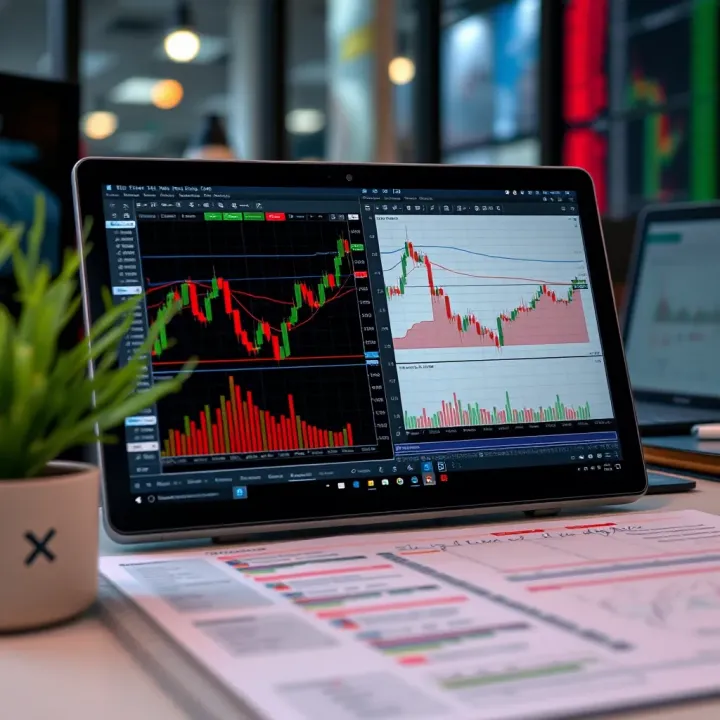
Successful trading with a $100 starting capital is not about trying to hit the jackpot but steadily building your account by managing losses and letting profits run.
Key elements to include in your forex trading plan:
Risk Management Rules: Limit your risk per trade to no more than 1–2% of your capital. On $100, this means risking just R1 to R2 per trade. This conservative approach safeguards your funds against large drawdowns.
Stop Loss and Take Profit Settings: Always set stop losses to cap potential losses instead of hoping the market will turn in your favour. For a $100 account, a 20-pip stop loss might be suitable when trading major pairs, depending on the chosen lot size.
Lot Size and Position Sizing: Trading micro lots (0.01 standard lots) is essential to control exposure. Trading even a mini lot (0.1) with $100 can be too risky.
Trading Style and Timeframe: Swing trading on 4-hour or daily charts works well for small accounts, reducing exposure to market noise and transaction costs.
Record Keeping: Maintain a trading journal logging entry, exit, and reasoning for each trade. This helps identify patterns and mistakes.
This practical approach respects the realities of trading with limited funds and emphasises the value of consistency over quick wins. Implementing these principles will prepare you to tackle the forex market intelligently and sustainably.
Grasping the fundamentals of forex trading when working with a small account is essential, especially if you’re starting with just $100. With such limited capital, every trade counts, and missteps can quickly wipe out your funds. Understanding key market mechanics and inherent challenges helps you manage risks better and craft a plan that’s realistic and effective.
Forex, or foreign exchange, is a global marketplace where currencies are bought and sold. It's the largest financial market worldwide, with a daily turnover exceeding $6 trillion. Traders attempt to profit by speculating on currency price movements, influenced by economic indicators, geopolitical events, and market sentiment.
Unlike stocks that trade on exchanges, forex operates 24 hours across different centres globally — from Sydney through London to New York. This round-the-clock nature offers flexibility but also means volatility can spike unexpectedly. For example, a sudden announcement from the South African Reserve Bank about repo rate changes can cause rapid shifts in ZAR pairs, impacting your trades if you're not alert.
Trading with a $100 account means you’ll typically deal in micro or nano lots since standard lots are too large to manage safely. This exposes you to less financial risk per trade but you’ll need to be savvy in timing and position sizing. Platforms like MetaTrader 4 enable small traders to access leverage but this is a double-edged sword.
One of the biggest challenges when trading with limited capital is the lack of a buffer during losing streaks. Larger accounts absorb small losses better, while a few bad trades on a $100 account can wipe out a significant portion of your funds. This reality puts a premium on strong risk management.
Another hurdle is emotional pressure. Limited funds often mean a trader feels every pip painfully—leading to impulsive decisions such as overtrading or abandoning stop-loss orders. For example, if a trader risks 5% per trade on $100, a losing streak of four trades could mean a 20% capital loss, which is hard to recover.
Furthermore, smaller accounts might face higher relative trading costs, including spreads and commissions, impacting profitability. Choosing forex brokers with low minimum deposits and tight spreads is critical. Also, keep realistic expectations: doubling a small account quickly is uncommon and usually involves excessive risk.
Tip: Treat your $100 as seed capital. Focus on learning, preserving your capital, and developing disciplined trading habits rather than chasing fast profits.
By mastering how the forex market operates and acknowledging the challenges of limited capital, you set a solid foundation for your $100 forex trading plan. This understanding guides your choices, from selecting the right broker to defining trading strategies that suit a tight budget.
Setting clear and achievable goals is the backbone of any trading plan, especially when starting with a modest amount like $100. Without realistic targets, it's easy to fall into risky behaviours, chasing quick wins that can wipe out your limited capital. A well-defined goal guides your strategy and decisions — it keeps you grounded in what’s possible and prevents disappointment.
When trading with $100, expecting to double your money overnight isn’t practical. Instead, focus on modest, consistent gains that build your account steadily. For instance, aiming for a 2% to 5% monthly return is a sensible starting point. That might not seem like much, but over time, compounding those profits can lead to respectable growth. For example, a 5% monthly return compounds to roughly a 79% increase in a year if you reinvest profits, turning your $100 into about $179.

It’s key to balance ambition with discipline. Setting too high profit targets encourages overtrading or taking large risks, which could burn your account quickly. In contrast, modest, achievable expectations encourage patience and careful analysis.
Choosing the right trading timeframe depends on your daily schedule, risk tolerance, and style. For a $100 account, shorter term approaches like day trading or scalping might lead to many trades, increasing fees and emotional stress. On the other hand, swing trading over a few days to weeks can reduce trading frequency and allow you to focus on higher-probability setups.
Set growth targets within realistic timeframes. Instead of pushing for a quick 50% gain in a month, consider a six- to twelve-month horizon. For example, aiming to grow your account by 25% every quarter, compounded, is an achievable goal that supports steady progress.
Also, factor in drawdowns—the inevitable periods when losses occur. Planning for a drawdown of 10% to 15% without panic allows you to respect market realities and avoid rash decisions.
Realistic goals help maintain your trading discipline, keeping you focused on steady growth rather than chasing an impossible dream. This mindset is crucial for preserving your capital and increasing your chances of long-term success.
In summary, set clear profit expectations that reflect your capital and trading style. Align your timeframe with these goals, and always prepare for market ups and downs. This approach transforms your $100 starting point into a learning platform for building consistent trading skills, rather than a quick-money scheme.
Managing risk is absolutely vital when trading forex with a small account like $100. Because the capital is limited, even a few bad trades can wipe out your account quickly. Implementing strong risk management techniques helps preserve your capital, allowing you to stay in the market longer and grow your funds steadily.
Position sizing refers to how much of your account you allocate to each trade. With only $100, it’s smart to risk a small percentage per trade—usually 1% or less. For example, risking 1% means you’d only risk R1.50 (about $0.10) if your account is converted. This keeps losses manageable and prevents rapid depletion.
Leverage is a double-edged sword. While it can amplify profits, it also magnifies losses. Forex brokers often offer leverage ratios up to 1:500, but aggressive use with a small account is risky. A safer approach is to use lower leverage, around 1:10 or 1:20, so you control your trades without blowing the entire account on one bad move. Think of leverage as an accelerator pedal—press lightly to keep control.
Stop losses and take profits are essential tools to lock in profits or limit losses automatically. Because small accounts can’t afford wide stops, set tight but sensible stop-loss points based on recent support or resistance levels. For instance, if you buy USD/ZAR at 18.50, placing a stop loss 50 pips away at 18.45 limits your loss if the market turns.
Take profits should strike a balance between ambition and achievability. Using a risk-to-reward ratio of at least 1:2 means you aim to gain twice what you risk. For small accounts, this cautious method compounds gains while safeguarding capital. Avoid moving stops farther away hoping for a turnaround—that's usually a slippery slope.
A few mistakes often cause traders to burn through small accounts fast:
Overtrading: Trying to catch every move often leads to impulse trades without proper analysis.
Ignoring risk limits: Trading without setting stop losses or risking too much per trade.
Chasing losses: Increasing trade sizes to recover losses typically backfires.
Poor broker choice: High spreads or unreliable execution can eat into profits quickly.
To avoid these, stick to your plan and respect your risk parameters. For example, if you lose three trades in a row, take a step back instead of doubling down. Also, pick brokers regulated in South Africa or top-tier jurisdictions that offer tight spreads and fast execution.
Successfully managing risk with a $100 forex account isn't about hitting a jackpot overnight. It’s about steady, disciplined trading, keeping losses tiny, and letting profits grow bit by bit.
In essence, risk management turns a small trading pot from a fragile hope into a solid foundation for growth. With proper position sizing, smart use of stops, and avoiding emotional pitfalls, you give yourself a real shot at turning your $100 into something more meaningful over time.
When you start trading forex with just $100, picking the right trading style can make or break your experience. The style you choose should fit your risk tolerance, time availability, and market understanding. A small capital base means every rand counts, so you want to avoid styles that demand large margin requirements or expose you to heavy losses quickly. Different approaches offer different rhythms and challenges—knowing the trade-offs helps you put together a plan that suits both your goals and your wallet.
Scalping and day trading involve making multiple quick trades within the day, aiming to profit from small price movements. For a $100 account, scalping might be tempting because it seems easier to lock in small wins frequently. But, it demands constant market attention, fast decision-making, and often high leverage.
With limited capital, high leverage is common, but it ramps up risk significantly. One unexpected spike can wipe out your entire account. Also, brokers’ minimum contract sizes might restrict how small your trades can be, so check whether your chosen broker lets you trade mini or micro lots. For instance, trading a micro lot (1,000 units) instead of a standard lot (100,000 units) can help manage risk within tight limits.
Day trading requires a good grasp of technical analysis and timely market news. But it’s exhausting and not for everyone. If you work full-time or have other commitments, maintaining the speed and focus scalping demands can be impractical. Plus, transaction costs add up quickly—spread and commission fees eat into your thin margins.
Swing trading and position trading take a slower route, holding trades for days, weeks, or even months. These styles suit small accounts by allowing trades to develop, avoiding the pressure of frantic moves and overtrading. You’re aiming to capture medium to larger price swings, which means fewer trades but potentially bigger profits per trade.
The lower frequency reduces transaction costs and lets you spend more time planning and analysing. Imagine spotting a promising forex pair like EUR/USD trending due to economic reports from Europe or the US; swing traders ride these waves without watching the market every minute. Position trading goes even longer, leaning on fundamental analysis, such as central bank interest rate decisions or geopolitical events.
Though patience is key here, it suits traders who cannot watch charts all day but want steady growth without risking every cent on quick scalps. For example, placing a trade on USD/ZAR after a South African Reserve Bank announcement, and holding it for a few weeks, could suit a small account well if stops and limits are set wisely.
With just $100, your style needs to help preserve capital and keep trading costs low. Scalping can work but demands experience and strict discipline. Swing and position trading offer a more measured pace that balances risk and reward over time.
Choosing your trading style also means thinking about your lifestyle and personality. Are you ready to sit glued to screens, or do you prefer analysing markets while sipping rooibos over a slow braai weekend? This choice shapes how you manage your trades and stick to your plan.
A solid trading plan is the backbone of successful forex trading, especially when starting with $100. Having a clear, written plan helps you stay disciplined and avoid emotional decisions that can quickly drain a small account. It defines your entry and exit rules, risk limits, and daily routine, which together prevent reckless trades and protect your limited capital.
Developing a consistent trading routine allows you to approach the market with structure rather than random guesses. Begin by setting specific times to analyse the market, such as the London or New York sessions when liquidity is higher and spreads are tighter. Use basic technical tools like moving averages or RSI (Relative Strength Index) to identify trends and overbought or oversold conditions.
For example, start your day reviewing the euro/dollar (EUR/USD) pair’s behaviour over the last 4 hours to spot possible breakout opportunities. Keeping a simple journal where you note why you took a trade, what the outcome was, and what you observed, helps improve your market reading skills over time.
Recording every trade’s details—entry, exit, size, profit or loss—gives you an honest look at what works and what doesn’t. For instance, if you notice losing trades often occurred during volatile news releases, you might decide to avoid trading 30 minutes before and after major economic announcements.
Adaptation is key; if a strategy underperforms over 15-20 trades, tweak the indicators or exit points before risking more of your Rands. Remember, preserving capital is more important than chasing profits. By routinely reviewing trade logs weekly, you sharpen your edge and stop repeating costly mistakes.
Smaller accounts need cost-effective yet reliable tools. Platforms like MetaTrader 4 or TradingView offer free charting and demo accounts to practice without risking real money. Leverage brokers regulated in South Africa or reputable global ones who offer micro or nano lots, letting you trade tiny positions aligned with your $100 budget.
Additionally, use economic calendars from sites like Investing.com to keep track of important data releases affecting currency pairs. RSS feeds or alerts from trusted forex news providers help keep you informed without overwhelming.
Building and consistently following a tailored forex plan helps you develop discipline, handles market volatility better, and turns your $100 into a learning tool rather than a money pit.
In short, treat your $100 like a training ground. Combine a steady routine, precise performance tracking, and simple yet effective tools to grow skills first, then your capital.
Start forex trading with $100 💸 using smart strategies, solid risk management, and practical tips to grow your investment steadily in the South African market 📈.
Discover how free $100 forex trading accounts work in South Africa 🇿🇦. Learn the benefits, risks, and tips to trade wisely in the forex market 💹.

Explore how global forex trading works 🌍, key players, exchange rate drivers, trading platforms, risks, strategies, and regulations in South Africa 🇿🇦.

Explore proven forex trading strategies tailored for traders in South Africa. Learn smart risk management and pick the right tools 📈💰 to trade effectively.
Based on 11 reviews